

 ENG
 English
 русский
 Español
 Türk

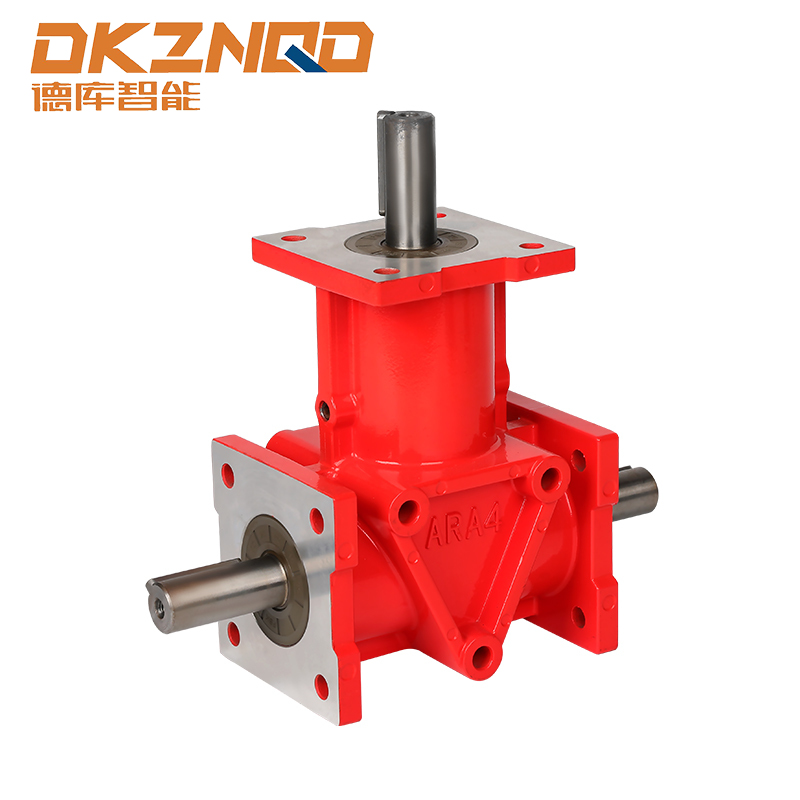
When a single helical gear drives a heavy load, the angled teeth generate an axial thrust that pushes the gear along the shaft. In many applications, that thrust must be absorbed by a thrust bearing, which adds cost, space, and heat. A double helical gear solves this problem by pairing two opposite-handed helical gears on the same shaft, so the axial forces cancel each other. This makes double helical gears a proven choice for high-torque, high-speed drives, but their real value depends on precise manufacturing and the right design choices.
What Are Double Helical Gears?
A double helical gear is a combination of left-handed and right-handed helical gears with the same twist angle, formed on a single blank. The two helixes share the same shaft axis but mirror each other in helix direction. As the gear rotates, the axial force created by one hand is balanced by the equal and opposite force from the other hand. This internal cancellation eliminates the need for a heavy thrust bearing and keeps the gear meshing stable.
Double Helical vs. Herringbone Gears
The terms are often used interchangeably, but there is a practical distinction. A true double helical gear has a narrow gap between the two opposite-handed sections, which is used for grinding and accurate profile finishing. A herringbone gear has no gap; the teeth meet at a centre point. The gap on a double helical gear is not a weakness — it is a manufacturing feature that lets the gear maker finish the flanks with a grinding wheel and achieve higher accuracy. For heavy-duty applications, the gap also permits better oil flow and avoids stress concentration at the apex.
How Double Helical Gears Work
Smooth Torque Transmission
Because the teeth are helical, the contact between the pinion and gear is gradual rather than instantaneous. Load builds up across the tooth face, which reduces impact and noise. Combined with the opposite-handed section, the two helical halves carry the torque together. The result is a smoother rolling action than a straight spur gear, even under changing load.
Load Distribution
In a correctly designed double helical gear, the two halves share the transmitted load almost equally. This matters in high-power drives because it lowers the stress on each tooth. The practical benefit is a higher permissible torque for the same gear width, or a smaller face width for the same torque. The internal force balance also helps keep the shaft from being pushed out of alignment, which protects the bearings and the gear housing over time.
Key Design Considerations
Double helical gearing is sensitive to design details. The following parameters are typically set by the gear manufacturer and should be verified before you specify a custom gearbox.
- Helix angle: The angle usually ranges from 15 to 30 degrees. A steeper angle gives smoother meshing but increases axial force; the double helix cancels that force, so larger angles are practical.
- Apex point positioning: The point where the two helixes meet must be placed so that the transition does not create a weak spot. A short gap is often preferred for ground gears.
- Gap width: The gap between the two helical sections must be wide enough for the cutting or grinding tool to exit cleanly. As a rule, the gap is tied to the module and the tool diameter.
- Pitch offset: If the two halves are not perfectly timed, one half can carry more load than the other. Standard accuracies such as ISO 1328 class 6 or better help keep the load split even.
- Profile modifications: Tip relief and root fillet modifications are used to prevent edge contact and reduce vibration under torque. These are not optional for high-speed gears.
Advantages and Limitations
Advantages
- No bearing thrust load: The axial forces cancel internally, so the thrust bearing can be removed or downsized.
- High torque density: For a given centre distance, a double helical gear can transmit more torque than a single helical gear of the same width.
- Low vibration and noise: The gradual contact and balanced forces reduce both dynamic loads and audible noise.
- Reliability in continuous service: Less bearing load and stable shaft alignment contribute to longer service intervals.
Limitations
- Higher manufacturing cost: The double helixes require special hobbing, milling, or grinding. The gap must be controlled precisely, which adds inspection time.
- The gear assembly is not service-friendly: If the two halves are cut as one piece, replacement usually means replacing the whole gear.
- Not an obvious choice for small gearboxes: In compact reducers where a thrust bearing is cheap and the torque is moderate, a single helical gear is often more cost-effective.
Before adopting a double helical gear, a buyer should weigh the total cost of the drive system — not only the gear cost, but also the savings on bearing components, housing size and maintenance.
Applications and Use Cases
Double helical gears are most common in high-power machines where axial loads would otherwise be severe. Typical applications include steam and gas turbine reducers, marine propulsion gearboxes, compressor drives, large crushers, and heavy-duty rolling mills. In these environments, the ability to run at high speed with low vibration is often more valuable than a slightly higher machining cost.
For general industrial duty, the same reasoning applies in a more moderate form. When a customer needs a reliable speed reducing solution for a continuous process line, we implement double helical gearing principles in our industrial gearboxes and helical geared motors to provide a compact, low-noise drive package.
Double Helical Gearbox for Industrial Power TransmissionThis gearbox design balances load sharing and axial thrust, making it ideal for continuous process lines. Precision grinding ensures accurate helix angle and surface finish, improving efficiency and reducing noise.View Product →Manufacturing and Quality Considerations
The quality of a double helical gear is decided long before installation. The gear teeth must be cut with a process that can handle the opposite-handed sections, and the flanks should be ground if the gear runs at high speed. Grinding improves the surface finish and the accuracy of the helix, which directly affects the load split between the two halves. Tool access to the gap is also an issue: the gap width must be large enough for the grinding wheel to escape without burning the tooth root.
Inspection is another critical step. You should ask for a runout check on the tooth helix, a tooth contact pattern, and an axial backlash reading. Confirm that the gear accuracy matches the design class. In our own machining lines, we keep tight control of these parameters to deliver repeatable, long-life gear sets.
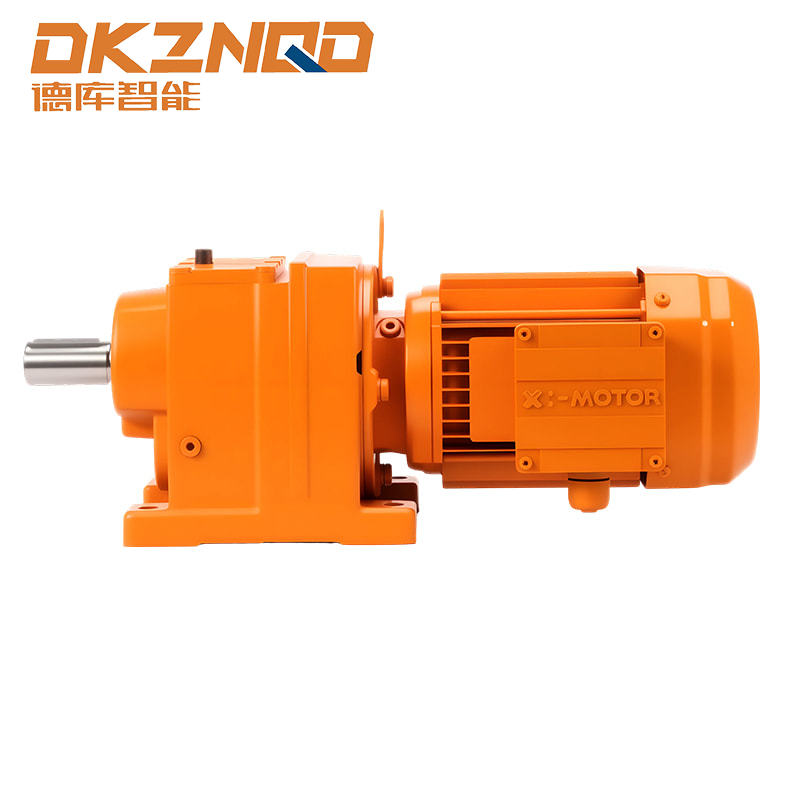 R Series Helical Geared Motor with Selectable StagesAvailable in 12 sizes with 1 to 3 stages, this unit covers power up to 160 kW and torque to 18,000 Nm. It suits applications requiring high speeds and reliable performance, with easy motor matching.View Product →
How to Choose the Right Double Helical Gear for Your Drive
When evaluating a double helical gearbox, start with the basic duty parameters, not with a drawing. Define the input power, input speed, required output speed, service factor, and the radial load on the output shaft. Then check the gearbox rating against these values. A common purchasing risk is over-sizing for the motor power but under-sizing for the shock load.
- Torque: Use the actual peak torque, not the average, if clutch or brake starts are frequent.
- Speed: At higher pitch-line velocities, the gear needs a finer accuracy class and a balanced pinion.
- Mounting position: The shaft forces and lubrication direction change with M1 to M6 orientations. A double helical gearbox with the wrong orientation can splash oil at the sealing area.
- Environment: If the machine works in a dusty or high-temperature area, the housing must support the required cooling and filtration.
For a custom drive, the manufacturer should provide calculated gear ratings, tooth contact data, and a detailed mounting drawing. This is a good moment to ask for a test report on a production unit, especially if the application involves high power or high speed.
Frequently Asked Questions
Q1: What is the basic difference between a double helical and herringbone gear?
The main visual difference is the gap. A double helical gear has a narrow central gap between the two opposite-handed sections; a herringbone gear has no gap and the teeth meet at a point. The gap in a double helical design allows the flanks to be ground with a wheel, which improves accuracy.
Q2: When should I choose a double helical gear over a single helical gear?
Choose double helical when the axial thrust from a single helical gear would create a bearing problem or require an oversized thrust bearing. They are also a good option when you need higher torque density, lower vibration, or a more compact housing for the same shaft centres.
Q3: Are double helical gears always more expensive?
Yes, the gear itself is almost always more expensive because cutting and grinding the opposite-handed sections takes more time and tooling. However, the system cost can be equal or lower when you remove the thrust bearing, reduce the housing size, and save on maintenance.
Q4: What accuracy should I specify for a high-speed double helical gear?
For pitch-line speeds above about 3000 m/min, an accuracy class of ISO 1328 class 5 or better is common. For lower speeds, class 6 with proper profile modifications can be acceptable. Always check the tooth contact pattern on the test stand.
 05 Jun,2025