

 ENG
ENG
 English
 русский
 Español
 Türk
Türk

Executive Summary
The ongoing transition toward electrified propulsion—primarily electric vehicles (EVs) and hybrid electric vehicles (HEVs)—is reshaping drivetrain architectures and, consequently, the requirements and design of key mechanical power‑transmission components such as the spiral bevel gearbox. This system‑level shift challenges traditional mechanical design paradigms and demands a re‑evaluation of gear mechanics, lubrication, noise behavior, manufacturing precision, integration strategy, and life‑cycle performance.
Industry Background and Application Importance
Electrification of Powertrains
The move from internal combustion engine (ICE)‑centric drivetrains to electrified powertrains is one of the defining industrial trends of the 2020s. Global EV production is forecast to increase significantly over the next decade, driven by regulatory pressure to reduce emissions and consumer demand for efficient mobility solutions. This trend alters how power is generated, distributed, and controlled in vehicles and industrial machines.
Traditional ICE powertrains typically require multi‑speed gearboxes or complex transmissions to keep engine speed in an optimal range across varying load conditions. In contrast, many EV designs adopt fixed‑ratio reduction gearboxes that simplify the drivetrain while accommodating high motor speeds and torque characteristics. This shift has direct implications for the architecture and requirements of gear systems.
Role of Spiral Bevel Gearbox in Powertrain Systems
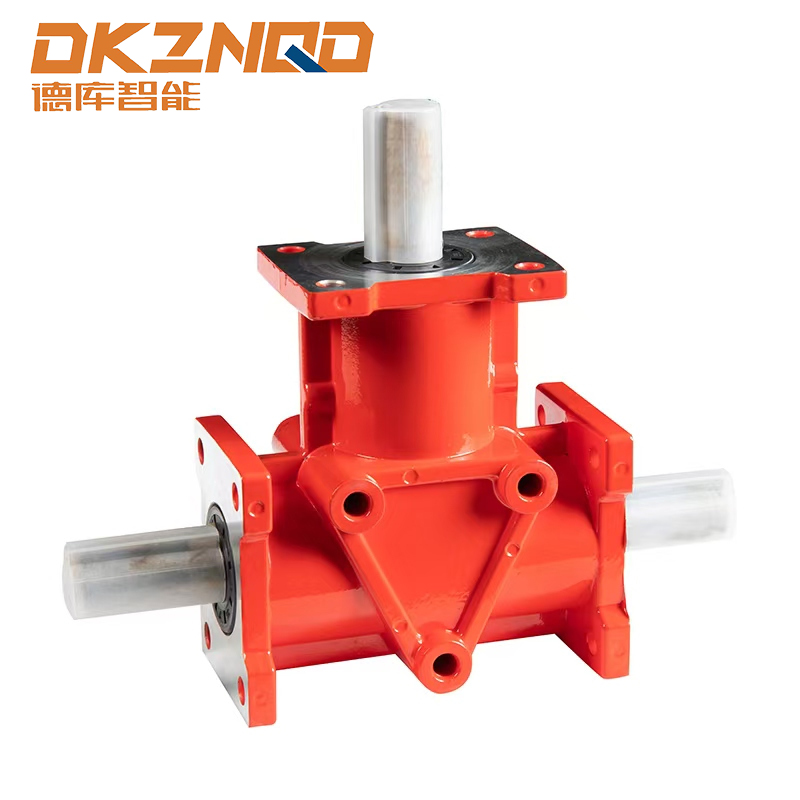
In conventional vehicles and many electrified drivetrains, spiral bevel gearbox systems (right‑angle gearboxes that transfer power between intersecting shafts) are central to enabling torque transfer at non‑parallel angles (usually 90°). These gearboxes are widely used in differential assemblies, final drive systems, and right‑angle drives in specialty industrial applications.
Spiral bevel gears are characterized by helical tooth geometry, which allows gradual tooth engagement over a larger contact area, reducing vibration and enabling smoother operation compared with straight bevel designs. ([Wikipedia][2])
In electrified vehicles, the function of spiral bevel gearbox systems shifts. They may be integrated into e‑axles, reduction gearboxes, or differential assemblies in HEVs, whereas in some pure battery EVs, alternative topologies (e.g., single‑speed reduction units) reduce or eliminate differential bevel gear sets, creating new design and supply chain dynamics. ([PW Consulting][3])
Core Technical Challenges in the Industry
1. Efficiency vs. NVH (Noise, Vibration, Harshness)
One of the primary performance challenges for gear systems in electrified powertrains is balancing transmission efficiency with acceptable NVH levels. High‑speed electric motors operate across a broader speed range than typical ICEs, often generating challenging vibration and tonal noise profiles. Even minor gear micro‑geometry deviations can produce undesirable noise characteristics in EVs because there is no engine noise to mask gear whine. ([MDPI][4])
Spiral bevel gears inherently exhibit smoother tooth engagement due to their helical profile, but electrified vehicle applications push design parameters further to suppress NVH while controlling frictional energy losses.
Technical Detail
- Sliding friction losses in gear mesh—primarily influenced by tooth geometry and lubrication dynamics—become significant contributors to efficiency loss and heat generation. ([Springer Nature][5])
- Reducing NVH often involves tooth profile modifications, tighter tolerances, and precision surface finishing—all of which influence cost and manufacturability.
2. High‑Speed Operation
Electric motors can operate at speeds that far exceed those typical of ICE outputs. Gear systems must therefore contend with high peripheral speeds on gear teeth. This introduces:
- Increased dynamic loading effects
- Elevated lubrication regime demands
- Stricter surface finish and profile precision requirements
For instance, small, high‑speed EV motors often operate in the 10,000–20,000 rpm range or higher, forcing gearbox designers to reconsider gear grade and surface treatment strategies traditionally used in ICE drivetrains. ([Gear Technology][6])
3. Material, Manufacturing, and Precision
Achieving high efficiency and low NVH in EV and HEV environments pressures traditional material choices and fabrication processes. To ensure acceptable performance:
- Material selection emphasizes high strength‑to‑weight ratios and fatigue resistance.
- Manufacturing precision must achieve tighter tolerances to minimize transmission error and vibration.
- Advanced surface finishing techniques and controlled heat treatment processes are essential to meet the stringent quality demands of electrified powertrains. ([Hewland Powertrain][7])
These demands strain manufacturing capacities and increase the importance of quality assurance methods such as in‑process inspection and post‑machining validation.
4. Integration with Power Electronics and Controls
Unlike mechanical gearboxes in ICE vehicles, electrified systems integrate closely with power electronics and control systems that influence torque distribution and propulsion efficiency. This integration requires:
- Intelligent torque distribution strategies
- Real‑time monitoring to support predictive maintenance
- Control systems capable of mitigating transient loads that affect gear life
Integrating mechanical components like spiral bevel gearbox systems with electronic controls and sensors expands design complexity and requires expertise across disciplines.
5. Lifecycle and Durability Requirements
EVs and HEVs often have different load profiles compared with ICE vehicles—frequent regenerative braking, variable torque demands, and extended life expectations necessitate robust reliability models. Gear systems must demonstrate:
- High contact fatigue resistance
- Consistent mesh performance over extended duty cycles
- Minimal wear and predictable failure modes
Design and testing methodologies must adapt to verify long‑term durability in these new usage paradigms.
Key Technical Paths & System‑Level Solution Approaches
To address the challenges outlined above, industry practitioners apply a variety of system‑level strategies that integrate mechanical, material, manufacturing, and control domains.
1. Gear Geometry Optimization
Optimizing the geometry of spiral bevel gears is vital for balancing the competing objectives of efficiency and NVH control. Typical system‑level approaches include:
- Refinement of spiral angle and tooth contact patterns to maximize load distribution while minimizing sliding friction.
- Application of tooth profile modifications to reduce transmission error.
- Use of high‑fidelity simulation tools to predict performance metrics such as efficiency loss and vibration behavior.
These geometric considerations are part of the broader system design that accounts for motor characteristics, load profiles, and assembly tolerances.
2. Precision Manufacturing and Surface Treatment
To meet rigorous quality requirements:
- Precision grinding and finishing methods are employed to achieve tight tolerances.
- Advanced surface treatments (e.g., polishing, controlled heat treatment, shot peening) improve fatigue resistance while reducing noise potentials. ([Hewland Powertrain][7])
Manufacturing strategies are paired with inspection systems that monitor tooth geometry and surface integrity to ensure consistent quality across production volumes.
3. Integrated Lubrication Management
Electrified powertrains often operate with gearboxes that are sealed or use specialized lubricants to accommodate high speeds and thermal loads. System‑level solutions include:
- High‑performance synthetic lubricants that maintain viscosity across wide temperature ranges.
- Lubrication channels and delivery systems that optimize film thickness and reduce boundary friction.
Proper lubrication management contributes directly to efficiency gains and lifespan extension.
4. Digital Models and Multi‑Domain Simulation
Model‑based design and simulation frameworks play a critical role in system optimization. These include:
- Dynamic simulation models capturing coupled mechanical and control system behavior
- Elasto‑hydrodynamic lubrication models for predicting film formation and friction
- Vibration and NVH analysis integrated with control strategy simulations
Multi‑domain models allow engineers to evaluate design trade‑offs early in the development process and reduce costly iteration cycles.
5. Controls‑Driven Load Management
In hybrid systems where multiple torque sources coexist (electric motor and ICE), advanced controls manage torque split, mitigation of peak loads, and regenerative braking interactions. These controls influence the loads experienced by the spiral bevel gearbox and therefore factor into design safety margins and service life predictions.
Typical Application Scenarios and System‑Level Architecture Analysis
1. Electric Vehicle (EV) E‑Axle Systems
In many modern EV architectures, the propulsion system consists of:
- One or more electric motors
- A fixed‑ratio reduction gearbox
- Power electronics and control units
In some designs, the reduction gearbox directly interfaces with the driveline without a mechanical differential, using in‑wheel motors or electronically controlled torque distribution. Where final‑drive gear sets are present, spiral bevel gearbox systems may be used to transmit power at right angles and to distribute torque between left and right wheels.
System Architecture Considerations:
| Subsystem | Key Function | Spiral Bevel Gearbox Role |
|---|---|---|
| Electric Motor | Generate torque at high rpm | Drives input to gearbox |
| Reduction Gear | Lower motor speed to wheel‑appropriate speed | May incorporate spiral bevel geometry |
| Differential | Distribute torque to wheels | Spiral bevel gears often pair in differential assemblies |
| Control Electronics | Manage torque commands | Impacts load dynamics on gearbox |
This architecture emphasizes that the gearbox’s performance is inseparable from control and motor characteristics, demanding integrated system design.
2. Hybrid Electric Vehicle (HEV) Transmissions
In hybrid architectures, multiple power sources interact through transmission systems, often requiring:
- Power‑split gear systems
- Continuously variable transmissions (CVTs)
- Multi‑mode gearsets
Spiral bevel gears may appear in differential elements but are typically downstream of complex power‑split mechanisms. In such systems, gearbox design must accommodate variable torque direction and magnitude from both the electric motor and the ICE, which places particular demands on load accommodation and fatigue resistance.
3. Off‑Highway and Industrial Electrified Machines
Electrified heavy machines (construction, agriculture, mining) use electric or hybrid powertrains and often require spiral bevel gearbox systems in:
- Final drives of mobile platforms
- Auxiliary drives in hybrid architectures
- Right‑angle gear applications in machine subsystems
These applications share requirements for high torque capacity, robustness under shock loads, and predictable maintenance characteristics.
Impact of Technology Solutions on System Performance, Reliability, Efficiency, and Maintenance
Transmission Efficiency
High transmission efficiency directly affects the energy efficiency of electrified powertrains. System strategies that reduce frictional losses—such as optimized gear geometry and high‑performance lubrication—translate into improved range for EVs and better fuel economy for HEVs.
NVH Performance
Because EVs lack the acoustic masking provided by ICE noise, gear NVH performance becomes a critical system attribute. Precision gear surface finishes and careful assembly practices reduce vibration and noise transmission to the vehicle cabin or machine structure.
Reliability and Lifetime Sustainability
System designs that incorporate advanced material treatments and life prediction models ensure that gearboxes can withstand demanding duty cycles and reduce unexpected service events. Reliable gearboxes also reduce total cost of ownership, a significant concern for fleet operators.
Maintenance and Diagnostics
Integrated monitoring systems that feed vibration, load, and temperature data into maintenance planning allow predictive action and reduce unplanned downtime. System architectures that facilitate easy replacement of gearbox units or components further improve serviceability.
Industry Trends and Future Technical Directions
Lightweight Materials and Additive Manufacturing
Lightweight construction—using high‑strength alloys or engineered composites—can reduce inertia and improve overall system efficiency without compromising load capacity. Additive manufacturing introduces new possibilities for complex geometries and integrated features that were previously unattainable.
Electromechanical Integration
Advanced architectures are integrating actuation and sensing directly into mechanical systems. For gearboxes, this may include embedded sensors for real‑time health monitoring and adaptive lubrication control.
Software‑Driven Design and Model‑Based Systems Engineering
Model‑based systems engineering (MBSE) approaches allow multi‑discipline teams to evaluate interactions between mechanical design, electrical control, lubrication, and duty cycle behavior earlier in development. Such approaches reduce iteration cycles and help optimize system performance.
Standardization and Modularization
Modular spiral bevel gearbox designs that can adapt to varied powertrain configurations (single‑motor EV, dual‑motor systems, hybrid transmissions) help streamline engineering and procurement processes while supporting scalability.
Sustainability and Lifecycle Considerations
Lifecycle assessment (LCA) frameworks are increasingly applied to gearbox development to ensure that materials, manufacturing, and end‑of‑life disposal align with environmental sustainability goals.
Summary: System‑Level Value and Engineering Significance
The transition toward electrified transportation and industrial machines is reshaping the role of spiral bevel gearbox design. Rather than focusing on isolated mechanical characteristics, engineers must adopt a systems engineering perspective that integrates gear design with motor behavior, controls, manufacturing precision, and lifecycle dynamics.
Key takeaways include:
- Efficiency and NVH: Spiral bevel gear systems must balance high efficiency with minimized noise and vibration in electrified applications.
- Multi‑Domain Integration: Gear mechanics, materials, manufacturing, and electronics must be co‑optimized.
- System Performance: Gear design choices directly impact range, efficiency, reliability, and maintenance outcomes.
- Future Trends: Lightweight materials, embedded diagnostics, and modular design approaches will shape next‑generation gearbox development.
Frequently Asked Questions
1. How do EV powertrains change the need for spiral bevel gearboxes?
EV powertrains often simplify traditional multi‑speed transmissions in favor of single‑ratio reduction gearboxes. While this can reduce the reliance on differential gear sets, spiral bevel gearboxes remain important in final drive and torque distribution roles where power must be redirected. ([PW Consulting][3])
2. Why is NVH more critical for EV gear systems?
Because EVs lack the masking acoustic noise of an internal combustion engine, gear noise and vibration are more noticeable to occupants, necessitating gear design approaches that prioritize smooth engagement and surface quality. ([MDPI][4])
3. What manufacturing advances support improved spiral bevel gearbox performance?
High‑precision grinding, controlled heat treatment, and advanced surface finishing help achieve tight tolerances and reduce transmission error, which is critical for NVH and efficiency performance. ([Hewland Powertrain][7])
4. How does system integration affect gearbox design?
Integrated design models that include motor dynamics, control strategies, and gearbox mechanics allow engineers to balance trade‑offs early in development, improving efficiency and reliability.
5. What future technologies will influence gearbox development?
Emerging areas include lightweight materials, embedded sensing and diagnostics, digital twin simulations, and modular architectural approaches for different electrified powertrain configurations.
References
- PMarketResearch, Worldwide Spiral Bevel Gearbox Market Research Report 2025, Forecast to 2031. ([PW Consulting][8])
- Verified Market Reports, Spiral Bevel Gear Market Size, Industry Insights & Forecast 2033. ([Verified Market Reports][1])
- MDPI, Surface Waviness of EV Gears and NVH Effects—A Comprehensive Review. ([MDPI][4])
- ZHY Gear, The Role of Bevel Gear in Electric Vehicle Powertrains. ([zhygear.com][9])
 05 Jun,2025