

 ENG
ENG
 English
 русский
 Español
 Türk
Türk

Introduction
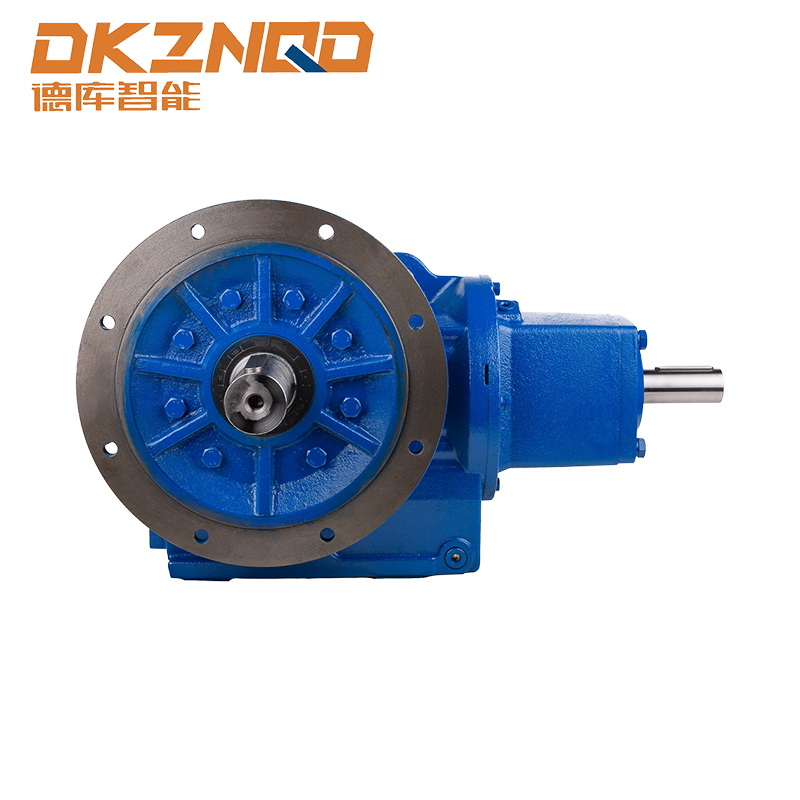
Modern industrial automation and motion control systems place increasingly stringent demands on mechanical power transmission components. Among these, K series helical bevel gear motors are widely used where compact footprint, torque density, and precision are required across industries such as material handling, robotics, packaging, and automated guided vehicles (AGVs). Material selection is a core design factor with direct influence on durability, noise, efficiency, thermal behavior, manufacturability, and total lifecycle cost.
Industry Background and Application Importance
Industrial Context for Gear Motors
Helical bevel gear motors combine the benefits of helical gearing — efficient torque transmission and smoother meshing — with bevel gear architectures that enable changes in shaft direction. Because they support right‑angle power transmission with reduced vibration, these gear motors are integral in:
- Automated material handling systems
- Robotic end‑effectors and joint actuators
- Conveyor and sorting systems
- Packaging machinery
- Automotive assembly lines
- AGVs and autonomous mobile robots
Across these applications, performance requirements center on load capacity, torque consistency, lifecycle reliability, noise reduction, energy efficiency, and maintenance predictability.
Why Material Innovation Matters
Traditional gear motor designs are constrained by the performance limits of the materials used for gears, shafts, housings, and lubrication systems. As systems evolve to require higher torque, tighter integration, and longer service intervals, materials must meet conflicting demands:
- High strength without brittle failure
- Wear resistance under varying lubrication regimes
- Thermal stability under prolonged operation
- Low noise and vibration transmission
- Manufacturability and cost efficiency
Advances in metallurgy, composites, and surface engineering offer pathways to mitigate these constraints while enhancing system reliability and performance.
Core Technical Challenges in the Industry
Before exploring material advancements, it is important to understand the core technical challenges in helical bevel gear motor design and deployment.
1. Torque Load and Fatigue Resistance
Gear teeth must withstand repeated cyclic loads. Fatigue failure — micro‑crack initiation and propagation — is a primary failure mode in gears subjected to high torque over time.
- High safety factors drive mass increase, reducing compactness
- Balancing toughness with hardness is critical
- Traditional hardened steels can still experience pitting or micro‑fracturing
2. Efficiency and Energy Losses
Helical bevel gearing is more efficient than worm drives, but frictional losses in gear contacts and bearings still impact overall system efficiency.
- Inefficient gear surfaces increase power consumption
- Heat generation alters lubrication performance
- Losses affect battery‑powered systems’ range or runtime
3. Noise and Vibration
Gear meshing dynamics produce noise and vibration that affect system precision and operator comfort.
- Surface roughness and micro‑geometry errors increase vibration
- Flexible materials reduce damping but can compromise load capacity
4. Wear and Lubrication Interaction
Wear mechanisms — adhesive, abrasive, and erosive — degrade gear surfaces and bearings.
- Lubricant breakdown at high temperatures accelerates wear
- Traditional steel‑on‑steel contacts require frequent lubrication
5. Thermal Management
Continuous or heavy duty operation raises component temperatures.
- Thermal expansion changes gear clearance
- Elevated temperatures accelerate material degradation
These challenges are interdependent. Solutions that solve one aspect may adversely impact another. Effective material selection requires a holistic understanding of system‑level dynamics.
Key Material Technology Paths
1. Advanced Metallurgical Alloys
Recent developments in alloy design for gear steels have yielded materials with improved strength, toughness, and wear resistance without excessive weight or heat treatment complexity.
High‑Strength, High‑Toughness Alloy Steels
Modern alloy steels incorporate controlled quantities of elements such as chromium, molybdenum, vanadium, and nickel to:
- Promote fine microstructure
- Increase hardenability
- Improve fatigue strength
These microalloyed steels provide a balance of surface hardness for wear resistance and core toughness for impact loading, making them suitable for gear teeth subjected to fluctuating torque loads.
Case‑Carburizing Materials
Case‑carburizing alloys, through controlled carbon diffusion on gear tooth surfaces, deliver a hard, wear‑resistant case while maintaining a ductile core.
The benefits include:
- Increased surface durability
- Resistance to pitting and scuffing
- Extended service life under mixed lubrication
2. Composite Materials and Fiber‑Reinforced Polymers
Composites — particularly fiber‑reinforced polymers — are entering gear motor subsystems where stiffness‑to‑weight ratio and damping are priorities.
Hybrid Composite Housings
Composite housings offer:
- Reduced mass for mobile applications
- Improved vibration damping
- Resistance to environmental corrosion
However, due to lower thermal conductivity compared to metals, composites require thoughtful thermal design for heat dissipation.
Polymeric Gear Components
In lighter‑load segments or where noise reduction is critical, polymeric gears provide low friction and noise.
- Low coefficient of friction
- Self‑lubricating behavior in some formulations
- Weight and cost savings in specific use cases
Polymer gear applications must balance load limits and creep characteristics under sustained loading.
3. Surface Engineering and Coatings
Surface engineering techniques, such as nitriding, carburizing, and specialized coatings, enhance contact durability without altering the bulk properties of components.
Nitriding and Ion Implantation
Surface hardening through nitriding increases surface fatigue strength and wear resistance:
- Improves resistance to micro‑crack initiation
- Enhances surface hardness without distortion
Ion implantation can modify surface chemistry to reduce friction.
Advanced Coatings
Thin, engineered coatings — such as diamond‑like carbon (DLC) and advanced ceramics — reduce friction and protect against adhesive wear.
- Lower friction improves efficiency
- Coatings act as sacrificial layers, extending base material life
4. Bearing Materials and Lubrication Integration
Bearing performance is integral to gear motor longevity and smooth operation.
Ceramic Bearings
Ceramic rolling elements provide:
- Higher hardness and wear resistance
- Lower friction than steel bearings
- Reduced sensitivity to lubrication breakdown
When paired with compatible synthetic lubricants, ceramic bearings increase reliability and reduce maintenance intervals.
Self‑Lubricating Materials
Materials that embed solid lubricants (e.g., graphite, PTFE) can reduce external lubrication dependence in specific subsystem components.
System‑Level Considerations: Material Selection Impact
Material choices must be evaluated through a system‑level lens. The following dimensions illustrate how material innovations propagate through gear motor performance and system architecture.
1. Performance and Load Capacity
Higher strength and fatigue‑resistant materials directly expand torque capacity.
| Material Technology | Primary Benefit | System Impact |
|---|---|---|
| Alloy carburized steel | Surface wear resistance | Extended life under high torque |
| Composite housing | Weight reduction | Better dynamic response |
| Ceramic bearings | Low friction | Improved efficiency |
The table above summarizes how specific material technologies improve load capacity and overall performance when integrated with optimized gear geometry and lubrication strategy.
2. Efficiency and Energy Consumption
Lower friction surfaces and advanced bearing materials reduce mechanical losses.
- Surface coatings reduce meshing friction
- Ceramic bearings improve rolling efficiency
- Polymer gear pairs reduce noise and friction in appropriate load domains
For systems where energy consumption is critical — such as battery‑powered robotics — material decisions can impact operational range.
3. Noise, Vibration, and Harshness (NVH)
Noise reduction arises from:
- Compliant materials that damp vibration
- Precision‑finished surfaces that minimize asperity interaction
- Proper material pairing that avoids resonance amplification
Composite housings and polymer components contribute to a quieter mechanical signature when system‑level design supports their use.
4. Reliability and Maintenance
Material enhancements contribute to:
- Longer mean time between failures (MTBF)
- Predictable wear patterns
- Reduced lubricant change frequency
Materials with high wear resistance and integrated lubrication properties reduce unplanned downtime, a key performance metric in automated manufacturing environments.
5. Thermal Performance
Thermal properties of materials influence:
- Expansion behavior
- Heat dissipation characteristics
- Lubrication performance at elevated temperatures
Material selection must consider the full thermal profile over operational cycles to ensure dimensional stability and consistent lubrication film formation.
Typical Application Scenarios and System Architecture
1. High‑Duty Conveyor Systems
In conveyor applications where loads vary with throughput, materials that resist wear and fatigue extend uptime.
- Hardened gear surfaces handle cyclic loads
- Coated surfaces reduce frictional losses
- Robust bearings withstand shock loads
Advanced materials allow these systems to scale with line speed demands without compromising service intervals.
2. Robotics and Precision Motion Systems
Robotic joints and precision actuators require smooth motion, low backlash, and high repeatability.
- Composite housings deliver stiffness with low mass
- High‑tolerance metal gear materials maintain geometric precision
- Low friction surfaces support accurate torque transmission
When material choices minimize backlash growth over time, system calibration intervals are extended.
3. Autonomous Mobile Robots
AMRs and AGVs require gear motors with high efficiency, low noise, and compact packaging.
- High‑efficiency gear surfaces conserve onboard energy
- Lightweight materials support agility
- Wear‑resistant components reduce maintenance overhead
In such systems, material selection is aligned with battery life and environmental conditions.
4. Packaging and Sorting Machinery
These systems demand high throughput and reliability under variable loads.
- Surface‑hardened gears reduce downtime
- Bearings resistant to contamination maintain running accuracy
- Material choices that tolerate intermittent operation are preferred
Material strategies in this domain balance robustness with cost efficiency.
Impact on System Performance, Reliability, and Operational Efficiency
Performance Metrics Enhancements
- Torque density improvements: stronger materials and optimized heat treatments increase usable torque for the same volume
- Efficiency gains: friction‑reducing surfaces and advanced bearings lower energy losses
- NVH reduction: material compliance and precision surfaces reduce noise and vibration signatures
Reliability and Lifecycle Benefits
- Extended wear life: surface‑engineered materials resist fatigue and pitting
- Maintenance reduction: self‑lubricating properties and long‑life coatings lower intervention frequency
- Environmental resilience: corrosion‑resistant materials perform reliably in harsh conditions
Operational Efficiency
- Lower downtime leads to higher throughput
- Predictable maintenance supports just‑in‑time service planning
- Energy savings reduce total cost of ownership
From a system engineering standpoint, these benefits are not isolated but cumulative, as improvements in one dimension reinforce performance in others.
Industry Development Trends and Future Directions
1. Integrated Sensing Materials
Materials that integrate sensing elements (e.g., embedded strain gauges) enable real‑time health monitoring without adding external sensors. This trend supports predictive maintenance and adaptive control.
2. Additive Manufacturing‑Compatible Alloys
As additive manufacturing matures for metals, gear and housing materials optimized for layer‑by‑layer fabrication will enable complex topologies and localized material property control.
3. Nano‑Engineered Surface Treatments
Nanostructured coatings promise further friction reduction and wear resistance with minimal thickness, minimizing geometric distortion and preserving precision.
4. Smart Composite Hybrids
Combining fibers and smart materials that adapt stiffness or damping dynamically could tune gear motor responses to operating conditions.
5. Sustainable and Recyclable Materials
Environmental regulations and corporate sustainability goals will drive adoption of materials that are recyclable, have lower embodied energy, and extend service life.
These trends will shape the next generation of industrial gear motors, enabling more resilient, efficient, and application‑tailored systems.
Summary: System‑Level Value and Engineering Significance
Advances in material science — from high‑performance alloys and engineered coatings to composites and advanced bearings — are materially reshaping the capabilities of helical bevel gear motor systems. When evaluated through a systems engineering lens, these material improvements contribute to:
- Higher torque capacity and mechanical robustness
- Lower energy losses and improved efficiency
- Reduced noise and vibration for precision systems
- Enhanced reliability and reduced lifecycle cost
- Better thermal management and environmental resilience
The value realized is not confined to individual components but extends throughout the mechanical, electrical, and operational architecture of industrial systems. Selecting and applying appropriate materials requires a multidisciplinary perspective that balances structural demands, environmental conditions, system dynamics, and service objectives.
For technical decision makers, understanding the interplay between materials and system performance is essential to designing reliable, efficient, and future‑ready motion solutions.
Frequently Asked Questions (FAQ)
Q1: How do material innovations impact gear motor maintenance intervals?
A: Material enhancements such as surface hardening, wear‑resistant coatings, and advanced bearings reduce surface degradation and friction. These changes slow wear progression, extending the time between scheduled maintenance and lowering lifecycle cost.
Q2: Can polymer gears be used in high‑load applications?
A: Polymer gears are suitable in lower to moderate load regimes where noise reduction and low friction are prioritized. For high‑load industrial applications, metal gears with advanced alloys and surface treatments remain preferable.
Q3: What role do advanced bearings play in system efficiency?
A: Bearings with lower friction coefficients (e.g., ceramic rolling elements) reduce rotational losses, leading to improved overall efficiency, reduced heat generation, and smoother motion response.
Q4: Are new material technologies compatible with existing gear motor housings and designs?
A: Many material innovations can be integrated into existing architectures with appropriate design modifications. System‑level evaluation is necessary to ensure compatibility, especially regarding thermal expansion and lubrication interactions.
Q5: How do materials contribute to noise reduction in gear motors?
A: Materials with damping properties (e.g., composites), precision surface finishes, and coatings that reduce asperity interaction all help to lower noise and vibration in gear systems.
References
- Journals on gear material fatigue and surface engineering in motion systems – Comprehensive industry studies on alloy performance and surface treatment impacts.
- International Society of Automation (ISA) publications on efficiency in industrial drives – Analysis of energy losses and material factors affecting mechanical transmissions.
- Proceedings of industrial automation conferences – Case studies on material innovations in gear motors for robotics and AGV applications.
 05 Jun,2025