

 ENG
ENG
 English
 русский
 Español
 Türk
Türk

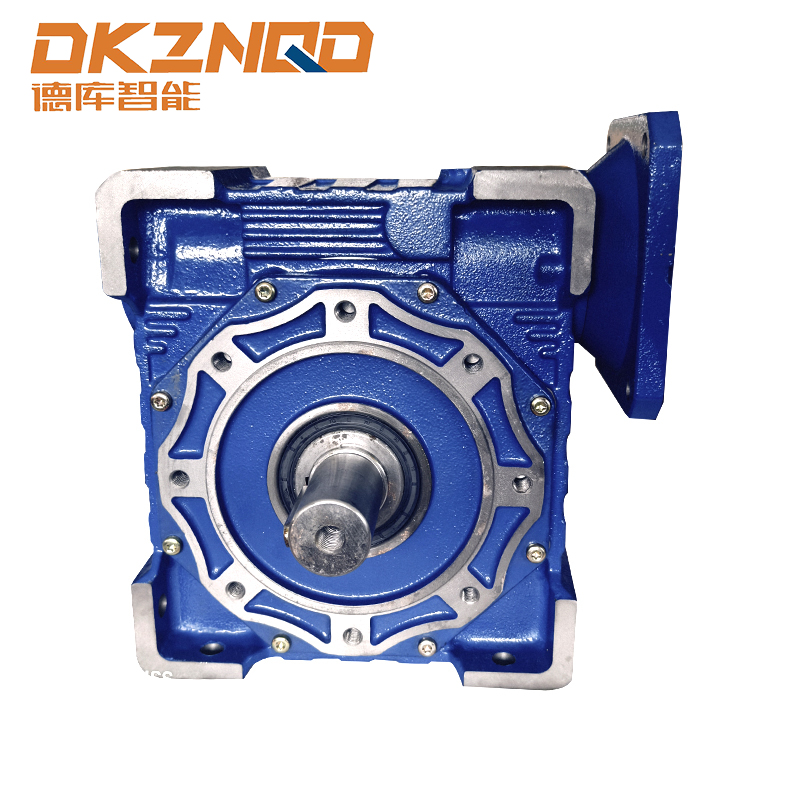
In modern automation and industrial machinery, gear reduction solutions are critical for achieving precise motion control, high torque transmission, and reliable performance. Among these solutions, the rv worm gear reducer and cycloidal gearboxes are frequently considered for precision applications.
Overview of RV Worm Gear Reducers
An rv worm gear reducer is a compact mechanical device designed to reduce rotational speed and increase torque. It typically consists of a worm, a worm wheel, and a housing, providing smooth and continuous power transmission. The design of the worm and wheel allows for high reduction ratios in a small footprint, which is a key reason why rv worm gear reducers are widely used in robotics, automation equipment, and industrial machinery.
Key features of rv worm gear reducers include:
- High reduction ratios in a compact design
- Self-locking capability in certain models, preventing reverse motion
- Smooth and quiet operation, suitable for sensitive machinery
- Durable construction, often with high-quality steel gears and precision-machined surfaces
These characteristics make the rv worm gear reducer a popular choice in applications where space is limited and precise motion control is required.
Overview of Cycloidal Gearboxes
Cycloidal gearboxes are another type of precision gear system that utilizes cycloidal motion to transfer torque. The design involves an input shaft, a cycloidal disc, and output rollers or pins, which together provide high torque capacity and shock load resistance. Cycloidal gearboxes are often used in applications where high precision, low backlash, and durability under heavy loads are essential.
Key features of cycloidal gearboxes include:
- Extremely low backlash, typically lower than most worm gear designs
- High torque density, allowing compact designs with large output torque
- Robust shock load handling, suitable for industrial automation
- Long service life with proper lubrication and maintenance
Cycloidal gearboxes have become standard in robotics, CNC machines, and high-precision automation due to their ability to maintain accuracy under demanding operational conditions.
Precision and Backlash Comparison
One of the most important factors in precision applications is backlash, which directly affects positioning accuracy.
- RV worm gear reducers generally have moderate backlash, which can be minimized with high-precision manufacturing and proper assembly. Some models achieve minimal backlash suitable for general automation, but they may not match the performance of cycloidal gearboxes in ultra-high-precision environments.
- Cycloidal gearboxes are known for extremely low backlash, often measured in arcminutes, which is critical for applications requiring highly accurate positioning and repeatability, such as robotic arms or CNC machinery.
In summary, if precision positioning is the primary concern, cycloidal gearboxes often outperform rv worm gear reducers, though modern high-quality rv worm gear reducers can still achieve acceptable precision for many industrial tasks.
Torque Capacity and Load Handling
Torque transmission and load-handling capability are essential considerations in selecting a gear reducer.
- RV worm gear reducers excel in providing high torque at reduced speeds, making them suitable for applications like conveyor systems, automated assembly lines, and packaging machinery. Their compact design allows them to fit in constrained spaces without sacrificing torque.
- Cycloidal gearboxes offer higher torque density and better shock load resistance compared to worm gear reducers. Their unique cycloidal mechanism distributes forces across multiple contact points, reducing stress on individual components and allowing them to handle sudden torque spikes effectively.
While both options are capable of transmitting significant torque, cycloidal gearboxes are often preferred in applications with high dynamic loads or where torque fluctuations are frequent.
Efficiency and Energy Consumption
Efficiency is another critical factor, particularly in continuous operation environments.
- RV worm gear reducers typically have lower efficiency compared to cycloidal gearboxes due to the sliding contact between the worm and the wheel. This results in more heat generation and slightly higher energy consumption, especially at high reduction ratios.
- Cycloidal gearboxes generally offer higher efficiency because their rolling contact reduces friction losses. This translates to lower energy consumption, reduced heat, and longer operational life in demanding industrial applications.
For energy-sensitive operations or applications where continuous duty is required, cycloidal gearboxes may offer tangible advantages over rv worm gear reducers.
Noise and Vibration
Operational noise and vibration can impact both machine performance and operator comfort.
- RV worm gear reducers are known for quiet and smooth operation due to the continuous meshing of the worm and gear teeth. They are well-suited for applications where noise reduction is important.
- Cycloidal gearboxes can generate more vibration under certain load conditions, though modern designs often include damping mechanisms to reduce noise.
For environments where minimal noise is critical, rv worm gear reducers may have a slight advantage.
Size and Installation Considerations
Both rv worm gear reducers and cycloidal gearboxes are designed for compactness, but their specific dimensions and installation requirements vary.
- RV worm gear reducers are highly compact in terms of footprint and can often be installed in confined spaces without extensive structural modifications. They are versatile in orientation, allowing horizontal, vertical, or angled installations.
- Cycloidal gearboxes are slightly larger in volume relative to their torque output but provide modularity and mounting flexibility. They often include flange or foot mounting options, making them adaptable for various machinery configurations.
Engineers should evaluate available installation space, orientation, and required reduction ratios when choosing between these gear types.
Maintenance and Durability
Durability and ease of maintenance are important for minimizing downtime and operational costs.
- RV worm gear reducers require periodic lubrication and inspection of wear surfaces. Their simpler mechanical design generally allows straightforward maintenance procedures. Proper care can extend service life significantly.
- Cycloidal gearboxes also require lubrication and occasional inspection, but their multiple contact points and rolling elements distribute wear more evenly. As a result, they often exhibit longer service life under heavy load conditions.
In high-duty cycle applications, cycloidal gearboxes may provide better longevity, while rv worm gear reducers are still suitable for many standard industrial uses.
Cost Considerations
Cost is always a factor in gear reducer selection.
- RV worm gear reducers are generally more cost-effective than cycloidal gearboxes for equivalent torque output, particularly in applications that do not require ultra-low backlash or extreme precision.
- Cycloidal gearboxes are typically more expensive due to their complex design and higher manufacturing tolerances. However, the investment can be justified in applications requiring precision, high torque, or high duty cycles.
Buyers should balance initial cost with long-term performance requirements to determine the most suitable solution.
Application Examples
RV worm gear reducers are commonly used in:
- Conveyor systems and material handling equipment
- Packaging machines
- Small robotics requiring moderate precision
- Automated assembly lines
Cycloidal gearboxes are often preferred in:
- Industrial robots and robotic arms
- CNC machines and precision milling equipment
- High-torque automation systems with frequent load changes
- Applications demanding ultra-low backlash and high repeatability
These examples illustrate how the specific strengths of each gearbox type influence their practical applications.
Summary Comparison Table
| Feature | RV Worm Gear Reducer | Cycloidal Gearbox |
|---|---|---|
| Backlash | Moderate, acceptable for general precision | Extremely low, suitable for high-precision |
| Torque Capacity | High, compact design | Higher torque density, handles shock loads |
| Efficiency | Moderate, some energy loss | Higher efficiency, lower friction loss |
| Noise | Quiet and smooth | Moderate, may require damping |
| Size | Compact footprint | Slightly larger, modular |
| Maintenance | Simple, requires lubrication | Longer life, even wear distribution |
| Cost | More cost-effective | Higher cost, justified by precision and durability |
 05 Jun,2025