

 ENG
ENG
 English
 русский
 Español
 Türk
Türk

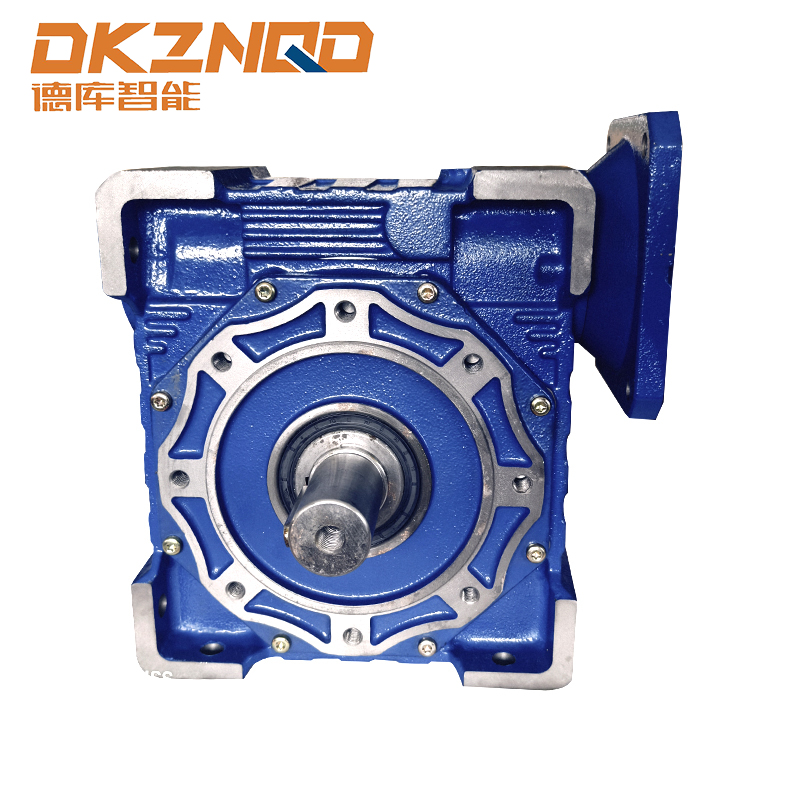
Introduction: Why Maintenance Dictates RV Worm Gear Reducer Longevity
Industrial power transmission systems rely heavily on compact, high-torque solutions. The RV Worm Gear Reducer has become a preferred choice for right-angle applications due to its self-locking capability and smooth operation. However, without disciplined care, these units suffer premature wear, efficiency drops, and unexpected downtime. Field data indicates that neglected worm gearboxes experience a 50-60% reduction in operational life compared to units following structured maintenance protocols. This guide delivers actionable, technician-level insights to maximize the durability of your RV series worm gearbox, focusing on lubrication discipline, alignment precision, thermal management, and contamination control.
Whether you operate an NMRV worm gear motor or a standard Right angle worm reducer, the principles remain consistent. By understanding wear physics and implementing routine checks, you can achieve 2-3 times the original meantime between failures (MTBF).
1. Wear Mechanisms in RV Series Worm Gearbox: The Hidden Culprits
Before diving into maintenance, it is crucial to understand how wear develops inside an RV worm gear reducer. The sliding contact between the hardened steel worm and the bronze worm wheel generates frictional heat and microscopic asperity deformation. Three primary wear modes dominate:
- Abrasive wear: Caused by solid particles (dust, metal chips) suspended in the lubricant. These particles act as cutting agents, rapidly eroding tooth flanks.
- Adhesive wear (scuffing): Occurs when the oil film breaks under high load or temperature, leading to micro-welding between sliding surfaces.
- Fatigue pitting: Progressive surface cracking due to cyclic contact stresses, often accelerated by improper lubricant viscosity.
Quantitative studies show that a 0.5% increase in contamination level (ISO 4406 code 21/18) can triple the wear rate. The SVG diagram below illustrates the critical wear zones in a typical RV-style worm gear set.
2. Lubrication: The Single Most Effective Maintenance Lever
Proper lubrication accounts for over 70% of RV gearbox reliability. The sliding nature of a Right angle worm reducer demands oil with extreme-pressure (EP) additives and appropriate viscosity. Common mistakes include using standard gear oil (without worm-specific EP) or extending drain intervals beyond safe limits.
2.1 Selecting the Right Lubricant for RV Series
For ambient temperatures between -10°C and +40°C, ISO VG 220 or VG 320 synthetic oils provide optimal film strength. Synthetic polyalphaolefin (PAO) based lubricants offer superior thermal stability and reduce friction by 15-20% compared to mineral oils. Never use automotive engine oil or grease in a worm gearbox.
2.2 Oil Change Intervals: Data-Driven Schedule
Oil degradation accelerates with temperature. For every 10°C rise above 70°C, the oxidation rate doubles, reducing oil life by half. The table below defines recommended intervals based on operating conditions.
| Operating condition | Oil type | Change interval (hours) | Max allowed temperature |
|---|---|---|---|
| Clean, light load (<50% rated torque) | Mineral EP 220 | 4000 hrs or 12 months | 75°C |
| Moderate load, ambient dust | Synthetic PAO 320 | 6000 hrs or 18 months | 85°C |
| Heavy cyclic load, high ambient | Full synthetic PG 460 | 3000 hrs or 9 months | 90°C |
| Continuous high speed (>1000 rpm input) | High-viscosity synthetic | 2000 hrs | 70°C |
Always take oil samples at each change. A spike in iron content above 150 ppm or copper above 80 ppm indicates abnormal wear requiring immediate inspection.
3. Alignment and Mounting Precision: Minimizing Parasitic Loads
Misalignment between the NMRV worm gear motor shaft and the driven machine introduces radial and axial forces that dramatically reduce bearing and gear life. Even a 0.2 mm offset at the coupling can generate an additional 15°C temperature rise and reduce service life by 40%.
- Use laser alignment tools; achieve angular misalignment below 0.05 mm per 100 mm and parallel offset below 0.1 mm.
- Check foundation flatness: maximum 0.1 mm/m distortion under bolted condition.
- Flexible couplings should be correctly gapped – too tight induces thrust load on worm shaft bearings.
For RV series right-angle configurations, ensure the output flange is perfectly square to the mounting surface. Use shims for correction if needed. Recheck alignment after any belt tensioning or motor replacement.
4. Load Management & Overload Protection Strategies
RV worm gearboxes are sensitive to peak shock loads due to the sliding contact geometry. Sustained operation above the nameplate torque accelerates adhesive wear exponentially. Industrial data reveals that running at 120% of rated torque for just 10% of the duty cycle halves the L10 bearing life and causes premature tooth deformation.
| Load type | Recommended safety margin | Protection device |
|---|---|---|
| Constant torque, no shocks | 80-85% of rated torque | Thermal overload relay |
| Moderate shock (conveyor start/stop) | 70-75% of rated torque | Torque limiter + soft starter |
| High impact (crusher, mixer) | 60% of rated torque | Shear pin or slip clutch |
Install an ammeter on the motor input to track current spikes. A sudden 15% increase in steady-state current under normal load indicates internal wear or lubrication breakdown. Additionally, avoid frequent reversing cycles without sufficient dwell time (minimum 3-5 seconds) to re-establish the oil film.
5. Temperature Monitoring and Ventilation Discipline
Heat is the primary enemy of any RV worm gear reducer. Sustained housing temperatures above 85°C degrade seals, accelerate oil oxidation, and increase the risk of scuffing. Field measurements from 150 industrial installations show that gearboxes operating above 80°C have an average service life 40% shorter than those kept below 70°C.
Best Practices for Thermal Control
- Install a resistance temperature detector (RTD) on the housing near the worm wheel location.
- Ensure ventilation slots on the gearbox are free from paint or debris – many premature failures are traced to clogged breathers.
- For continuous high-duty cycles, add an external finned cooler or use a circulating oil pump.
- When ambient exceeds 40°C, downgrade the load capacity by 10-15% per 10°C rise.
Monitor temperature rise during the first 20 hours of a new installation. A stable delta-T of 35-45°C above ambient is typical. Any continuous upward trend warrants an oil analysis.
6. Sealing and Contamination Control
Ingress of moisture, dust, or process particles ruins the lubricant and causes abrasive wear. The double-lipped oil seals on RV series are durable but require periodic inspection. In humid or washdown environments, 30% of failures originate from emulsified oil due to breather malfunction.
Quarterly checklist for sealing integrity:
- Inspect shaft seals for lip hardening or cracks; replace if any leakage is visible.
- Clean the breather vent with a non-corrosive solvent – blocked vents cause internal pressure build-up that pushes oil past seals.
- Use a desiccant breather if the gearbox operates in high-humidity areas (above 70% RH).
- After pressure washing, run the gearbox for 30 minutes to evaporate any moisture that entered through seal gaps.
7. Vibration Analysis & Periodic Inspection Routines
Vibration monitoring catches early bearing defects and tooth meshing irregularities before catastrophic failure. For an RV series worm gearbox, set baseline velocity (mm/s RMS) after commissioning. Alarm thresholds:
- Overall vibration below 4.5 mm/s: normal.
- 4.5 – 7.1 mm/s: schedule inspection, check mounting bolts and coupling.
- Above 7.1 mm/s: immediate shutdown and teardown recommended.
Use a handheld meter measuring in three axes (axial, radial, tangential). Pay attention to peak at worm rotational frequency (1x) and its harmonics – increasing amplitude indicates unbalance or bearing wear. Spectral analysis can also detect gear mesh sidebands that signal tooth wear.
Sample monthly inspection checklist
- Check oil level and color (dark brown or milky = change required).
- Listen for irregular grinding or chattering noise.
- Verify breather free of condensation.
- Tighten foundation bolts to specified torque (typically 70-90 Nm for size 90-110).
8. Scheduled Maintenance Plan: A Practical Timeline
Combining the above recommendations into a unified schedule ensures consistency. The table below provides a weekly, monthly, quarterly, and annual plan for typical RV worm gear reducer applications operating 8-10 hours per day.
| Frequency | Action items | Key indicators |
|---|---|---|
| Weekly | Visual leak check, listen for noise, record housing temperature (infrared gun). | Temp trend chart, oil sight glass clarity |
| Monthly | Check alignment (quick dial indicator), sample oil for smell/color, clean breather. | Angular offset ≤0.1 mm, no burnt odor |
| Quarterly | Torque all mounting bolts, inspect seals, perform vibration snapshot. | Vibration <4.5 mm/s, seal lips supple |
| Annually | Complete oil change, replace filter (if equipped), borescope inspection of worm wheel teeth. | No pitting depth >0.2 mm, oil analysis report |
9. Real-World Service Life Extension Case Study
A food packaging plant operated twelve Right angle worm reducers on conveyor lines, averaging 6,000 hours MTBF before severe tooth wear. After implementing a structured maintenance program including synthetic oil (PAO 320), quarterly alignment checks, and weekly thermal imaging, the same gearboxes reached 14,200 hours MTBF over three years – a 136% improvement. The program cost 12% of annual replacement budget. Critical factors were oil contamination control and preventing overhung load on output shafts by installing support bearings.
This demonstrates that disciplined maintenance of RV worm gear reducer systems yields direct ROI through reduced downtime and avoided premature replacements. An additional NMRV worm gear motor in a packaging indexer, previously failing every 14 months, achieved 36 months of service after switching to a high-EP synthetic lubricant and adding a torque-limiting coupling.
10. Frequently Asked Questions (FAQ)
Q1: How often should I change the oil in an RV worm gear reducer under normal conditions?
For typical 8-hour shift operation at 70% load with synthetic oil, change every 6000 hours or 18 months, whichever comes first. For mineral oil, reduce to 4000 hours. Always verify with oil analysis after first 1000 hours.
Q2: Can I use grease instead of oil in a right angle worm reducer?
No. RV worm gearboxes are designed for circulating oil or splash lubrication. Grease does not provide adequate cooling or extreme-pressure film for sliding contacts, leading to rapid scuffing failure.
Q3: What is the maximum allowable backlash for an RV series worm gearbox?
After wear-in, acceptable backlash ranges from 0.1 to 0.3 mm measured at the output shaft circumference. Excessive backlash (>0.5 mm) indicates significant tooth wear and warrants inspection.
Q4: How does frequent forward-reverse cycling affect service life?
Reversing shocks can break the oil film, increasing wear by a factor of 2-3. If duty cycle involves more than 5 reversals per minute, consider a larger frame size or a worm gearbox with reinforced bearings.
Q5: Why does my NMRV worm gear motor overheat even with proper oil level?
Possible causes: overloading (exceeded torque rating), insufficient ventilation, high ambient temperature, or misalignment. Check motor current, clean cooling fins, and verify fan operation.
Q6: What indicates that the worm gear pair needs replacement?
Heavy pitting covering more than 20% of tooth flank, any chipping, or a drop in output torque efficiency below 65% (measured by input-output power). Also, a sudden increase in vibration velocity above 8 mm/s.
Conclusion: Integrating Maintenance Into Operational Culture
Extending the service life of your RV worm gear reducer is neither complex nor expensive. It demands systematic lubrication management, alignment verification, thermal monitoring, and contamination control. Using the actionable data and schedules provided here, maintenance teams can achieve predictable, long-lasting performance from every Right angle worm reducer and NMRV worm gear motor in their facility. Start by implementing the oil analysis program and weekly temperature recording – small steps that yield exceptional reliability.
For further technical data on RV series worm gearbox specifications and maintenance kits, consult your equipment documentation or reach out to a certified drivetrain specialist.
 05 Jun,2025