

 ENG
ENG
 English
 русский
 Español
 Türk
Türk

Imagine the automatic transmission in a car. It shifts gears smoothly, handles different speeds, and delivers power through years of driving. Inside that compact housing, a planetary gear set does the heavy lifting.
A planetary gear set consists of a central sun gear, several planet gears that orbit around it, a ring gear that surrounds them all, and a planet carrier that connects the planet gear shafts. By holding components stationary, engineers can change speed and torque in a remarkably small package.
Here is the core answer: planetary gears work by distributing rotational power across multiple gear meshes. The input shaft drives the sun gear, the planet gears travel around it inside the ring gear, and the carrier carries the output. This structure creates high torque density, compactness, and a broad range of ratios.
Core Components of a Planetary Gear Set
Understanding each part makes it easy to visualize how the motion combines.
- Sun gear: the central driven gear that carries input torque.
- Planet gears: usually 3 to 5 identical gears that mesh with the sun gear and the ring gear at the same time.
- Ring gear: the outer toothed ring that encloses all planet gears.
- Planet carrier: the structural frame that holds the planet gear axes and forms the output in most configurations.
The planet gears rotate on their own axes, but their axes also revolve around the sun gear. This is why the assembly is called epicyclic gearing.
How Planetary Gears Work in Practice
The most common configuration is simple: the ring gear is fixed, the sun gear receives input, and the planet carrier becomes the output.
As the sun gear turns, it pushes each planet gear. Because the ring gear is stationary, the planet gears not only spin on their own axes but also travel around the sun gear. The carrier follows that orbital motion at a reduced speed, producing your output.
The reduction ratio for this setup is:
Reduction ratio = 1 + (Ring gear teeth / Sun gear teeth)
For example, a 72-tooth ring gear and a 24-tooth sun gear produce a 4:1 ratio. Each mesh adds a lever arm that trades speed for torque. This is the same principle behind any gear reducer: how a reducer creates torque through gear meshing.
The more teeth on the ring gear relative to the sun gear, the higher the reduction. Input speed is divided by this ratio to give output speed; output torque is multiplied by the same factor, minus small efficiency losses.
Three Basic Configurations
Depending on which component is fixed, the same gear set can produce a speed reduction, an alternative reduction, or a reverse drive.
| Configuration | Fixed Part | Input | Output | Speed Ratio |
|---|---|---|---|---|
| Primary Reduction | Ring gear | Sun gear | Carrier | 1 + Nr / Ns |
| Alternative Reduction | Sun gear | Ring gear | Carrier | 1 + Ns / Nr |
| Reverse Drive | Carrier | Sun gear | Ring gear | -Nr / Ns |
In the table, Nr is the number of ring gear teeth and Ns is the number of sun gear teeth. The negative sign in the reverse configuration indicates that the output turns opposite to the input.
Advantages and Challenges
Advantages
- High torque density Because multiple planet gears share the load, a planetary gearbox can transmit more torque in a smaller volume than a standard pinion-and-bull-gear reducer.
- Compact coaxial design Input and output share the same axis, which simplifies packaging in servos and robot joints.
- Wide ratio range A single stage can cover 3:1 to 10:1. Multi-stage compound planetary sets extend this further.
- Quiet operation The evenly distributed meshing points reduce stress concentration and vibration compared with a single mesh.
Drawbacks to Plan For
- Manufacturing requires hardened and ground teeth; this leads to higher cost than simpler gear types.
- Backlash can increase if bearings, carrier pins, and tooth tolerances are not controlled.
- Heat dissipation is sometimes limited because the compound structure leaves less room for airflow.
- Lubrication must be designed carefully for the rolling and sliding contacts inside the set.
Where Planetary Gears Are Used
Because planetary gears offer high torque density and predictable ratios, they appear in many industrial and engineering contexts.
- Automatic transmissions: planetary gear sets handle multiple ratios within the same gearbox.
- Industrial robot joints: compact, high-torque planetary stages fit directly into the joint housing.
- Wind turbines: planetary stages increase the slow rotor speed to generator speed.
- Aerospace actuators: lightweight planetary gear sets drive flaps, landing gear, and control surfaces.
- Material handling: winches, hoists, and slewing drives use planetary sets for their high torque-to-weight ratio.
Choosing a Planetary Gearbox for Your Application
When you evaluate a planetary gearbox, start with the following specifications.
| Specification | Why It Matters | Best Practice |
|---|---|---|
| Rated output torque | Controls the absolute load capacity | Select with a 1.2 to 1.5 safety factor |
| Reduction ratio | Defines output speed vs. input speed | Check the actual service factor, not just the nominal ratio |
| Backlash | Affects positioning accuracy in servo systems | Choose 3 arc-min or lower for precision motion |
| Efficiency | Determines operating temperature and energy use | Look for 95% or higher for a single-stage planetary |
| Noise | Important for human-adjacent equipment | Ask for a dB(A) rating at your working speed |
Planetary gearboxes are not the only answer. In many industrial conveyor, mixing, and packaging applications, a simpler helical gearmotor is more economical and easier to maintain. The R Series Helical Geared Motor is a proven single-stage coaxial option for these duties.
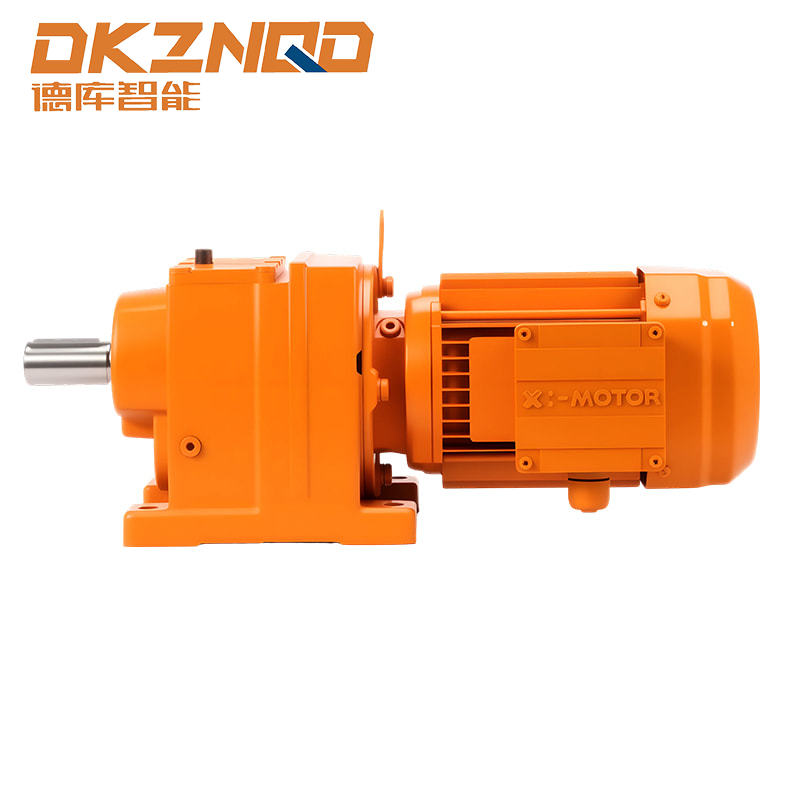 R Series Single-Stage Helical Geared Motor for High-Speed ApplicationsThis single-stage helical gearmotor offers a wide power range and high output speed, making it a cost-effective choice for conveyor, mixing, and packaging duties where planetary gearboxes are unnecessary.View Product →
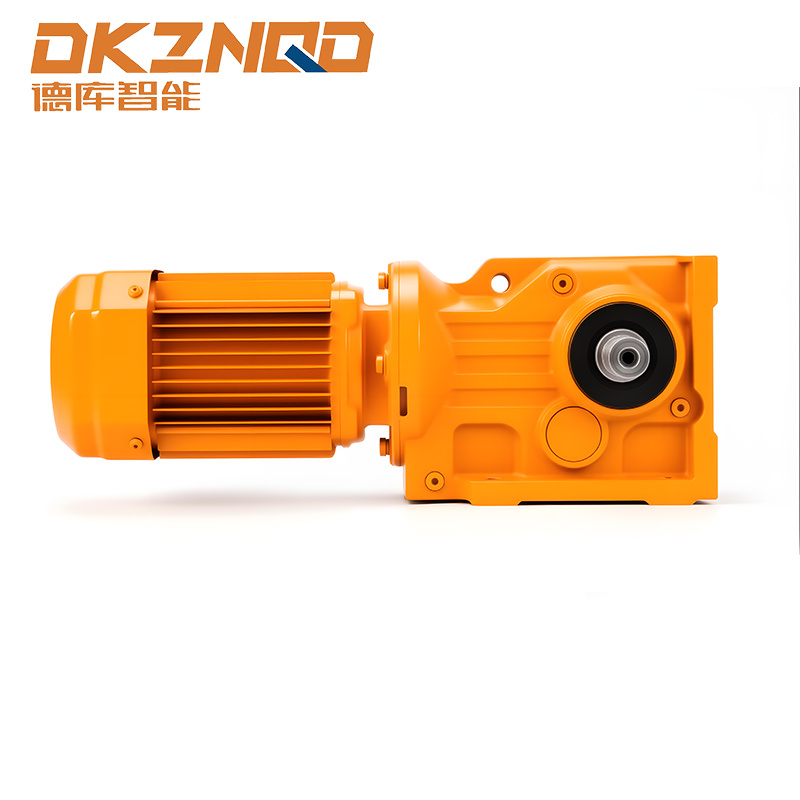
If your equipment layout demands right-angle power transmission, the K Series Helical Bevel Gearmotor transfers torque between perpendicular shafts with high efficiency.
 K Series Helical Bevel Gearmotor for Right-Angle Power TransmissionWith compact construction and high torque capacity, this right-angle gearmotor efficiently transfers power between perpendicular shafts, suiting space-limited industrial drive systems.View Product →
For parallel shaft output in those same conveyors and mixers, the F Series Parallel Shaft Helical Gearmotor offers a compact, easy-to-install drive package.
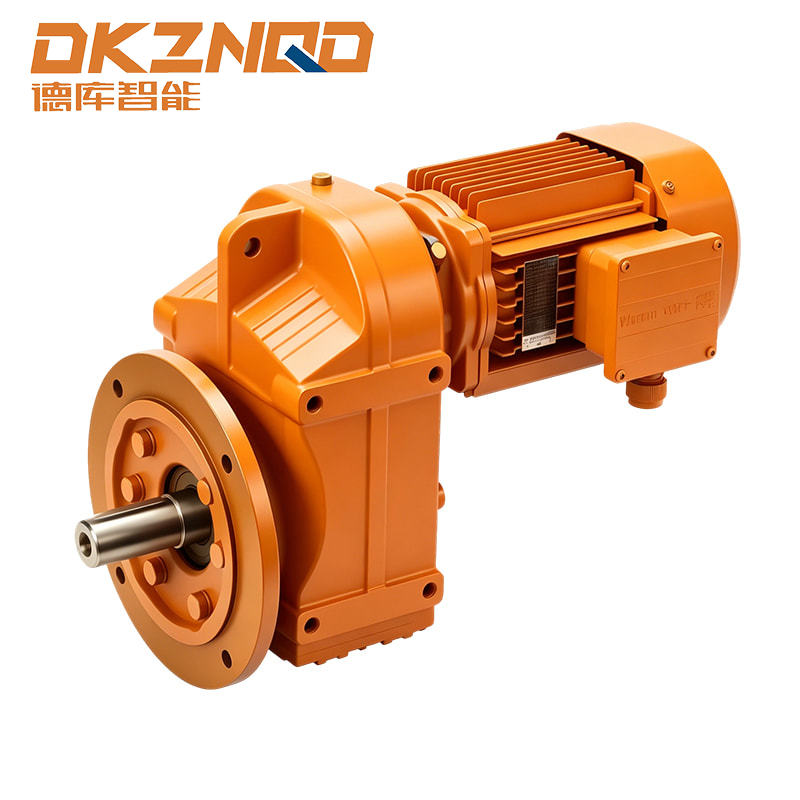 F Series Parallel Shaft Helical Gearmotor for Compact InstallationIts parallel shaft design enables a slim profile and flexible mounting options, simplifying installation in confined spaces while delivering reliable performance for conveyors and mixers.View Product →
In precision motion systems, how gearbox accuracy is measured can help you compare suppliers. The key metrics are tooth runout, backlash, and transmission error under load.
Frequently Asked Questions About Planetary Gears
Q1: What is the main difference between planetary gears and standard gear reducers?
Planetary gears distribute the load over 3 to 5 planet gears, which improves torque density. Standard reducers rely on a single gear mesh path, so they are simpler but often need a larger housing for the same torque.
Q2: Can planetary gears provide a high reduction ratio with only one stage?
Yes. A standard single-stage planetary set gives ratios of about 3:1 to 10:1. For higher reductions, combine two or more stages in series.
Q3: Why is backlash important when selecting a planetary gearbox?
Backlash is the amount of play between mating teeth. For positioning tasks like robotics, high backlash causes lost motion at the output. Precision planetary gearboxes are rated in arc-minutes, and a value of 3 arc-min or lower is typical for servo applications.
Q4: How long can a planetary gearbox last?
Service life varies widely with load, speed, and lubrication. With proper maintenance, well-built planetary gearboxes can reach 20,000 to 30,000 hours, but thermal and impact loads reduce reliability faster than nominal speed.
Q5: Are planetary gearboxes reversible?
Yes, planetary gear sets can be driven in either direction. In some applications, they are used for backdriving or regenerative braking, depending on the ratio and efficiency of the gear set.
Final Takeaway
Planetary gears are an efficient way to achieve compact, high-torque transmission in a single coaxial package. The key to understanding them is the motion of the sun gear, planet gears, ring gear, and carrier together. Hold one part fixed and the other two become input and output, creating a broad set of ratios in a small footprint.
Whether you are specifying a servo reducer, designing a robot joint, or choosing a drive for an industrial conveyor, matching the gearbox to the actual load, duty cycle, and required precision is what really makes the difference.
 05 Jun,2025