

 ENG
ENG
 English
 русский
 Español
 Türk
Türk

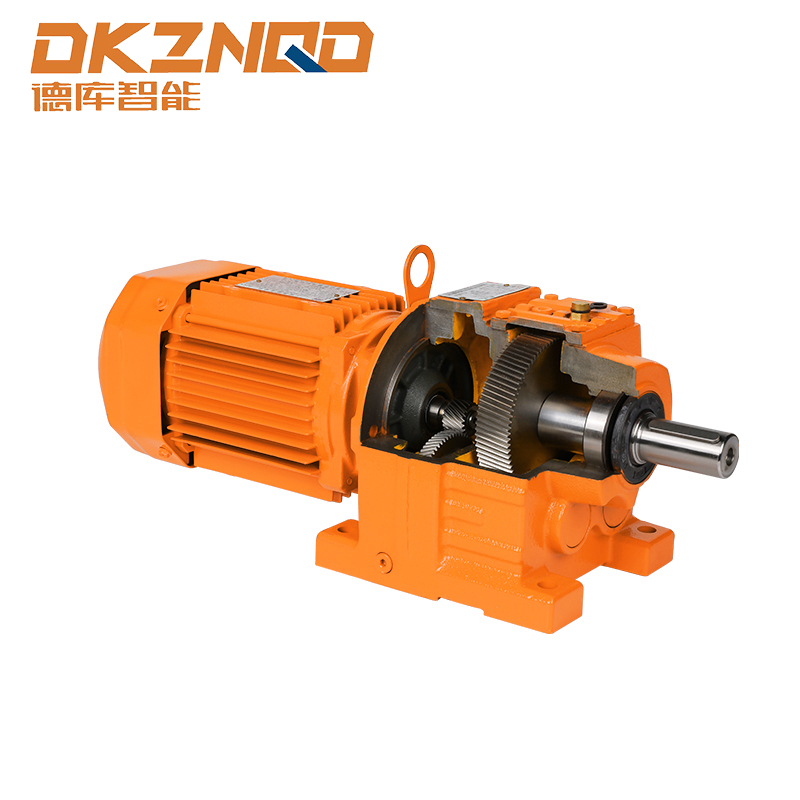
If you need high torque in a compact housing, a planetary gear is often the first solution engineers turn to. A planetary gear—also called an epicyclic gear—is a gear system where several planet gears rotate around a central sun gear while being enclosed inside a ring gear. This layout allows the system to share load across multiple gear meshes, which is why it can deliver torque several times higher than a comparable single-mesh gearbox of the same size.
The key practical result: you get a lighter, shorter drive unit without sacrificing output torque or durability. Understanding how this arrangement works, what types exist, and where it outperforms other gearing is essential before you specify one for an industrial application.
Core Components and Working Principle
Every planetary gear set has three main elements:
- Sun gear: The central gear, driven by the input shaft.
- Planet gears: Typically three to five gears mounted on a carrier, which mesh with both the sun gear and the ring gear.
- Ring gear: The outer internal gear that encloses the planet gears.
The planet carrier holds the planet gears and is connected to the output shaft. Depending on which component is held stationary, which is driven, and which is used for output, the gear set can produce different speed ratios. In the most common arrangement, the ring gear is fixed, the sun gear is driven, and the carrier provides the output. This gives a reduction ratio that is proportional to the number of teeth on the ring gear plus the sun gear.
Because multiple planet gears carry the load simultaneously, the force at each tooth mesh is much lower than in a conventional single pair of gears. This is why planetary gearing is favored in applications that demand high power density, such as automotive transmissions, robotics, and heavy-duty industrial drives.
Common Types of Planetary Gearboxes
Planetary gearboxes are available in several variations to match different layout and performance requirements. The most frequently used types are:
- Single-stage planetary: One set of planet gears provides one reduction stage. This is the simplest and most common configuration, used in many servo gearboxes.
- Multi-stage planetary: Two or more planetary stages are stacked in series to achieve very high reduction ratios, often over 100:1.
- In-line planetary: The input and output shafts are coaxial, which makes the unit particularly compact and easy to integrate.
- Right-angle planetary: Uses a bevel or worm gear input stage to change the drive direction by 90 degrees. This is common in packaging machinery and material handling equipment.
- Offset planetary: The input axis is offset from the output axis, allowing for a smaller motor footprint while preserving a planetary reduction mechanism.
- Compound planetary: Uses two or more planet gear sets that share a carrier ring, offering even more flexibility in speed ratio and torque capacity.
For industrial drive applications, the choice between a standard gear reducer and a planetary gearbox often comes down to load distribution, allowable envelope, and cost. A helical gear reducer can be more economical in lower-torque applications, while a planetary unit usually wins where high output torque and compactness matter.
Why Planetary Gears Are Widely Used
There are several concrete reasons why this gear arrangement appears in so many industrial and mobile systems:
- High torque-to-weight ratio: Load sharing across multiple planet gears means each tooth carries less force, which allows a smaller and lighter gear set to produce the same torque as a larger conventional gear.
- Compact coaxial design: Since input and output are on the same axis, the gearbox can be mounted directly to a motor and a load without needing a parallel shaft space.
- Low noise and low backlash: Multiple meshing points smooth out motion and reduce vibration, which contributes to quieter operation.
- High efficiency: A well-lubricated planetary stage can operate at 95-98 percent efficiency per stage, which is comparable to other precision gear types.
- Long service life: The distribution of load reduces contact stress and wear, making the gear set more durable under continuous duty.
This set of advantages explains why planetary gears are found in applications as varied as wind turbine drives, mobile machinery slew drives, robotics, medical imaging systems, and even electric vehicle transmissions.
What to Check When Choosing a Planetary Gear
Specifying a planetary gearbox is not just about picking the highest torque rating. Here are the practical factors that influence real-world performance:
- Output torque and service factor: Always compare the continuous torque rating against your actual load, including shock and repeated starts. A gearbox sized without a service factor margin can fail prematurely.
- Backlash requirements: Servo-driven positioning systems often need low backlash (3 arcmin or less). Standard industrial applications can accept higher backlash in exchange for lower cost.
- Operating speed and thermal limits: High input speeds create heat, especially in multi-stage units. Check the allowable running speed at your actual temperature.
- Load type and duty cycle: Reversible loads, high inertia, and frequent starts all reduce the effective life of the gear teeth and bearings.
- Mounting configuration: Flange mounting, foot mounting, or hollow shaft output all affect the overall envelope and how much stress is placed on the gearbox housing.
In many industrial lines, the decision is between a planetary gearbox and a conventional reducer. A compact right-angle spiral bevel gearbox can be an excellent alternative when the drive direction needs to change, while a K series helical bevel gearmotor offers a similar space-saving benefit for lower-torque applications. If the requirement is high torque in a straight-line layout, a BKM hypoid gear reducer provides a quieter and more efficient option than a standard worm drive, though its torque capacity still follows a different sizing curve than true planetary gearbox.
For axial loads and lift applications, a screw lift mechanism is a distinct system altogether. You would select a SWL worm gear screw lifter when the primary goal is linear motion rather than rotational speed reduction.
Planetary Gearbox vs. Conventional Gear Reducer
Understanding the trade-off is useful for avoiding cost overruns. In general:
- A planetary gearbox offers better torque density and a shorter envelope, but it is usually more expensive to manufacture.
- A conventional parallel-shaft or coaxial helical reducer offers a lower initial price and simpler maintenance, but at the same torque, it will be larger and heavier.
- A planetary gearbox is also better suited for servo applications because its low inertia and low backlash make it more responsive.
If you are designing a new machine or upgrading a line, it is worth comparing the full cost of ownership. The lower material and assembly cost of a standard gearmotor may be outweighed by the space saved and the longer bearing life found in a planetary unit.
Practical Engineering Details and Tolerances
At the component level, a few factors determine whether a planetary gear set will perform well for years:
- Gear tooth profile: Correct profile shifting and tip relief minimize stress concentrations. This is why harsh-duty gearboxes from a reliable manufacturer are machined to precise tolerances.
- Planet load equalization: If the carrier is not perfectly centered, one planet gear can carry more load than the others, causing premature wear. Quality manufacturers pay particular attention to both the carrier and the thrust bearings.
- Lubrication: Splash lubrication works well in moderately loaded planetary sets, but circulating oil is advisable for high powers and high speeds.
- Radial and axial loads: Unlike some compact reducers, a planetary gearbox generally has limited external radial load capacity. If your application requires a large overhung load, an output bearing with increased load rating is necessary.
The manufacturing quality and inspection process of the gearbox supplier is therefore directly linked to long-term reliability. A manufacturer with deep vertical integration and careful quality control is usually the safer choice for a custom drive solution.
Frequently Asked Questions
Q1: What is a planetary gear used for?
A planetary gear is used to reduce speed and increase torque in a compact, coaxial layout. It is common in automotive automatic transmissions, wind turbine pitch drives, wheel hubs, robotics, and heavy-duty industrial equipment.
Q2: Why is it called a planetary gear?
The name comes from the visual resemblance of the planet gears orbiting around the central sun gear, while the ring gear surrounds the whole system like a planet ring.
Q3: What is the difference between a planetary gear and an epicyclic gear?
They are the same. Planetary gearing is the more common name for what is technically called epicyclic gearing. There is no functional difference between the two terms.
Q4: Is a planetary gear the same as a gearbox?
No. A planetary gear is the internal gear arrangement. A gearbox or gear reducer is the complete housing that contains the gear set, bearings, seals, and lubrication. A planetary gearbox is simply a gearbox that uses a planetary gear arrangement inside it.
 05 Jun,2025