

 ENG
ENG
 English
 русский
 Español
 Türk
Türk

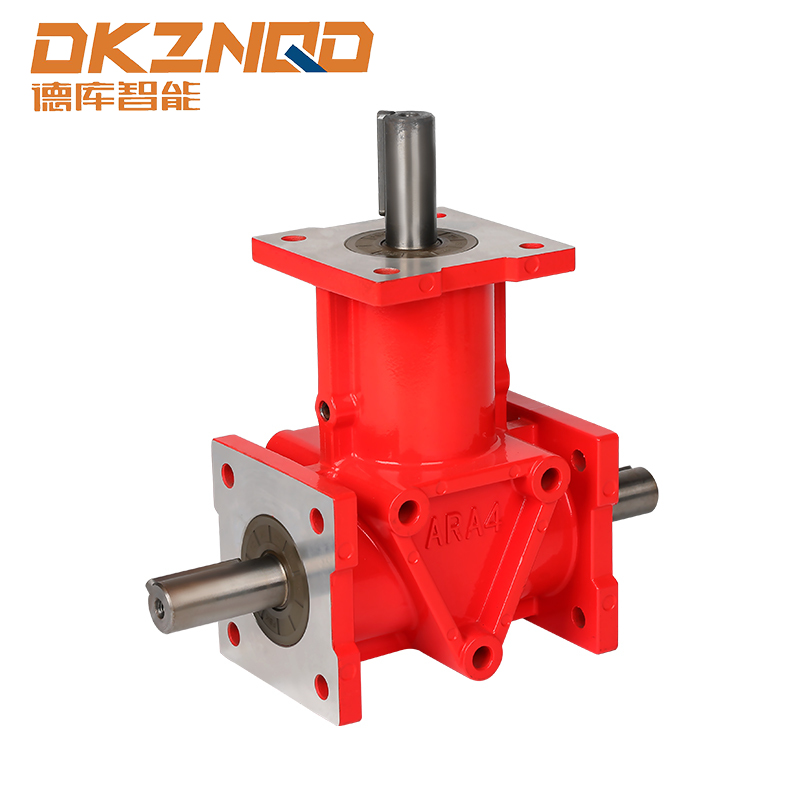
Planetary gear transmissions deliver high torque in a compact footprint, but they are not a universal solution. The correct choice depends on your speed range, required backlash, and tolerance for maintenance complexity. Below, we explain the mechanics, the main varieties, and the selection factors that matter most in industrial drives. This guide draws on our own manufacturing experience with hard-toothed gear reducers, where we have learned that a gearbox must match the machine's operating reality, not just a datasheet.
What Is a Planetary Gear Transmission?
A planetary gear transmission, also called an epicyclic gear train, arranges one or more planet gears around a central sun gear. The planets rotate between the sun gear and an outer ring gear, while a planet carrier keeps the planet shafts in position. This layout lets multiple gear pairs share the transmitted load, so a planetary gearbox produces more torque per unit of volume than an equivalent parallel-shaft reducer.
The table below lists the four main components that define the arrangement.
| Component | Function |
|---|---|
| Sun gear | Central gear that can act as input or output |
| Planet gears | Small gears that orbit between the sun and ring gear |
| Ring gear | Outer gear with internal teeth |
| Planet carrier | Holds the planet gear shafts and provides the output |
The real benefit emerges when multiple planet gears are used. Instead of one gear pair carrying the whole load, two or three planets share torque, which reduces tooth stress and allows a smaller overall diameter. This is why planetary transmissions are common in wind turbines, robotics, and vehicle drives.
How Does a Planetary Gear Transmission Work?
The working principle is straightforward: torque enters one member, a second member is held stationary or used as the output, and the resulting speed ratio is determined by the number of teeth on the sun and ring gear.
In the most common configuration, the ring gear is fixed and the sun gear is the input. The planet carrier then acts as the output. For this case, the ratio equals 1 plus the ring gear tooth count divided by the sun gear tooth count. If the sun gear has 20 teeth and the ring gear has 80 teeth, the gear ratio is 5 to 1. That means one full turn of the sun produces a fifth of a turn at the carrier while multiplying torque by about five times.
When you need a much higher ratio, manufacturers stack multiple stages inside the same housing. Each stage adds a set of planet gears and further reduces speed. The trade-off is efficiency: a single-stage planetary stage can reach 97 to 98 percent efficiency, but each additional stage reduces overall efficiency by about one to two percentage points.
For a closer look at how speed reducers work, you can read our article on the working principle of a reducer. This explains the same power transmission concept through different gear arrangements.
Types of Planetary Gear Transmissions
Planetary gearboxes are not one single design. They differ by stage count, output configuration, and the way the sun, ring, and carrier are connected. Here are the most common types used in industrial equipment.
- Single-stage planetary provides a ratio between roughly 3:1 and 10:1. It is compact and efficient for moderate reductions.
- Multi-stage planetary chains two or more stages to reach ratios of 20:1, 50:1, or higher. This is common in winches and wind turbines.
- In-line planetary has the input and output shafts aligned, which simplifies installation in line with a motor.
- Right-angle planetary includes a bevel gear set to change the direction of the drive, useful in confined spaces.
- Differential planetary allows two inputs and one output, or one input and two outputs. It is used in vehicles and specialized industrial machines.
- Compound planetary uses multiple planet gear meshes within one carrier to achieve unique ratios with fewer stages.
Each type has a different cost and torque profile. A single-stage unit is cheaper, but if the application calls for a very high ratio in one free-standing housing, a multi-stage or compound design will usually be more practical.
For right-angle drive applications, a right-angle bevel gearbox offers a separate solution that may be easier to service in certain layouts.
Advantages and Limitations
The main reason to choose a planetary gear transmission is its torque density. Because several planet gears share the load, the gearbox can be much smaller and lighter than a conventional parallel-shaft reducer for the same torque rating. This helps in mobile equipment, robotic joints, and any machine where weight and space are scarce.
Another advantage is low backlash. The multiple meshing points can be designed with tighter tolerances, which improves positional accuracy. For applications like indexing tables or precision servos, that matters more than raw torque.
Key point: planetary gearboxes are highly efficient, but efficiency decreases as you add stages. Also, they are usually more expensive than simpler helical or worm gear reducers, and they can be less tolerant of repeated shock loads if the housing is not robustly supported.
Limitations include higher manufacturing cost, a larger number of moving parts, and the need for precise lubrication. In some low-speed, high-torque applications, a simple helical gearmotor might be more cost-effective. We have seen that in many conveyor and mixer drives, a strong helical reducer can outperform a planetary design once the total installed cost and maintenance schedule are considered.
Key Selection Criteria
Before selecting a planetary gear transmission, define the torque at the output, the input speed, and the required service factor. The service factor accounts for shock loads, duty cycle, and environmental conditions. A service factor of 1.0 is fine for smooth, steady loads, while a mix of frequent starts and reverses may require 1.5 or higher.
Backlash is the next critical value. Standard industrial units often have backlash between 10 and 20 arcminutes. If your process requires high repeatability, look for a low-backlash or precision planetary gearbox with backlash under 5 arcminutes.
Mounting is another factor. C-face, flange, and shaft-mounted versions are available. Choose the interface that matches your motor and driven equipment. This also affects how the reaction torque is anchored; a weaker mounting can cause premature seal wear.
Finally, review lubrication and cooling. For continuous operation, oil splash or forced-oil lubrication is preferable. Grease lubrication is acceptable for intermittent duty, but then you must check the recommended lubricant viscosity at the operating temperature.
If your application requires a more conventional industrial gearbox for high-torque duties, we offer a range of industrial gearboxes built for demanding drives. For applications where a compact, pre-assembled geared motor fits your layout better, our R series helical geared motor provides reliable speed reduction with standard foot or flange mounting.
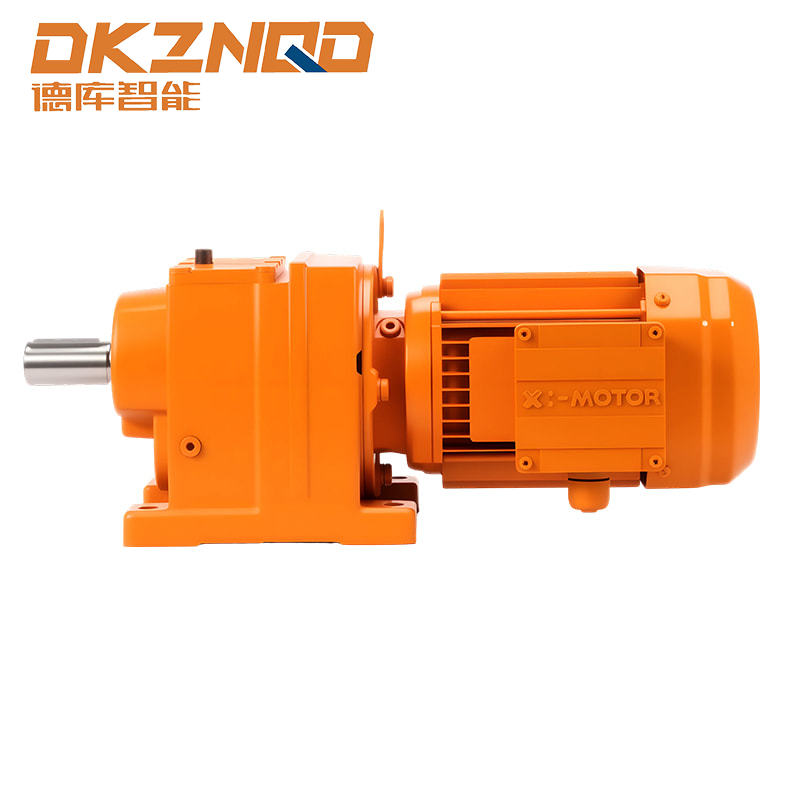 R Series Helical Geared Motor with High EfficiencyThis compact geared motor provides reliable speed reduction with foot or flange mounting. It offers power up to 160 kW and high output torque, suitable for applications requiring high-speed operation and efficiency.View Product →
 Industrial Gearbox Manufacturer for Power TransmissionThis manufacturer offers a range of industrial gearboxes built for high-torque duties and demanding drives. Their products feature precise gear combinations and robust construction, making them suitable for various industrial applications.View Product →
To understand gearbox accuracy tolerances, visit our guide on gearbox accuracy. It explains how manufacturing quality affects the performance of any reduction gear, whether it is planetary or not.
Applications
Planetary gear transmissions are used wherever high torque and compactness are needed. Wind turbines use them to convert slow rotor speed into faster generator speed. Robots use them to place high torque directly inside the joint without making the arm bulky. Material handling machines use them in travel drives, and automotive transmissions use them to achieve multiple gear ratios in a small space.
Then there are applications where planetary gears are a natural fit but not the only option. For example, a mining conveyor may prefer a parallel-shaft helical gearbox because it offers easier access for maintenance. In those cases, a standard hard-tooth gear reducer can be more economical, even though it takes up more space. Our own experience with non-standard reducer manufacturing confirms that many customers choose the simplest arrangement that meets the required reliability.
Conclusion
Planetary gear transmission remains the best choice when torque density, precision, and compactness outrank initial cost. It is also the right choice when you need a very high reduction ratio in a single housing. But it is not always the most economical option. Evaluate your service factor, backlash, mounting, and cooling requirements first. Then compare it with a robust helical or bevel gearmotor before committing to a design.
Our engineering team can help you assess which transmission type fits your machine better. We manufacture non-standard and standard hard-toothed gear reducers, and we understand that the final decision must be based on real operating conditions, not just a datasheet.
 05 Jun,2025