

 ENG
ENG
 English
 русский
 Español
 Türk
Türk

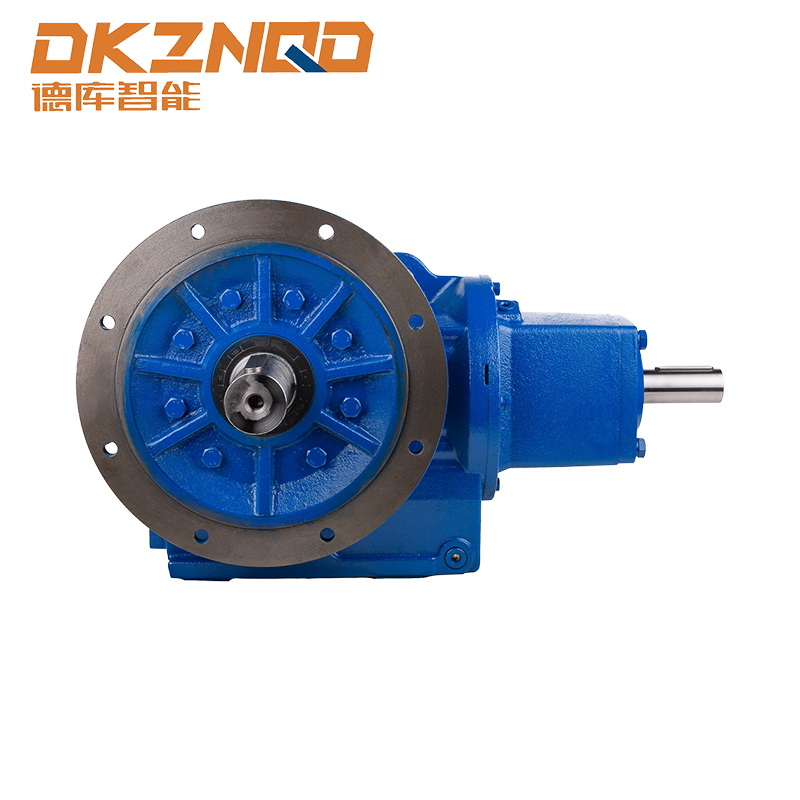
A Helical Bevel Gearmotor is a highly versatile component widely used in industrial machinery for transmitting torque and motion efficiently. Its unique combination of helical gears and bevel gear arrangement allows for right-angle power transmission with enhanced load distribution, reduced vibration, and higher torque density. Understanding how a helical bevel gearmotor performs under continuous duty operation is critical for ensuring reliability, energy efficiency, and longevity in demanding industrial applications.
Fundamentals of helical bevel gearmotor operation
A helical bevel gearmotor combines the geometry of helical gears with bevel gears. Helical gears feature angled teeth that allow gradual engagement, reducing noise and improving load sharing. Bevel gears, on the other hand, transmit power at an angle, typically 90 degrees, enabling compact design and flexible integration into machinery layouts. The synergy of these two gear types provides a Helical Bevel Gearmotor with high torque output, smooth operation, and superior mechanical efficiency.
Continuous duty operation requires the gearmotor to deliver constant output torque over prolonged periods. The design of helical bevel gearmotors inherently supports this by distributing forces more evenly across multiple teeth, minimizing localized stress and wear.
Key performance metrics under continuous duty
- Torque capacity: The ability of the gearmotor to maintain rated torque without thermal or mechanical degradation.
- Efficiency: Continuous duty often demands sustained efficiency to reduce energy losses and operational costs.
- Temperature stability: Gearbox and motor components must resist heat buildup over long operating periods.
- Vibration and noise levels: Proper design ensures smooth engagement, reducing vibrational wear and acoustic emissions.
Table 1 below summarizes the primary performance indicators for a helical bevel gearmotor under continuous duty operation.
| Performance Metric | Typical Range/Value | Importance for Continuous Duty |
|---|---|---|
| Torque capacity | 50–2000 Nm | Ensures stable output under load |
| Efficiency | 85–96% | Minimizes energy loss and heat |
| Operating temperature | 40–90°C | Prevents thermal damage |
| Noise level | 60–75 dB | Reduces workplace noise |
| Vibration amplitude | <0.5 mm/s RMS | Enhances mechanical stability |
Design considerations for continuous operation
The performance of a helical bevel gearmotor in continuous duty is influenced heavily by design choices. These factors ensure sustained operation without premature wear or failure.
Gear geometry and tooth design
The angled teeth of helical gears distribute load across multiple teeth, which significantly reduces localized stress. Bevel gears allow for torque redirection while maintaining the load balance. Optimized tooth profiles contribute to reduced backlash, improved efficiency, and lower wear rates during extended operation. High-precision machining ensures accurate tooth geometry, which is essential for maintaining performance over long cycles.
Material selection
Materials used in gear and housing construction must withstand thermal and mechanical stresses. Alloy steels for gears, hardened bearings, and treated housings are commonly selected for helical bevel gearmotors intended for continuous duty. These materials resist fatigue, maintain alignment, and contribute to overall reliability.
Lubrication and cooling
Effective lubrication is critical in continuous duty applications. The right synthetic or mineral-based lubricants reduce friction, dissipate heat, and extend component life. In some cases, forced lubrication or cooling systems are implemented to maintain consistent operating temperatures during extended cycles.
Load alignment and shaft configuration
Proper alignment of input and output shafts ensures minimal stress concentration and reduces vibration. Misalignment in continuous duty applications can accelerate wear, leading to unexpected downtime. A helical bevel gearmotor designed for continuous operation often includes precision bearing arrangements and rigid housing structures to maintain alignment under load.
Thermal behavior in continuous duty
Temperature management is one of the most critical factors affecting helical bevel gearmotor performance under continuous operation. Heat generated from friction and load transmission can influence both lubrication effectiveness and material properties.
Heat generation factors
- Torque level and load variations: Higher torques increase frictional heat.
- Operating speed: Continuous high-speed operation can raise temperatures.
- Gear and bearing friction: Inefficient surfaces contribute to additional thermal load.
Table 2 illustrates common thermal considerations for continuous duty gearmotors.
| Component | Continuous Duty Thermal Limit | Recommended Management |
|---|---|---|
| Gear teeth | 90°C | Proper lubrication, hardened surfaces |
| Bearings | 80°C | High-grade greases, heat dissipation |
| Housing | 70–85°C | Ventilation, heat sinks, or fins |
Maintaining optimal temperatures ensures that the gearmotor does not suffer from premature wear, gear pitting, or bearing failures. Temperature monitoring is often integrated into high-performance applications to prevent overheating.
Reliability and maintenance strategies
Long-term reliability under continuous operation requires proactive maintenance strategies. Even robust helical bevel gearmotors benefit from regular inspection and preventive measures.
Lubrication schedule
Continuous duty gearmotors require consistent lubrication intervals. Checking lubricant levels, replacing contaminated oil, and ensuring proper viscosity are essential to maintain performance. High-quality greases or oils with anti-wear additives are preferred.
Inspection of gears and bearings
Regular inspection of gears for surface wear, pitting, or misalignment ensures early detection of issues. Bearings should be checked for vibration, noise, or temperature anomalies. Corrective maintenance before catastrophic failure is crucial for continuous duty applications.
Alignment checks
Over time, operational loads can cause minor shaft deviations. Periodic alignment checks help maintain torque transmission efficiency and minimize vibration.
Replacement and overhaul planning
A well-planned replacement or overhaul schedule based on operational hours and load conditions helps maintain optimal performance. This approach minimizes unplanned downtime and reduces the risk of secondary damage to associated machinery.
Applications benefiting from continuous duty
Helical bevel gearmotors are widely adopted in industries requiring high reliability under prolonged operation. Typical sectors include:
- Material handling systems: Conveyors, elevators, and cranes.
- Food and beverage processing: Mixers, pumps, and automated packaging lines.
- Mining and heavy machinery: Crushers, mills, and industrial mixers.
- Automotive manufacturing: Assembly line conveyors and robotics.
In these applications, continuous duty performance ensures that production schedules remain uninterrupted, reducing downtime and operational costs.
Operational challenges and mitigation
While helical bevel gearmotors are robust, continuous duty introduces specific challenges:
- Thermal accumulation: Mitigated through proper lubrication, heat sinks, and ventilation.
- Vibration and resonance: Addressed with precision gear alignment and damping mounts.
- Lubricant degradation: Regular oil replacement and use of high-quality lubricants prevent accelerated wear.
- Load fluctuations: Proper load analysis and torque control maintain consistent performance.
Addressing these challenges proactively ensures long-term operational stability.
Conclusion
A Helical Bevel Gearmotor exhibits excellent performance under continuous duty operation when designed, installed, and maintained correctly. Key factors, such as gear geometry, material selection, lubrication, thermal management, and alignment, collectively determine the reliability, efficiency, and longevity of the gearmotor. With proper application and preventive maintenance, continuous duty operation can be sustained without significant performance degradation, ensuring consistent torque transmission and energy efficiency in industrial environments.
Frequently Asked Questions (FAQ)
Q1: Can a helical bevel gearmotor operate continuously at maximum torque?
A1: While helical bevel gearmotors can handle rated torque, prolonged operation at maximum torque may increase temperature and wear. Continuous monitoring and proper lubrication are recommended.
Q2: How often should lubrication be checked for continuous duty gearmotors?
A2: Lubrication should be checked at intervals defined by operational hours and load intensity, typically ranging from 500 to 1000 hours, depending on the application and lubricant type.
Q3: Are there specific installation guidelines for continuous duty applications?
A3: Yes, ensuring proper shaft alignment, housing support, and adequate cooling are essential. Misalignment or poor installation can reduce efficiency and lifespan.
Q4: How can temperature be monitored during continuous operation?
A4: Temperature sensors or thermal cameras can be installed to track operating temperatures of gears, bearings, and housing, allowing preventive action before overheating occurs.
Q5: What industries benefit most from continuous duty helical bevel gearmotors?
A5: Industries with constant material handling, production lines, and heavy machinery, such as mining, food processing, and automotive manufacturing, derive significant benefits.
References
- Dudley, D. W. Gearing Handbook: Fundamentals and Applications. McGraw-Hill, 2020.
- American Gear Manufacturers Association (AGMA). Gear Rating and Design Standards. AGMA, 2019.
- Childs, D. W. Mechanical Design of Machines. CRC Press, 2021.
 05 Jun,2025