

 ENG
ENG
 English
 русский
 Español
 Türk
Türk

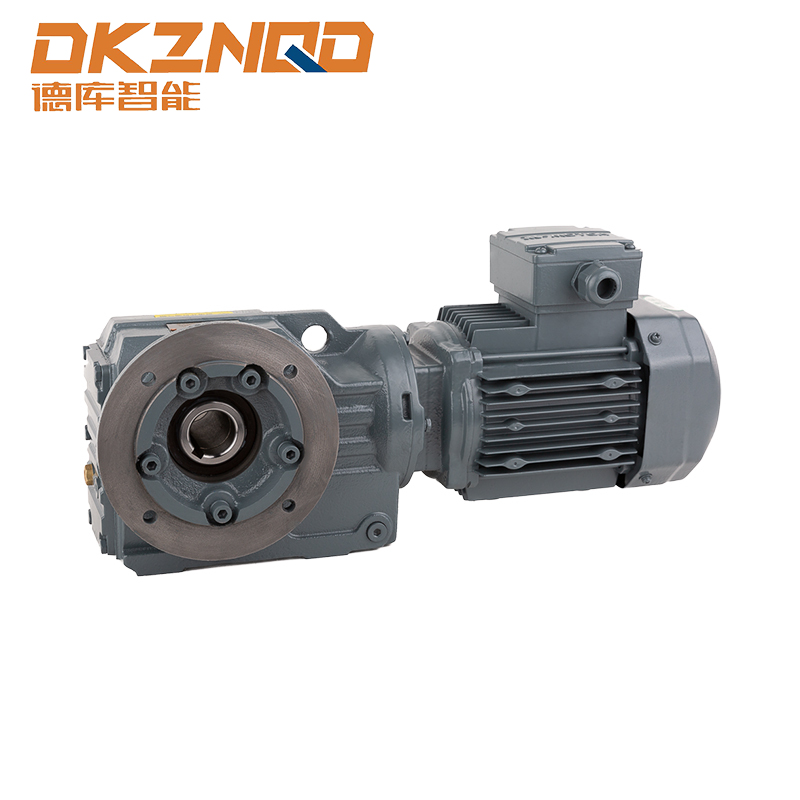
A helical worm gearmotor represents a key category of mechanical drive systems, widely employed in industrial automation, material handling, and precision equipment. Its unique design combines a helical gear with a worm mechanism, enabling high torque transmission in a compact configuration. Over the past decades, engineers and designers have compared helical worm gearmotors with other drive solutions, particularly planetary gear motors, to assess efficiency, durability, and application suitability.
Understanding the differences between a helical worm gearmotor and a planetary gear motor requires a thorough examination of design principles, operational characteristics, performance metrics, and maintenance considerations.
Design principles and mechanical structure
The helical worm gearmotor is characterized by a worm shaft meshing with a helical gear. This configuration offers a high torque multiplication while maintaining a small footprint. The worm’s angled threads engage the gear teeth gradually, resulting in smoother motion and reduced shock load. The inherent design also allows for self-locking capabilities, which can prevent back-driving in specific applications.
In contrast, a planetary gear motor features a central sun gear surrounded by multiple planet gears, which rotate inside a ring gear. This configuration distributes load evenly among the planets, providing high efficiency and compact size for high-speed applications. While both systems achieve torque multiplication, the load distribution and mechanical contact patterns differ significantly, influencing efficiency, wear, and noise characteristics.
Table 1: Structural comparison between helical worm gearmotor and planetary gear motor
| Feature | Helical Worm Gearmotor | Planetary Gear Motor |
|---|---|---|
| Gear type | Helical worm and wheel | Sun, planet, and ring gears |
| Torque distribution | Single-point contact | Multi-point contact |
| Self-locking capability | Often present | Generally absent |
| Compactness | Moderate | High |
| Shock absorption | Good | Very good |
Performance characteristics
Torque and speed capabilities
A helical worm gearmotor excels in applications requiring high torque at low output speed. Its mechanical advantage allows a smaller motor to deliver substantial force. The design is particularly beneficial when continuous load handling is essential. However, due to sliding contact between the worm and gear, efficiency typically ranges between 40% and 70%, which is lower than that of planetary systems.
Planetary gear motors, by contrast, provide high efficiency, often exceeding 90% under optimal load conditions. They are suitable for applications requiring rapid acceleration, high-speed rotation, or minimal energy loss. The multi-gear engagement reduces localized stress, contributing to consistent performance under varying torque demands.
Noise and vibration
Noise generation is a critical factor in selecting drive systems. The helical worm gearmotor produces lower vibration due to gradual engagement, but the sliding nature of worm-tooth contact can generate moderate operational noise under heavy loads. For environments where noise reduction is a priority, attention must be given to lubrication and housing design.
Planetary gear motors typically exhibit lower noise levels due to evenly distributed load and rolling contact, rather than sliding contact. As a result, they are often preferred in precision machinery and robotics, where smooth operation is crucial.
Efficiency and energy consumption
Efficiency directly impacts operating costs and system sustainability. While helical worm gearmotors offer compact torque solutions, their sliding-contact mechanism results in higher energy loss. Selecting appropriate lubrication and maintaining correct alignment can mitigate efficiency losses. For long-term energy-sensitive operations, planetary gear motors may offer advantages, particularly in high-speed or continuous-duty applications.
Table 2: Performance metrics comparison
| Metric | Helical Worm Gearmotor | Planetary Gear Motor |
|---|---|---|
| Efficiency | 40%–70% | 85%–95% |
| Maximum torque output | High | Moderate to high |
| Speed range | Low to medium | Medium to high |
| Maintenance frequency | Moderate | Low to moderate |
| Noise level | Moderate | Low |
Application suitability
Helical worm gearmotor applications
The helical worm gearmotor is widely used in systems that require high torque, compact design, and self-locking features. Typical applications include:
- Conveyor drives in industrial environments
- Lifting and hoisting mechanisms
- Automated gates and access systems
- Packaging machinery requiring low-speed, high-load operation
The self-locking capability makes it advantageous in safety-critical applications, where unintentional back-driving must be avoided.
Planetary gear motor applications
Planetary gear motors are commonly found in scenarios demanding high efficiency, high-speed operation, and precise motion control, such as:
- Robotics and automation
- Machine tools with variable speed requirements
- Electric vehicles and mobility equipment
- Servo-driven systems with feedback control
Their compact and distributed load design allows for high-speed performance without excessive heat generation, making them ideal for energy-conscious and precision applications.
Durability and maintenance
A helical worm gearmotor requires careful attention to lubrication and alignment to ensure longevity. The sliding action between the worm and gear teeth can generate heat and wear, particularly under high torque or continuous duty. Regular inspection, proper grease selection, and housing design improvements can extend service life.
Planetary gear motors, due to rolling contact and distributed torque, often demonstrate lower wear rates. Bearings and gears in planetary configurations typically experience less localized stress, reducing maintenance frequency. However, sealing and lubrication remain critical to maintain consistent performance in dusty or high-temperature environments.
Cost considerations
When evaluating helical worm gearmotors and planetary gear motors, cost is a crucial factor. Helical worm systems may be less expensive for low-speed, high-torque applications due to simpler manufacturing processes. However, energy losses and higher maintenance needs can affect the total cost of ownership.
Planetary gear motors often have higher initial costs, but superior efficiency, longer service life, and reduced downtime may lead to better long-term value in applications requiring sustained performance and precise operation.
Selection guidelines
Selecting the optimal drive system requires understanding application requirements, including torque, speed, efficiency, and spatial constraints. Helical worm gearmotors are suitable for:
- Low-speed, high-torque applications
- Situations where self-locking is required
- Systems where moderate energy efficiency is acceptable
Planetary gear motors are preferred when:
- High-speed operation and energy efficiency are priorities
- Smooth and precise motion is critical
- Long service life with reduced maintenance is necessary
Design and customization considerations
Engineers may customize helical worm gearmotors to match specific requirements, such as:
- Gear ratio adjustments for target speed and torque
- Specialized lubrication to reduce friction and heat
- Housing modifications to improve noise reduction and durability
Planetary gear motors may also be tailored for specific needs, including:
- High-precision gear machining for minimal backlash
- Compact integration with servo or stepper motors
- Optimized lubrication pathways for continuous operation
Proper design selection ensures system reliability, efficiency, and safety across different industrial applications.
Advantages and limitations summary
Helical worm gearmotor
Advantages:
- High torque in compact configuration
- Self-locking capability
- Smooth engagement and shock absorption
Limitations:
- Lower efficiency compared with planetary systems
- Moderate maintenance requirements
- Potential heat generation under continuous load
Planetary gear motor
Advantages:
- High efficiency and consistent performance
- Distributed load reduces wear
- Low noise and vibration
Limitations:
- Higher initial cost
- Limited self-locking capability
- More complex assembly and design
Conclusion
The comparison between a helical worm gearmotor and a planetary gear motor highlights distinct design philosophies and application suitability. While helical worm gearmotors provide compact, high-torque solutions with self-locking features, planetary gear motors excel in efficiency, high-speed operation, and low-noise environments. Careful consideration of operational requirements, spatial constraints, and maintenance capabilities is essential for selecting the optimal drive system.
FAQ
Q1: What industries commonly use helical worm gearmotors?
A1: Helical worm gearmotors are widely applied in industrial automation, material handling, packaging machinery, and lifting systems due to their high torque and self-locking capabilities.
Q2: Can helical worm gearmotors be used in high-speed applications?
A2: Helical worm gearmotors are generally optimized for low to medium speed. For high-speed applications, planetary gear motors may offer better efficiency and durability.
Q3: How often should a helical worm gearmotor be maintained?
A3: Maintenance depends on load and operational conditions. Regular inspection of lubrication, alignment, and housing integrity is recommended to prevent wear and heat-related damage.
Q4: Are planetary gear motors more energy-efficient than helical worm gearmotors?
A4: Yes. Due to rolling contact and distributed load, planetary gear motors typically have higher mechanical efficiency, especially under high-speed or continuous-duty conditions.
Q5: Can helical worm gearmotors prevent back-driving?
A5: Many helical worm gearmotors feature self-locking properties, which prevent reverse motion, enhancing safety in lifting and positioning applications.
References
- Dudley, D. W., Handbook of Gear Design and Engineering, McGraw-Hill, 2019.
- Smith, J., Industrial Gear Systems: Selection, Application, and Maintenance, Industrial Press, 2021.
- Brown, L., Mechanical Drive Fundamentals for Automation, Elsevier, 2020.
 05 Jun,2025