

 ENG
ENG
 English
 русский
 Español
 Türk
Türk

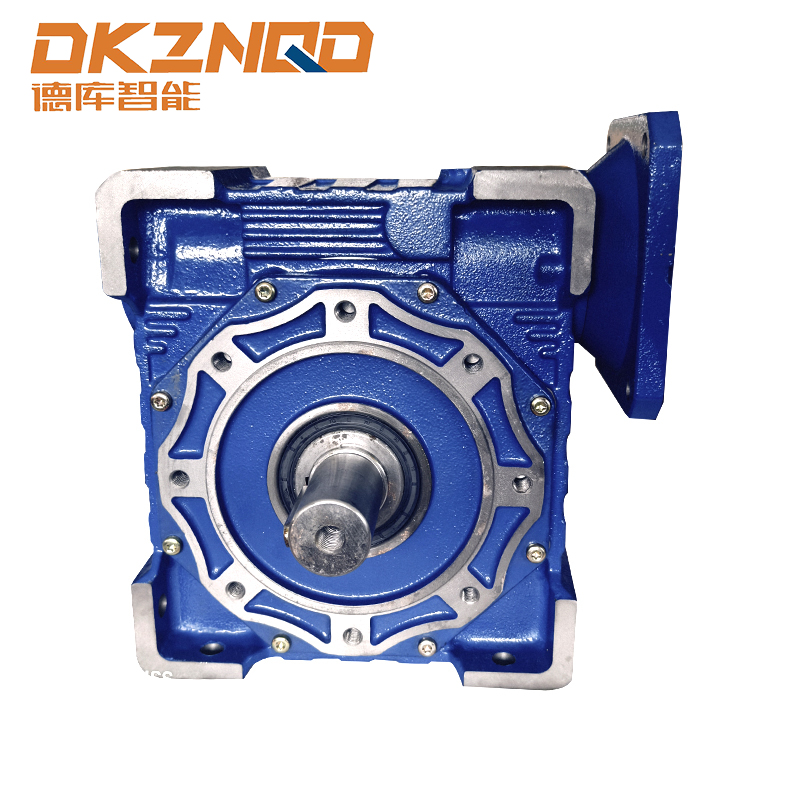
The rv worm gear reducer is a critical component in modern mechanical transmission systems, widely used in automation, robotics, packaging machinery, and various industrial equipment. Its unique structure allows for high reduction ratios, compact size, and smooth torque transmission. Among the many factors that determine the performance and reliability of an rv worm gear reducer, precision machining plays a central role. Precision machining not only affects the dimensional accuracy of the gears and housing but also influences the efficiency, noise levels, and long-term durability of the system.
The importance of precision machining in rv worm gear reducer production
Precision machining involves the accurate shaping, cutting, and finishing of components to meet tight tolerances. In the case of an rv worm gear reducer, precision machining ensures that all parts, including the worm, worm wheel, bearings, and housing, fit together perfectly. High-precision gear teeth enable smooth engagement, reducing friction and wear, while maintaining consistent output torque.
The core elements affected by precision machining include:
- Gear tooth geometry
- Shaft alignment
- Bearing seat accuracy
- Housing flatness and concentricity
These factors collectively determine the operational stability of the rv worm gear reducer, its load-carrying capacity, and efficiency. Poor machining can lead to premature gear wear, excessive vibration, and reduced service life.
Table 1: Key components influenced by precision machining
| Component | Precision requirement | Effect on performance |
|---|---|---|
| Worm shaft | Diameter tolerance ±0.01 mm | Ensures smooth rotation and torque transfer |
| Worm wheel | Tooth profile accuracy ±0.02 mm | Reduces backlash and wear |
| Bearings | Seat concentricity ±0.01 mm | Minimizes vibration and noise |
| Housing | Flatness tolerance ±0.03 mm | Maintains alignment and structural stability |
Precision machining and gear tooth accuracy
The gear teeth in an rv worm gear reducer are subjected to continuous contact and sliding forces during operation. Precision machining ensures that the worm and worm wheel teeth have exact geometry, correct pressure angles, and uniform spacing. These factors directly influence:
- Backlash control: Proper machining reduces unwanted movement between meshing gears.
- Torque consistency: Accurate teeth ensure uniform force transmission.
- Wear reduction: High precision minimizes stress concentrations and uneven load distribution.
Backlash is a critical parameter in applications requiring precise positioning, such as robotics and CNC equipment. An rv worm gear reducer with well-machined gears exhibits minimal backlash, enhancing the system’s accuracy and responsiveness.
Shaft alignment and bearing positioning
Shaft alignment is another critical aspect influenced by precision machining. The worm shaft must be accurately aligned with the worm wheel to maintain smooth engagement. Misalignment can result in increased friction, uneven wear, and noise. Similarly, bearing seats machined with high accuracy ensure proper support for rotating components, reducing the risk of vibration or shaft deflection.
Table 2: Typical alignment tolerances and their impact
| Machining tolerance | Observed effect on rv worm gear reducer |
|---|---|
| ±0.01 mm | Optimal torque transmission and minimal vibration |
| ±0.03 mm | Increased wear, slight noise, minor efficiency loss |
| ±0.05 mm | Noticeable vibration, heat generation, reduced service life |
By maintaining strict tolerances during machining, manufacturers ensure that the rv worm gear reducer operates smoothly and reliably, even under high loads or continuous duty cycles.
Housing and structural precision
The housing of an rv worm gear reducer provides the structural support for internal components. Precision machining of the housing includes flatness, concentricity, and bore positioning. Any deviation can result in misalignment of gears and bearings, negatively impacting performance. A precisely machined housing contributes to:
- Stable gear meshing
- Reduced noise and vibration
- Enhanced sealing performance, which protects internal components from contamination
In high-performance applications, such as industrial automation or high-speed conveyors, housing precision becomes a decisive factor in the rv worm gear reducer’s operational reliability.
Effects on efficiency and energy consumption
Precision machining directly affects the efficiency of an rv worm gear reducer. Accurate gear and shaft dimensions reduce friction losses during operation, which can otherwise result in energy waste and heat generation. Additionally, precise alignment lowers the mechanical resistance, enabling smoother torque transfer. In applications that demand continuous operation, such as assembly lines or robotics, improved efficiency translates into lower energy consumption and reduced operating costs.
Longevity and maintenance
A well-machined rv worm gear reducer exhibits enhanced durability. Precision machining ensures:
- Uniform load distribution across gear teeth
- Reduced wear rates on shafts and bearings
- Minimized vibration, which prolongs component life
Regular maintenance remains essential, but precision-machined components typically require less frequent intervention. Lubrication performance also improves, as consistent clearances allow oil films to form uniformly, protecting gears from premature wear.
Applications benefiting from precision-machined rv worm gear reducers
Precision-machined rv worm gear reducers are particularly valuable in industries where accuracy, smooth motion, and long-term reliability are essential:
- Robotics: High positioning accuracy for robotic arms and automated systems
- CNC machinery: Consistent torque and minimal backlash for precise machining
- Automation equipment: Smooth motion control for conveyors, packaging lines, and material handling
- Medical devices: Quiet, accurate, and reliable transmission for surgical or diagnostic equipment
The combination of precision machining and optimized gear design makes these reducers indispensable in applications requiring high-performance motion control.
Manufacturing considerations for precision machining
Achieving high precision in rv worm gear reducers involves several critical manufacturing practices:
- Use of CNC grinding and hobbing machines for gear teeth
- Application of high-precision lathes for shafts and bearings
- Surface finishing techniques such as polishing, honing, or lapping to reduce friction
- Rigorous quality control and inspection, including coordinate measuring machines (CMMs) and gear testers
By integrating these practices, manufacturers can produce rv worm gear reducers that meet strict tolerances, ensuring reliable performance and longevity.
Common challenges in precision machining
Despite its importance, precision machining faces several challenges:
- Material hardness: Hard alloys and steels are difficult to machine with tight tolerances.
- Thermal expansion: Heat generated during machining can affect component dimensions.
- Tool wear: Cutting tools degrade over time, impacting machining accuracy.
- Complex geometries: The helical nature of worm gear teeth requires advanced machining techniques.
Addressing these challenges requires careful process planning, regular tool replacement, and monitoring of environmental factors such as temperature and vibration.
Conclusion
In summary, precision machining plays a pivotal role in determining the performance, efficiency, and reliability of an rv worm gear reducer. From gear tooth accuracy to shaft alignment and housing precision, machining quality directly influences torque transmission, backlash control, and service life. Industries that rely on high-precision motion control benefit significantly from rv worm gear reducers manufactured with stringent machining standards.
FAQ
Q1: How does precision machining affect the efficiency of an rv worm gear reducer?
Precision machining ensures accurate gear tooth profiles and alignment, reducing friction and torque losses. This results in smoother operation, lower energy consumption, and higher overall efficiency.
Q2: Can an rv worm gear reducer with lower machining accuracy still be used in industrial applications?
While possible, reducers with lower machining precision may exhibit increased backlash, higher noise levels, and reduced lifespan, making them less suitable for high-accuracy or high-performance applications.
Q3: What maintenance practices are recommended for precision-machined rv worm gear reducers?
Regular lubrication, periodic inspection for wear or misalignment, and ensuring proper mounting are recommended to maintain optimal performance and extend service life.
Q4: Why is housing precision critical for an rv worm gear reducer?
The housing supports the gear and bearing alignment. Precision in the housing prevents misalignment, reduces vibration, and ensures consistent torque transmission.
Q5: What industries benefit the most from precision-machined rv worm gear reducers?
Robotics, CNC machinery, automation equipment, and medical devices benefit most due to the high demands for accuracy, smooth motion, and reliability.
References
- Dudley, D. W. Gear Handbook: The Design, Manufacture, and Application of Gears. McGraw-Hill, 2005.
- Shigley, J. E., Mischke, C. R. Mechanical Engineering Design. McGraw-Hill, 2011.
- Litvin, F. L., Fuentes, A. Gear Geometry and Applied Theory. Cambridge University Press, 2004.
 05 Jun,2025