

 ENG
ENG
 English
 русский
 Español
 Türk
Türk

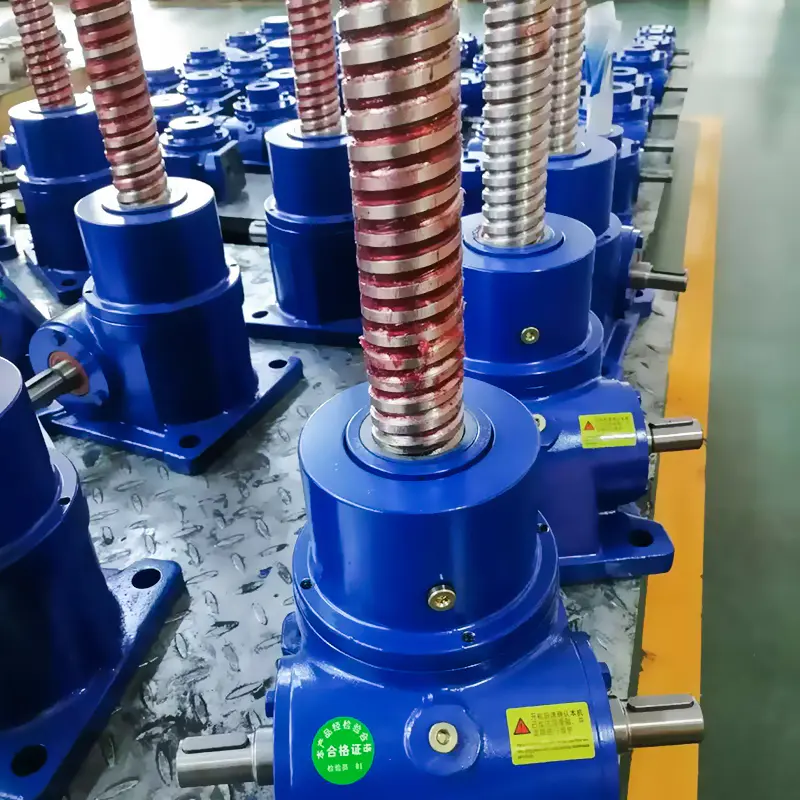
In modern industrial and commercial settings, lifting solutions play a critical role in ensuring operational efficiency, safety, and precision. Among the available options, electric machine screw lift, hydraulic lifts, and pneumatic lifts are widely used for various applications.
Understanding electric machine screw lifts
An electric machine screw lift is a mechanical lifting device that converts rotational motion from an electric motor into linear motion through a screw mechanism. This system is designed to lift, lower, or position loads with precision and control. The main components of an electric machine screw lift include the motor, screw shaft, nut, and guiding structures. These lifts are available in various load capacities and travel lengths, making them adaptable to a wide range of industrial environments.
Key advantages of an electric machine screw lift include:
- High precision control: The screw mechanism allows for accurate positioning of loads.
- Low maintenance requirements: Fewer moving parts and the absence of hydraulic fluids reduce maintenance needs.
- Energy efficiency: Electric operation typically consumes less energy than hydraulic systems for comparable workloads.
- Safety and reliability: Built-in mechanical brakes and anti-backlash systems enhance operational safety.
Comparing lifting mechanisms
Electric machine screw lift versus hydraulic lift
Hydraulic lifts operate by using pressurized fluid to generate linear motion. The system relies on a hydraulic pump, cylinders, and control valves. While hydraulic lifts are known for their high load capacities and smooth operation, electric machine screw lifts differ in several critical ways:
-
Precision and control
Hydraulic lifts excel in lifting heavy loads smoothly, but they may exhibit slight movement inconsistencies due to fluid compressibility and potential leakage. In contrast, an electric machine screw lift provides precise linear motion, making it ideal for applications where accurate load positioning is critical. -
Maintenance and cleanliness
Hydraulic systems require regular monitoring of fluid levels, inspection for leaks, and periodic replacement of hydraulic fluids. An electric machine screw lift has minimal maintenance demands since it does not rely on hydraulic oil, reducing contamination risks and simplifying upkeep. -
Energy consumption
Hydraulic lifts often operate continuously, keeping pumps active even when idle, which can increase energy costs. An electric machine screw lift only draws power during operation, making it a more energy-efficient choice in environments with intermittent lifting needs. -
Installation and footprint
Hydraulic systems may require extensive piping, reservoirs, and pumps, consuming valuable floor or installation space. Electric machine screw lifts are more compact and can often be integrated directly into machinery or assembly lines without extensive infrastructure.
Electric machine screw lift versus pneumatic lift
Pneumatic lifts rely on compressed air to drive cylinders and create linear motion. They are commonly used in light-load applications, automated systems, or environments where electrical hazards must be minimized. Comparing a pneumatic system with an electric machine screw lift highlights distinct differences:
-
Load capacity and force control
Pneumatic lifts are limited by air pressure and cylinder size, making precise force control challenging. Electric machine screw lifts offer adjustable speed and torque control, providing consistent lifting force for heavier or more variable loads. -
Operational precision
Pneumatic systems may experience variations due to air compressibility, leading to minor inaccuracies in positioning. Electric machine screw lifts can achieve exact positioning, which is particularly important in assembly, packaging, or inspection processes. -
Efficiency and energy use
Pneumatic systems require a continuous supply of compressed air, which may involve energy-intensive air compressors. Electric machine screw lifts operate directly from electrical power and generally consume less energy, especially for intermittent lifting tasks. -
Environmental impact and noise
Pneumatic systems generate noise from air exhaust and compressor operation, whereas electric machine screw lifts operate quietly. Additionally, pneumatic systems may contribute to higher energy consumption and associated environmental impacts.
Technical advantages of electric machine screw lifts
The technical strengths of an electric machine screw lift stem from its mechanical and electrical design. These advantages include:
- High positioning accuracy: The screw-and-nut mechanism allows for fine adjustment, suitable for precision machinery or automated production lines.
- Self-locking capability: Many designs prevent load back-driving, reducing the need for additional braking systems.
- Variable speed operation: Electric control systems allow smooth acceleration and deceleration, reducing wear on both the lift and the load.
- Modular design: Components can often be replaced or upgraded without replacing the entire system.
- Durability in harsh conditions: When properly sealed, an electric machine screw lift can withstand dust, moisture, and moderate chemical exposure, making it versatile across industries.
Industrial applications
Electric machine screw lifts are used across a wide spectrum of industries, reflecting their adaptability and technical advantages:
- Automotive manufacturing: For precise positioning of components on assembly lines.
- Packaging and material handling: To lift or lower products with accurate alignment for filling, labeling, or inspection.
- Medical and laboratory equipment: Where exact positioning and minimal vibration are essential.
- Food processing: In environments where hydraulic fluids must be avoided for hygiene reasons.
- Aerospace and electronics: For delicate components requiring repeatable, accurate movements.
In comparison, hydraulic lifts dominate applications requiring extremely high loads or smooth, continuous lifting over long distances, while pneumatic lifts are preferred for lightweight, high-speed, and low-precision tasks.
Safety and operational considerations
Electric machine screw lifts are inherently safe due to their mechanical design. The self-locking feature prevents accidental lowering in the event of power failure. Additional safety measures often include:
- Limit switches to prevent over-travel.
- Overload sensors to stop the lift if a load exceeds the design capacity.
- Emergency stop systems integrated into the electrical control panel.
While hydraulic and pneumatic lifts also feature safety mechanisms, their reliance on fluid pressure or compressed air introduces different failure modes, such as leaks or pressure drops, which can affect operational safety.
Maintenance and lifecycle
Proper maintenance of an electric machine screw lift primarily involves lubrication of the screw mechanism and periodic inspection of the motor and bearings. Compared to hydraulic lifts, which require fluid management, or pneumatic lifts, which demand air system maintenance, the electric screw lift offers reduced downtime and lower total cost of ownership.
Typical maintenance tasks include:
- Inspecting screw and nut for wear
- Checking motor and electrical connections
- Ensuring alignment and guide integrity
- Cleaning and lubrication
With routine maintenance, an electric machine screw lift can provide consistent performance over many years, making it a reliable investment for industrial operations.
Summary table of differences
| Feature | Electric machine screw lift | Hydraulic lift | Pneumatic lift |
|---|---|---|---|
| Precision | High | Moderate | Low |
| Load capacity | Moderate to high | Very high | Low to moderate |
| Maintenance | Low | High | Moderate |
| Energy efficiency | High | Moderate | Low |
| Installation footprint | Compact | Large | Moderate |
| Noise | Low | Low | Moderate |
| Safety | Self-locking, predictable | Risk of fluid leaks | Air pressure dependency |
 05 Jun,2025