

 ENG
ENG
 English
 русский
 Español
 Türk
Türk

IEEE 841 Severe Duty Motors: Design Features That Matter
Standard general purpose motors are engineered for benign indoor conditions with predictable loads. Severe duty designs built to align with IEEE 841 practices address the failure modes most common on process and mining sites, including shaft current damage, seal degradation, and insulation breakdown from thermal cycling. The comparison below outlines the practical differences an equipment planner should look for on a nameplate or datasheet.
| Design Element | General Purpose Motor | Severe Duty Motor |
|---|---|---|
| Bearing Protection | Standard grease seal | Shaft grounding or insulated bearing on non-drive end |
| Insulation System | Class B or F, limited moisture barrier | Class F with vacuum pressure impregnation, non-hygroscopic |
| Enclosure Rating | Open drip proof or TEFC | TEFC with corrosion resistant paint and gasketed conduit box |
| Hardware | Standard fasteners | Stainless steel fasteners and drain plugs |
| Service Factor | 1.0 to 1.15 | 1.15 or higher with derating margin |
These upgrades add cost, but on a site where unplanned downtime for a crusher or pump station can cost far more per hour than the motor itself, the additional investment is usually recovered within a single avoided outage.
Premium Efficiency Motor Performance and Lifecycle Cost
Efficiency class is often treated as an energy line item, but on continuously running process equipment it becomes a structural part of the total cost of ownership. A premium efficiency motor typically reduces winding and core losses through better lamination steel, tighter air gaps, and optimized winding design, which lowers operating temperature as a secondary benefit alongside energy savings.
85 to 95 percent
Typical loaded efficiency range for premium designs versus standard designs in the same frame size
Lower
Operating winding temperature rise, which extends insulation life on continuous duty pumps and compressors
Years
Typical payback window when premium motors replace standard units on high run-hour equipment
The lower heat rise also matters in enclosed pump houses and skid packages where ambient temperature is already elevated by process piping, giving premium efficiency motors an operational margin that standard designs do not have.
Crusher Duty Motors and Rock Crusher Gearbox Requirements
Crushing and screening applications generate repeated shock loading rather than smooth continuous torque. crusher duty motors are built with reinforced shaft extensions, higher pullout torque margins, and bearing systems sized for radial shock rather than steady load, since a jam event can momentarily multiply torque several times over the running value.
Where a motor connects into a rock crusher gearbox, the drive train needs to be evaluated as one unit. Key selection points include:
- Overhung load rating at the output shaft to match sheave or coupling loads
- Torsional stiffness of the gearbox to limit backlash during jam and reversal events
- Thermal capacity for repeated stop start cycles during feed interruptions
- Sealed input shaft to prevent dust ingress at the motor coupling
A mismatch between motor inertia and gearbox torsional rating is one of the more common causes of premature gear tooth wear on aggregate and mineral processing lines, which is why drive selection is usually done as a paired calculation rather than motor first, gearbox second.
High Torque Gearmotors for Conveyor Systems
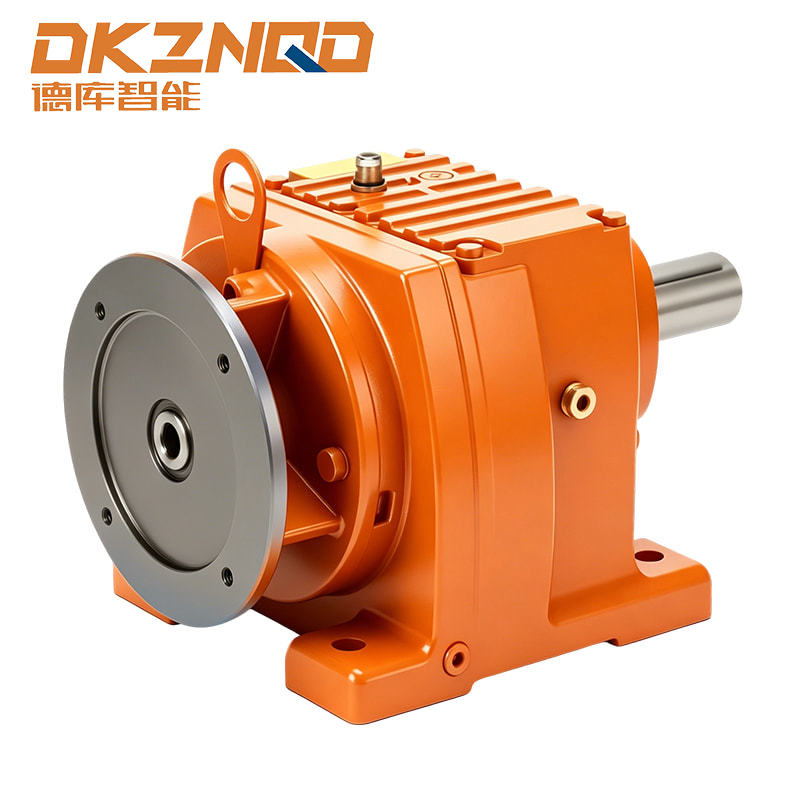
Conveyor drives present a different challenge from crushers: the load is more consistent, but starting torque under a loaded belt can be several times the running torque, particularly on inclined sections common in stockpile and load out conveyors. A r series helical geared motor combines a helical gear stage with an integral motor to deliver compact, high efficiency torque transmission while keeping backlash low, which helps maintain consistent belt tracking over long runs.
For conveyor sizing, three factors typically drive gearmotor selection:
- Breakaway torque required to start a fully loaded belt from standstill, including cold grease drag
- Service factor appropriate to duty cycle, since conveyors on continuous three shift operation need a higher margin than intermittent feed conveyors
- Output speed accuracy, since a high torque gearmotor for conveyor systems feeding a weigh scale or blending process needs tighter speed regulation than a simple transfer conveyor
Soft Starters for Oil and Gas and Pumps: Reducing Inrush and Mechanical Stress
Direct on line starting sends a current surge into the motor windings and mechanical torque surge into the coupled load simultaneously. On pump stations, that torque spike stresses shaft seals, couplings and check valves every time the motor starts, while the electrical inrush can cause voltage sag across the site distribution system. Soft starters address both problems by ramping voltage progressively rather than applying it in a single step.
| Starting Method | Relative Inrush Current | Mechanical Shock | Typical Application |
|---|---|---|---|
| Direct On Line | High | High | Small fans, light duty pumps |
| Star Delta | Moderate | Moderate, with transition bump | Mid size compressors |
| Soft Starter | Reduced and adjustable | Low, ramped torque | Pumps, screw compressors, conveyors |
| Variable Frequency Drive | Lowest | Lowest, fully controlled | Process pumps needing speed control |
For soft starters for pumps specifically, controlled ramp down is often as valuable as controlled ramp up, since an uncontrolled stop can trigger water hammer in long discharge lines. A properly tuned soft starter reduces both the starting surge and the stopping transient, protecting piping and check valves that are otherwise exposed to repeated pressure spikes.
Heavy Duty Motor Soft Starter Panels: Integration and Protection
A soft starter is only as reliable as the panel it is installed in. Sites in dusty or corrosive environments typically specify heavy duty motor soft starter panels with the following characteristics:
- Sealed enclosure rating appropriate to the installation area, with positive pressure ventilation where dust ingress is a concern
- Bypass contactors that carry running current once the ramp is complete, reducing heat generated inside the thyristor stack
- Integrated motor protection relays covering thermal overload, phase loss, and locked rotor conditions
- Communication ports for integration into a plant control system, allowing start sequencing to be coordinated across multiple loads
- Internal thermal management sized for the ambient temperature at the installation site, not just the standard reference temperature
Panels intended for outdoor or semi enclosed mining installations also benefit from corrosion resistant hardware and gasketed doors, since panel failures from moisture ingress are a frequent cause of unplanned soft starter downtime.
Aggregation Mining Equipment Drives: Coordinating Multiple Motor Loads
On a crushing and screening plant with several large motors, the limiting factor for starting sequence is rarely a single motor. It is the total inrush the site electrical supply can absorb without tripping upstream protection or sagging voltage for equipment already running.
Aggregation mining equipment drives, meaning the coordinated set of crusher, screen, feeder and conveyor motors on a processing plant, are usually staged rather than started simultaneously. A typical sequencing approach brings up conveyors first at no load, followed by screens, then feeders, and finally the crusher once material flow downstream is confirmed clear. Soft starters assigned to each stage allow the site to stagger starting current draw so that peak demand never exceeds the capacity of the incoming supply or backup generator set.
This staged approach also protects mechanical components. Starting a loaded crusher before the discharge conveyor is running can cause material to back up against the crusher chamber, creating an avoidable overload condition on the very first cycle of the day.
How a Soft Starter Ramp Sequence Protects Motor and Driven Load
This staged sequence is the operating principle behind every soft starter application on this page. The controlled ramp segment is where mechanical stress on couplings, belts and check valves is reduced, while the bypass stage protects the starter itself from continuous heat exposure once the motor reaches running speed.
Maintenance Practices That Extend Motor and Starter Life
- Trend winding and bearing temperatures over time rather than relying on single point readings, since a rising trend often precedes failure by weeks
- Inspect soft starter heat sinks and cooling fans on a fixed schedule, since dust accumulation is a leading cause of thyristor overheating
- Verify shaft grounding rings and bearing insulation resistance annually on severe duty motors, since shaft current damage develops gradually and is not obvious during a visual inspection
- Confirm soft starter ramp and current limit settings after any process change, since a setting tuned for the original load may no longer be appropriate
- Torque check foundation and coupling hardware after the first weeks of operation, since vibration loosens fasteners faster during initial run in
Motor and Starter Selection Checklist by Application
| Application | Motor Duty Class | Recommended Starting Method | Key Consideration |
|---|---|---|---|
| Wellhead Pump | Severe duty, premium efficiency | Soft starter with controlled stop | Water hammer protection on shutdown |
| Rock Crusher | Crusher duty, high service factor | Soft starter with high torque limit | Shock load margin on gearbox |
| Incline Conveyor | High torque gearmotor | Soft starter or variable frequency drive | Breakaway torque under full load |
| Screw Compressor | Premium efficiency, TEFC enclosure | Soft starter with current limit | Coordinated start with downstream valves |
| Screening Plant | Severe duty, vibration rated | Sequenced soft starter panel | Coordinated start order across plant |
Frequently Asked Questions
Q1: What distinguishes a severe duty motor from a standard TEFC motor?
Severe duty motors add corrosion resistant hardware, upgraded insulation systems, shaft grounding provisions, and higher service factors to withstand dust, moisture and vibration that a standard motor is not designed to tolerate over the long term.
Q2: Why use a soft starter instead of starting a pump motor direct on line?
A soft starter ramps voltage and torque gradually, which reduces electrical inrush on the supply and mechanical shock on couplings, seals and piping, and it can also provide a controlled stop that helps prevent water hammer in discharge lines.
Q3: How is a crusher duty motor different from a general industrial motor?
Crusher duty motors are built with reinforced shafts, higher pullout torque margins and bearings rated for repeated shock loading, since crushing applications generate torque spikes far above steady running torque during jam events.
Q4: Can multiple motors on a mining plant share one soft starter panel?
Some panels are designed with multiple starter modules to sequence several motors, but each motor still needs its own protection relay and current path, and the starting sequence must be coordinated so peak demand does not exceed supply capacity.
Q5: Does premium efficiency matter on intermittently used equipment?
The energy savings are smaller on low run-hour equipment, but the reduced heat rise still benefits reliability, so premium efficiency is often justified even outside continuous duty applications where downtime cost is high.
 05 Jun,2025