

 ENG
 English
 русский
 Español
 Türk

A mechanical engineer once replaced an aging right-angle gearmotor by copying the old nameplate: same frame, same ratio, same voltage. The unit bolted on, but the conveyor stalled under cold-start load because the replacement had a lower service factor than the duty actually demanded. The lesson is simple: selection starts with the load, not the part number. A helical bevel gear motor earns its place when you need a right-angle drive with high torque density, low noise, and good efficiency in one package. To choose the right unit, settle five inputs before you open a catalog: output torque, output speed, duty cycle, mounting position, and ambient conditions. Get those right, and the frame size, ratio, and price follow logically.
Define Torque, Speed, and Ratio First
A helical bevel gear motor combines a bevel gear stage for the right-angle turn with additional helical gear stages for quiet, high-torque reduction. The ratio is the motor speed divided by the required output speed, and the torque figure decides the frame size, output shaft diameter, and final price. Never guess torque: measure it on an existing machine or calculate it from the driven equipment.
Collect the following values before comparing suppliers:
| Parameter | What it affects | Typical source |
|---|---|---|
| Output torque | Frame size, shaft diameter, price | Machine drawings or load calculation |
| Output speed | Gear ratio, cooling requirement | Process specification |
| Duty cycle | Service factor, thermal rating | Shift schedule and load profile |
| Mounting position | Housing type, oil fill, breather location | Installation layout |
| Ambient conditions | Seals, paint, grease, motor enclosure | Site survey |
At ratios above 20:1, worm-based right-angle drives lose efficiency quickly, so a helical bevel unit often provides the better balance of efficiency, package size, and service life.
Efficiency Determines Lifetime Cost
The mechanical efficiency of a helical bevel gear motor is typically 94 to 97 percent at full load, depending on ratio, lubrication, and oil level. A right-angle worm gearmotor of a similar ratio often runs at 60 to 85 percent. On a 5 kW output running 8000 hours per year, every lost 10 percent of efficiency wastes roughly 4000 kWh per machine annually, which makes the higher purchase price of a helical bevel unit a short payback rather than a premium.
Efficiency also changes with ratio and load, so check the curve at your operating point instead of the catalog headline. The way you match ratio and motor power can change the result more than the gearbox brand. Our article on how helical gear motor selection determines long-term drive efficiency explains why load profile review should come before quote comparison.
Use a helical bevel gear motor when the job calls for: right-angle output high torque density continuous duty low noise long service life
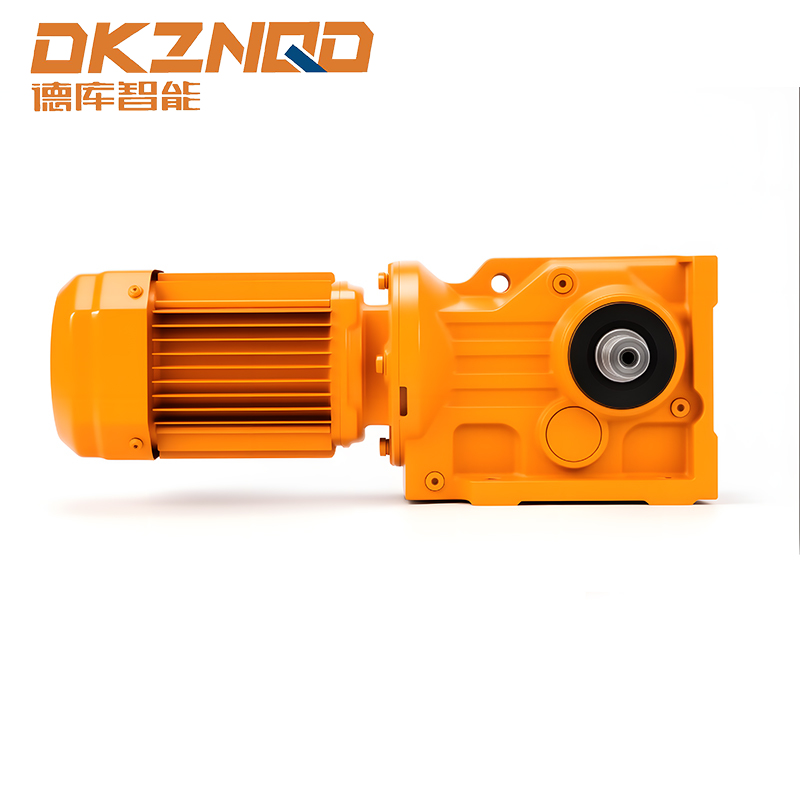
K Series Helical Bevel Gear Motor for High-Torque Right-Angle DrivesThis right-angle gear motor offers power up to 200 kW and torque to 50,000 Nm. Its compact design suits space-constrained applications while providing high efficiency and low noise, as highlighted in the preceding discussion on gearbox service factor.View Product →Match the Service Factor to the Real Duty Cycle
The service factor expresses how much overload capacity the gearbox has compared with its rated torque. A unit rated with a service factor of 1.0 is suitable only for uniform, continuous load at the nameplate torque. Real machines see startup peaks, load swings, and cycling, so the factor must cover the worst case, not the average.
Rule of thumb: use 1.25 for uniform load on one or two shifts, 1.5 for moderate shock or three-shift operation, and 2.0 for heavy shock, reversing, or high-inertia loads. When in doubt, move one step higher. An oversized gearbox costs more to buy; an undersized one costs more in downtime.
Do not oversize without limit, though. A gearmotor that constantly runs far below its rated torque loses efficiency and may develop lubrication film problems in the upper stages. Size for the real worst-case torque, not for a doubled margin.
Check Mounting Position and Shaft Configuration
Helical bevel gearmotors are built for the standard M1 to M6 mounting positions. M1 is feet down with a horizontal output shaft; M6 usually means the output shaft points vertically upward. Vertical orientations change oil drainage and breather placement, so the same unit cannot be rotated into any position without checking the manufacturer's oil fill and vent instructions.
You also need to choose between a solid output shaft and a hollow shaft with a torque arm. A hollow-shaft unit slides directly onto the driven shaft, which saves space and removes a coupling, while a solid shaft is easier to align and connect with a coupling or sprocket. If headroom is the constraint, an R-series coaxial helical geared motor puts the motor and output shaft in a straight line, which shortens the installed length compared with a right-angle layout.
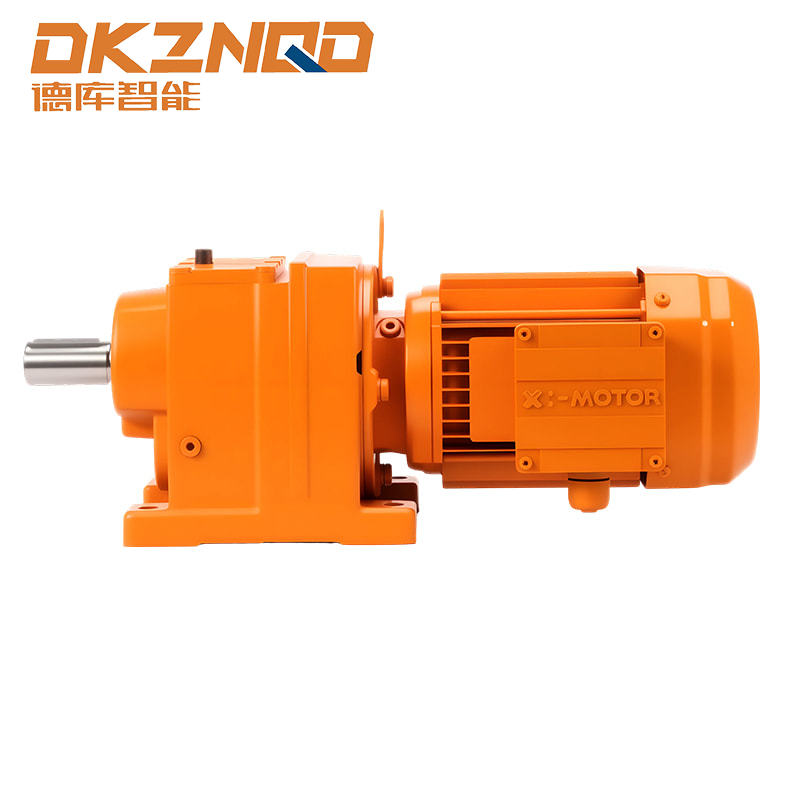 R Series Coaxial Helical Gear Reduction Motor for Straight-Line LayoutsFeaturing a coaxial shaft arrangement, this geared motor suits applications where headroom is tight. With power up to 160 kW and speeds to 1,075 r/min, it provides an efficient alternative when a right-angle configuration is not ideal.View Product →
Compare Right-Angle Drive Types Before You Commit
Helical bevel units are the most capable right-angle option, but they are not the only one. The table below compares the three drive families commonly offered for right-angle installations.
| Drive type | Typical efficiency | Torque density | Noise level | Best suited to |
|---|---|---|---|---|
| Helical bevel (K series) | 94 to 97% | High | Low | Continuous duty, high torque, long life |
| Helical worm (S series) | 70 to 85% | Medium | Medium | Intermittent duty, compact right-angle drives |
| Worm (RV series) | 50 to 85% | Low to medium | Low at low speed | Light duty, occasional operation, self-locking cases |
These figures are general industry ranges rather than specific product guarantees; the real value depends on ratio, lubrication, and load. The useful rule is that if a machine runs for more than eight hours a day, a helical bevel unit usually pays back its higher first cost through electricity savings within the first year. If the machine can accept an offset, parallel-shaft layout, an F-series parallel shaft helical gearmotor delivers similar efficiency with a different footprint.
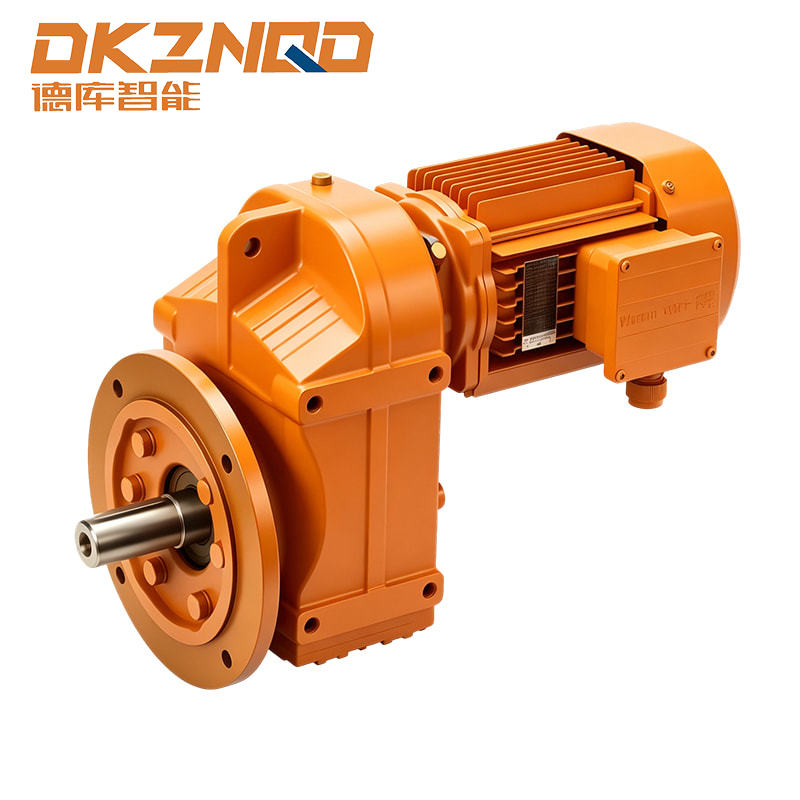 F Series Parallel Shaft Helical Gearmotor for Compact InstallationsThis parallel shaft gearmotor delivers power up to 200 kW and torque to 18,000 Nm. Its sleek, space-saving design supports multiple mounting options, making it a practical choice for limited-space installations, especially when comparing efficiency and footprint.View Product →
Account for Ambient Conditions and Thermal Limits
Catalog torque ratings assume standard conditions, typically about 20 degrees Celsius ambient temperature and near-sea-level altitude. At 40 degrees, the unit may need a derating or a larger frame. Above 1000 meters altitude, cooling air is thinner and thermal capacity drops, which matters more than mechanical strength in many applications.
Housing material, shaft seals, paint, and motor enclosure all follow the site. Washdown areas require better seals and stainless steel options; dusty plants need good breathers and filters; hazardous areas require a package that matches the area classification. The cheapest unit is rarely the one that survives its environment.
Evaluate the Manufacturer, Not Just the Price
Two gearmotors with the same ratio and torque can have very different lifetimes if one is built with hardened and ground gears and the other with a simpler finishing process. Ask how gear teeth are finished after heat treatment, what inspection and testing happens before shipment, and which motor supplier is used. A manufacturer that controls gear cutting, housing machining, and motor supply can respond faster to non-standard ratios, mounting positions, and custom shafts.
That practical capability is why our group, Deku Intelligent Drive (Zhejiang) Co., Ltd., positions itself as a manufacturing partner rather than a catalog reseller. With more than 21 years of gear reducer experience and 450+ skilled workers, the company builds the K-series, F-series, and R-series units for customized industrial orders, and its long warranty terms are backed by factory-level quality methods. Before you sign a low-price order, verify the factory, the testing center, and the qualifications you are actually buying.
Frequently Asked Questions
Q1: What is the typical efficiency of a helical bevel gear motor?
A well-designed multi-stage helical bevel gearmotor operates at roughly 94 to 97% efficiency at full load, depending on the ratio, lubrication type, and oil level. High-ratio units sit at the lower end of that range.
Q2: How do I calculate the gear ratio I need?
Divide the motor's nominal speed by the required output speed. For example, a 1400 rpm motor driving a machine at 56 rpm needs a ratio of 25:1. Then verify that the selected ratio can deliver the required output torque at the motor power you plan to use.
Q3: Can a helical bevel gearmotor replace a worm gearmotor?
It can replace it in most right-angle applications where the mounting position, output shaft size, and torque requirement match. Expect a higher purchase price but better efficiency, less heat, and a longer service life, which typically reduces the total operating cost.
Q4: What is the difference between a hollow shaft and a solid shaft gearmotor?
A hollow-shaft unit slides over the driven shaft and is secured with a torque arm and shrink disc, which saves space and removes one coupling. A solid-shaft unit connects through a coupling or sprocket and is easier to align. Choose according to the driven machine's shaft configuration and maintenance preference.
 05 Jun,2025