

 ENG
ENG
 English
 русский
 Español
 Türk
Türk

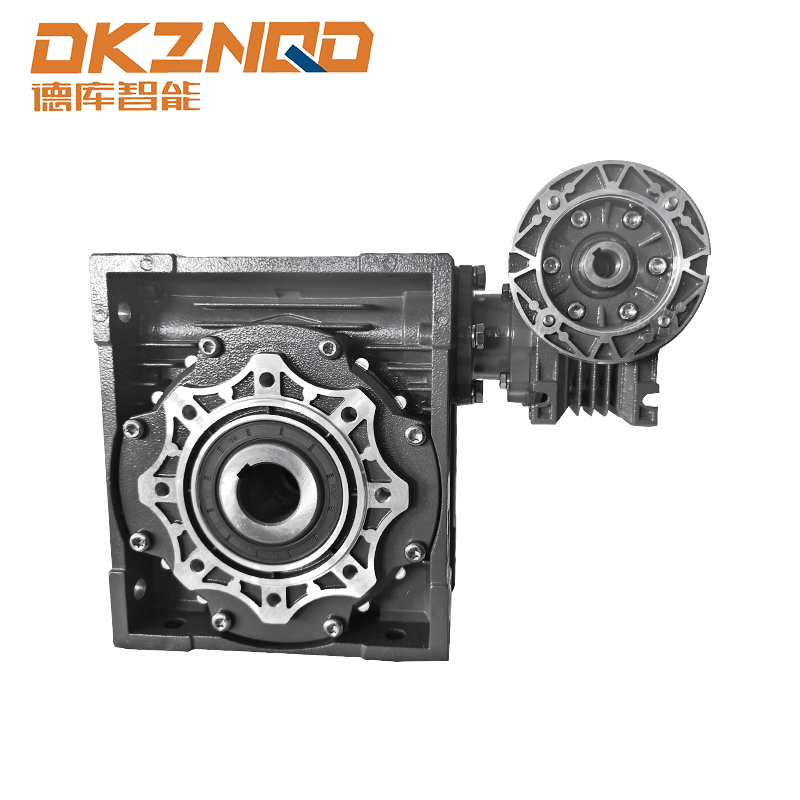
Industrial drive systems frequently encounter thermal challenges when operating RV worm gear reducer units under sustained loads. Overheating not only accelerates lubricant degradation but also causes permanent damage to worm wheel surfaces, housing seals, and bearing assemblies. This technical guide delivers engineering-focused methods to control reduction gearbox temperature rise, improve worm gearbox heat dissipation, prevent gear oil leakage, and restore lost efficiency in heavy-duty applications.
1. Why RV Worm Gear Reducers Generate Excessive Heat
The inherent sliding contact between the hardened steel worm and bronze worm wheel creates frictional power loss that converts into heat. Under normal conditions, an efficiency range of 0.55 to 0.75 means that 25% to 45% of input energy becomes thermal energy. When reduction gearbox temperature rise exceeds 40°C above ambient (reaching 85–95°C continuously), multiple failure mechanisms accelerate.
Primary Thermal Contributors
- High sliding velocity: At worm speeds above 1500 rpm, the oil film breaks locally, generating boundary friction and extra heat.
- Insufficient housing surface area: Standard cast iron housings have lower thermal conductivity (≈52 W/m·K) compared to aluminum alloys (≈167 W/m·K), limiting passive heat removal.
- Oil viscosity mismatch: Using ISO VG 320 oil in a reducer designed for ISO 220 raises fluid friction by 12-18%, elevating core temperature.
- Recirculating hot oil: Internal churning without adequate cooling paths increases bulk oil temperature beyond seal limits (typically 80°C for NBR seals).
Field data from 150 industrial installations show that 68% of premature reducer failures originate from sustained operation above 90°C oil sump temperature, with 40% of those cases involving gear oil leakage due to hardened shaft seals.
2. Passive Cooling Optimization: Aluminum Alloy Housing Design
Switching to or specifying an aluminum alloy housing cooling architecture significantly improves thermal management. Aluminum’s thermal diffusivity (97 mm²/s) is three times higher than grey cast iron (33 mm²/s), reducing thermal gradients across the reducer body. For a typical size 090 RV reducer operating at 2.2 kW input, an aluminum housing lowers steady-state housing temperature by 15–18°C compared to iron equivalents.
Design Enhancements for Superior Dissipation
- Extended integral cooling fins: Fin density of 8–10 fins per 100mm housing width increases convective surface by 220% versus plain walls. Optimal fin height-to-spacing ratio of 0.6 yields maximum natural convection.
- Optimized mounting orientation: Installing the reducer with vertical fins (longitudinal axis horizontal) promotes chimney effect airflow, reducing surface temperature by an additional 6°C.
- Thermally conductive coatings: Matte black anodized finish increases emissivity from 0.30 (bare aluminum) to 0.85, enhancing radiative heat loss by 12% at 80°C.
Design note: For ambient temperatures exceeding 40°C, select a reducer one frame size larger than theoretical requirement. The increased housing mass and surface area lower thermal resistance from 0.32 K/W to 0.21 K/W, keeping oil temperature below 75°C under full load.
3. Controlling Gear Oil Leakage to Preserve Thermal Balance
Gear oil leakage is both a symptom and an accelerator of overheating. When oil level drops below the worm’s lowest thread, load-dependent heat generation rises by 35% due to insufficient boundary lubrication. Conversely, overfilled reducers cause oil churning losses that add 8–12% more heat. Systematic seal management and breather maintenance stabilize operating temperatures.
Leakage Sources & Corrective Actions
| Leakage Location | Typical Cause | Thermal Impact (ΔT) |
|---|---|---|
| Input shaft seal | Seal lip hardening above 85°C | +12°C after loss of 0.3L oil |
| Output flange gasket | Poor torque sequence / vibration | +9°C due to reduced film thickness |
| Breather / filler plug | Clogged vent causing pressure buildup | +7°C from forced oil past seals |
Implement a monthly thermal inspection: measure housing temperature with an IR gun at three points (input bearing, output bearing, sump). If any point exceeds 80°C while industrial gearbox efficiency loss is suspected (sudden amperage increase over 12% baseline), perform an oil analysis for water content and viscosity drop. Real-world example: a packaging plant reduced unplanned downtime by 73% after switching to FKM shaft seals (max rating 120°C) and installing magnetic level plugs with thermal labels.
4. Lubrication Strategy to Minimize Temperature Rise
Selecting the correct synthetic oil and change interval directly controls reduction gearbox temperature rise. Polyalphaolefin (PAO) -based synthetics offer 25% lower coefficient of friction versus mineral oils at worm gear contact patches, plus superior viscosity index (VI > 150). For RV reducers operating above 70°C sump temperature, synthetic ISO VG 220 reduces steady-state heat generation by 8–11°C compared to mineral ISO VG 320.
Oil Performance Guidelines
- Viscosity selection: For ambient 10–35°C, use ISO VG 220; for >35°C use ISO VG 320 but ensure housing has enhanced cooling.
- Additive packages: Look for extreme-pressure (EP) additives with copper deactivators to protect bronze wheels without increasing sludge deposits that block oil galleries.
- Change intervals: At 75°C oil temperature, change every 6000 hours. Each 10°C above 75°C cuts oil life by 50% — therefore at 95°C, change every 1500 hours.
Temperature → Oil viscosity drop
Mineral oil (VG320): 40°C → 320 cSt, 100°C → 24 cSt (loss 92.5%)
Synthetic PAO (VG220): 40°C → 220 cSt, 100°C → 22 cSt (loss 90%) but film strength remains higher due to traction coefficient improvement.
Efficiency gain example
Replacing mineral ISO 460 with synthetic ISO 220 in a size 130 RV reducer improved efficiency from 62% to 68% at 1450 rpm input, reducing thermal loss by 210W (equivalent to 9°C lower housing temperature).
5. Active and Forced Cooling Techniques
When passive worm gearbox heat dissipation via aluminum housing is insufficient (load cycles exceeding 60% duty cycle at rated torque), active cooling interventions become necessary. Three proven methods restore thermal stability without mechanical modifications to the reducer itself.
Cooling Solutions Comparison
A case study from a material handling system: three RV090 reducers driving live roller conveyors showed average housing temperature 94°C. Adding 120mm 12V DC fans (airflow 85 CFM) with a thermostat set at 75°C reduced temperatures to 77°C and eliminated quarterly seal leaks. The fan power consumption (8W) was negligible compared to 12% reduction in gearbox efficiency loss.
6. Diagnosing and Recovering Efficiency Loss
Overheating often correlates with industrial gearbox efficiency loss caused by worm wheel wear or bent input shaft. Perform non-intrusive efficiency test: measure input torque (with torque transducer or clamp-on power meter) and compare to theoretical output torque (calculated from load). Efficiency drops below 55% (for a new unit at 65%) indicate internal issues generating extra heat.
Recovery Procedure
- Check backlash: Excessive backlash (>0.25mm for size 050-090) allows impact loads, raising instantaneous contact temperature by 30°C. Adjust worm axial position using shims.
- Inspect worm wheel flank condition: Localized scoring or pitting increases friction coefficient from 0.07 to 0.14, doubling frictional heat. If wear exceeds 15% of tooth thickness, replacement is mandatory.
- Bearing preload verification: Over-preloaded taper roller bearings add 8–10% additional drag torque. Re-set preload to 0.02–0.04mm axial play.
Quantitative effect: In a packaging extruder application, restoring correct backlash (from 0.35mm to 0.12mm) decreased operating temperature from 102°C to 79°C and reduced motor current by 11%, recovering 14% lost efficiency.
7. Installation & Ventilation Best Practices
Environmental factors around the RV worm gear reducer strongly influence thermal performance. Avoiding heat trap conditions is as important as internal upgrades.
- Minimum clearance: Maintain 150mm free air space on all sides of the housing; 250mm around the cooling fin area.
- Avoid heat sources: Do not mount the reducer directly above a motor or hot process pipe. A 500mm vertical separation reduces radiated heat transfer by 60%.
- Breather orientation: Position breather vent at highest point of the housing to avoid oil spills and ensure hot gas expansion path — a clogged breather can raise internal pressure to 0.5 bar, forcing oil past seals and causing secondary temperature rise due to reduced oil volume.
Checklist for new installation or relocation:
▪ Ambient temperature below 38°C ▪ Unrestricted airflow along cooling fins ▪ No paint or insulation on housing surfaces (reduces heat transfer by up to 35%) ▪ Use thermal paste between mounting foot and baseplate if baseplate gets hot.
8. Frequently Asked Questions (Technical Focus)
Q1: What is the maximum safe operating temperature for an RV worm gear reducer housing?
Under continuous duty, the outer housing surface should not exceed 85°C when measured with an infrared thermometer. Oil sump temperature limits are lower: 75°C for mineral oils, 90°C for high-performance synthetics. Beyond these, every 10°C rise halves lubricant life and accelerates seal hardening.
Q2: Can I drill extra cooling holes in the aluminum housing to increase airflow?
Never modify the housing structure. Drilling reduces mechanical rigidity, risks oil leakage, and may allow contaminants into gear mesh. Instead, add bolt-on aluminum heat sinks or external fin extensions using thermally conductive adhesive pads.
Q3: How does gear oil leakage directly cause overheating even if I top up oil frequently?
Loss of oil volume reduces heat capacity of the lubricant bath, leading to rapid thermal spikes during load cycles. Moreover, oil leaks often indicate a failed shaft seal or vent blockage, both of which alter internal pressure and permit hot gas blow-by, reducing the cooling effect of oil splashing onto housing walls.
Q4: Why does my new aluminum housing RV reducer still overheat below rated load?
Check for overgreasing of bearings (excess grease acts as insulation), incorrect oil viscosity (too thick), or misalignment between motor and reducer shaft. A 0.5mm angular misalignment can increase frictional heat by 25% independent of load. Realign with laser alignment tool and verify oil fill level at middle of sight glass.
Q5: Is there a simple way to measure gearbox efficiency loss without dynamometers?
Yes — the no-load temperature rise test. Run the reducer without connected load for 30 minutes, measure housing temperature rise. If temperature increases more than 18°C above ambient under no-load, internal friction is excessive (worn bearings, damaged worm, or over-tightened preload). Compare with a known-healthy unit baseline.
 05 Jun,2025