

 ENG
ENG
 English
 русский
 Español
 Türk
Türk

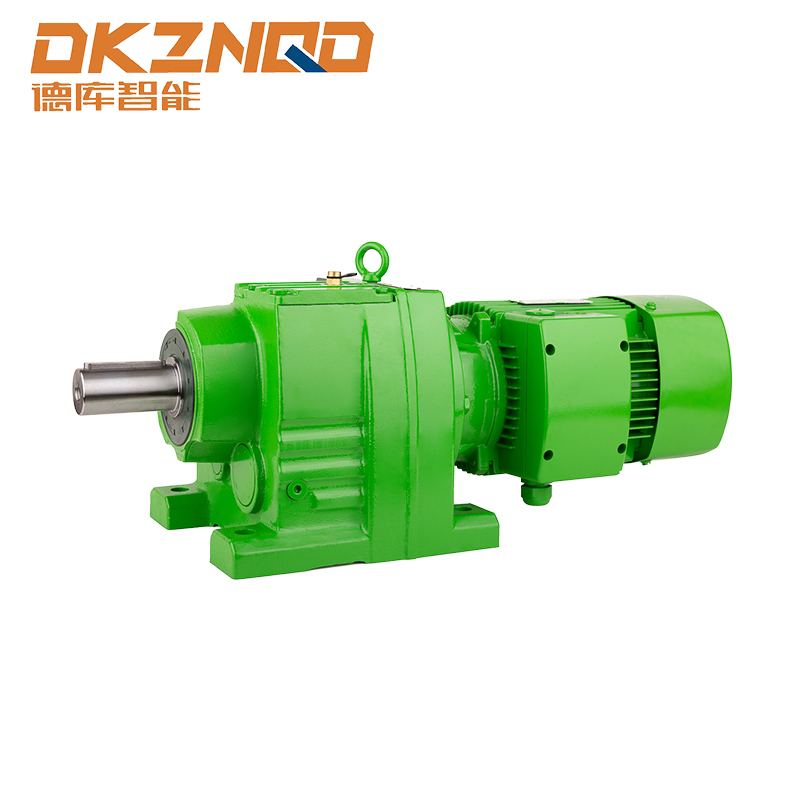
Why Helical Gearmotors Are the Preferred Choice
Helical gearmotors offer superior efficiency, quieter operation, and higher load capacity compared to spur or worm gear alternatives. Their angled tooth design enables gradual meshing, which distributes force more evenly and reduces mechanical stress. For industries requiring reliable, continuous power transmission — from conveyor systems to mixing equipment — helical gearmotors consistently outperform in both durability and energy efficiency.
In practical terms, a helical gearmotor can achieve transmission efficiencies of up to 98% per gear stage, making it one of the most energy-efficient options available in industrial drive technology.
Key Advantages of Helical Gearmotors
1. High Transmission Efficiency
The helical tooth geometry allows multiple teeth to engage simultaneously, distributing the load across a larger contact area. This results in efficiency ratings typically between 95% and 98% per stage, reducing energy waste and lowering operating costs over the long term. For facilities running gearmotors 24/7, this efficiency gain translates directly into measurable savings on electricity bills.
2. Smooth and Quiet Operation
Unlike spur gears that engage teeth abruptly, helical gears mesh progressively along the tooth face. This gradual engagement eliminates impact loading and significantly reduces vibration and noise. Noise levels are typically 10–15 dB lower than comparable spur gear arrangements, which is critical in food processing, pharmaceutical manufacturing, and other environments sensitive to noise and vibration.
3. High Load-Carrying Capacity
The overlapping tooth contact inherent to helical gears means the load is shared across multiple teeth at all times. This allows helical gearmotors to handle torque outputs ranging from a few Nm up to tens of thousands of Nm, making them suitable for heavy-duty applications such as material handling, extruders, and industrial mixers.
4. Compact and Modular Design
Modern helical gearmotors are engineered for a compact footprint. Their modular construction allows engineers to combine different motor ratings and gear ratios to meet specific application requirements without designing a custom drivetrain. This versatility reduces installation time and simplifies maintenance planning.
5. Long Service Life and Low Maintenance
The reduced shock loading and even force distribution in helical gearsets result in less wear on gear teeth and bearings. With proper lubrication, helical gearmotors commonly achieve service lives exceeding 20,000 operating hours under rated conditions, minimizing unplanned downtime and maintenance costs.
Helical vs. Other Gearmotor Types: A Direct Comparison
Understanding how helical gearmotors compare to other common types helps clarify why they are so widely specified in industrial applications.
| Feature | Helical Gearmotor | Spur Gearmotor | Worm Gearmotor |
|---|---|---|---|
| Efficiency per Stage | 95–98% | 92–96% | 50–90% |
| Noise Level | Low | Medium–High | Low–Medium |
| Load Capacity | High | Medium | Medium |
| Torque Range | Wide | Moderate | Moderate |
| Typical Applications | Conveyors, mixers, compressors | Light machinery, printers | Lifts, gates, slow conveyors |
| Maintenance Interval | Long | Medium | Shorter (heat/wear) |
The data clearly shows that helical gearmotors strike the best balance between efficiency, noise control, and load capacity for most industrial use cases.
R Series Helical Geared Motor: A Representative Example
The R Series Helical Geared Motor is a widely adopted inline helical gearmotor configuration that exemplifies the advantages described above. Its coaxial shaft arrangement makes it easy to integrate into existing machinery layouts without requiring complex coupling adapters.
Key characteristics of the R Series design include:
- Gear ratios typically from 1.3:1 to over 289:1, offering broad speed reduction flexibility
- High-precision gear grinding for reduced noise and extended gear life
- Modular mounting options including foot mount, flange mount, and shaft mount variants
- Compatible with standard IEC and NEMA motor frames for easy motor pairing or replacement
- Sealed housing suitable for dusty or washdown environments
This combination of flexibility and robust performance makes the R Series a go-to solution in industries such as logistics, food and beverage, packaging, and material handling.
Typical Application Scenarios
Helical gearmotors are found across a wide spectrum of industrial applications due to their adaptability and performance consistency:
- Belt and chain conveyors — smooth torque delivery prevents belt slippage and reduces wear on conveyor components
- Agitators and mixers — high torque at low speed handles viscous materials without overheating
- Compressors and fans — high efficiency reduces energy consumption in continuous-duty cycles
- Packaging machinery — quiet operation and precise speed control meet hygiene and accuracy requirements
- Pump drives — reliable shaft output accommodates variable flow demands
- Crane and hoist systems — high load capacity with smooth acceleration and deceleration
Factors to Consider When Selecting a Helical Gearmotor
Selecting the right helical gearmotor requires evaluating several key parameters to ensure reliable, long-term performance:
- Required output torque and speed — define the gear ratio and motor power needed
- Duty cycle — continuous duty requires different thermal ratings than intermittent operation
- Service factor — applications with shock loads or frequent starts need a higher service factor rating
- Mounting configuration — shaft orientation, foot or flange mounting, and available installation space
- Environmental conditions — IP rating for dust and moisture protection, temperature range, and chemical exposure
- Lubrication type — synthetic lubricants extend change intervals and support wider temperature ranges
Getting these parameters right at the specification stage prevents premature failures and avoids costly retrofits later.
FAQ
Q1: What is the main advantage of helical gears over spur gears?
Helical gears mesh gradually rather than all at once, which reduces noise, vibration, and impact loading. This results in smoother operation and higher load capacity for the same gearbox size.
Q2: How efficient is a helical gearmotor?
A single-stage helical gearmotor typically achieves 95–98% transmission efficiency. Multi-stage units are slightly lower but still significantly more efficient than worm gear alternatives.
Q3: What does the "R Series" designation mean?
The R Series refers to an inline (coaxial) helical gearmotor configuration where the input and output shafts are on the same axis. It is a widely standardized design suitable for a broad range of industrial applications.
Q4: Can helical gearmotors be used in food processing environments?
Yes. Models with appropriate IP ratings and food-grade lubricants are specifically designed for food processing, beverage, and pharmaceutical environments where hygiene and washdown resistance are essential.
Q5: How often does a helical gearmotor need maintenance?
Under normal conditions, the main maintenance task is lubricant inspection and replacement — typically every 10,000–20,000 operating hours depending on the lubricant type and operating temperature. Synthetic lubricants allow longer intervals.
Q6: What gear ratios are available for R Series helical geared motors?
R Series units commonly offer gear ratios from approximately 1.3:1 up to 289:1 or more, depending on the number of gear stages and the specific model selected.
Q7: Are helical gearmotors suitable for variable speed drive (VFD) applications?
Yes. Helical gearmotors are fully compatible with variable frequency drives. Using a VFD in combination with a helical gearmotor offers precise speed control and can further improve energy efficiency across varying load conditions.
 05 Jun,2025