

 ENG
ENG
 English
 русский
 Español
 Türk
Türk

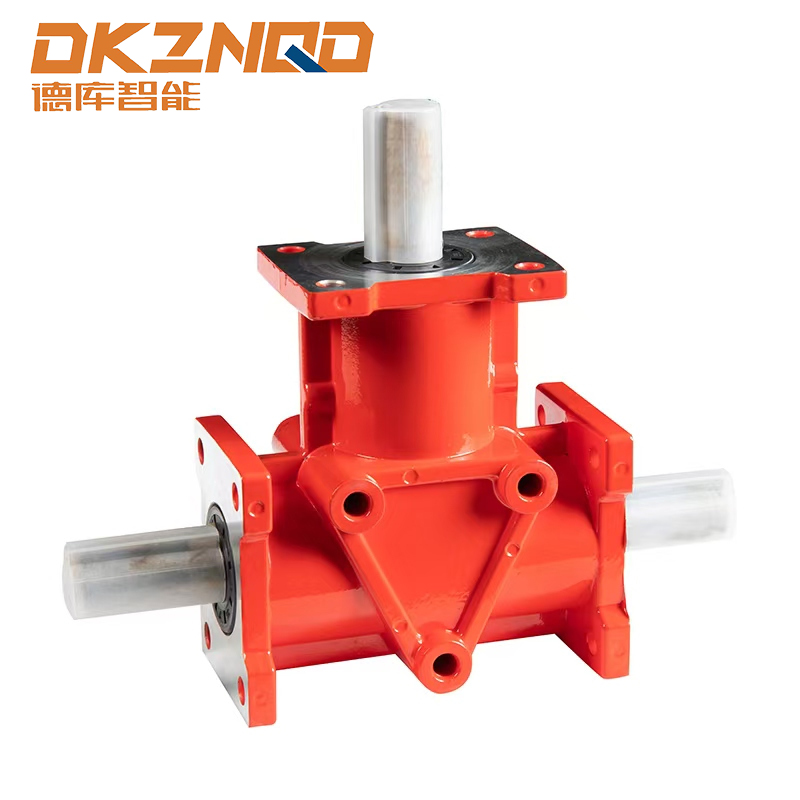
Quick Verdict: Spiral Bevel Gears Are High-Performance but Demand-Intensive
Spiral bevel gears offer superior torque transmission, quieter operation, and higher load capacity compared to straight bevel gears. However, they come with trade-offs: higher manufacturing complexity, greater sensitivity to misalignment, and increased cost. For applications requiring smooth, high-speed, high-torque power transmission at intersecting axes—such as automotive differentials or heavy industrial machinery—the advantages far outweigh the drawbacks. Understanding both sides helps engineers select the right gear system for their specific requirements.
What Makes Spiral Bevel Gears Distinct
Spiral bevel gears are conical gears with curved, oblique teeth that wrap around the gear face at a helix angle—typically between 25° and 45°. Unlike straight bevel gears, which have teeth aligned radially, spiral bevel gear teeth engage gradually along their length. This gradual engagement is the root cause of most of their advantages.
A Spiral Bevel Gearbox houses these gears in a precision-engineered casing designed to handle the unique axial and radial thrust forces produced during operation. These gearboxes are found across industries from automotive and aerospace to mining and marine applications.
Key structural characteristics include:
- Curved teeth with a defined spiral angle
- Intersecting shaft axes (typically at 90°, but other angles are possible)
- Tapered pitch cone geometry
- Higher tooth overlap ratio than straight bevel gears
Advantages of Spiral Bevel Gears
1. Smooth, Quiet Operation
The gradual tooth engagement of spiral bevel gears significantly reduces noise and vibration. In automotive rear axles, spiral bevel gears can reduce gear noise by up to 50% compared to straight bevel gears under equivalent load conditions. This makes them suitable for passenger vehicles, medical equipment, and any noise-sensitive environment.
2. High Load-Carrying Capacity
Because multiple teeth are in contact simultaneously (a contact ratio typically between 1.5 and 2.0), the load is distributed across a larger surface area. This increases the gear's ability to handle heavy, continuous loads without premature wear or fatigue failure.
3. Efficient Power Transmission
Spiral bevel gears achieve transmission efficiencies of 98–99% in well-lubricated, precision-manufactured setups. This high efficiency makes them preferable in energy-sensitive applications such as wind turbines, industrial conveyors, and aerospace actuators.
4. High-Speed Capability
The smooth tooth engagement allows spiral bevel gears to operate at pitch line velocities exceeding 40 m/s in some configurations. This high-speed performance is critical in turbine drives and high-output industrial gearboxes.
5. Compact Power Transmission at Angle Changes
Spiral bevel gears efficiently transmit power between intersecting shafts in a compact package. A 90° shaft redirection can be achieved without excessive space requirements, which is valuable in gearbox designs where layout constraints are critical.
6. Longer Service Life
The distributed load and smoother engagement reduce stress concentrations on individual gear teeth, leading to extended fatigue life. In industrial applications with continuous operation schedules, this translates directly to lower maintenance frequency and reduced downtime costs.
Disadvantages of Spiral Bevel Gears
1. Higher Manufacturing Complexity and Cost
Producing spiral bevel gears requires specialized cutting machines (such as Gleason or Klingelnberg gear generators) and precision grinding equipment. Manufacturing costs are typically 30–60% higher than equivalent straight bevel gears. This cost factor becomes significant in high-volume or cost-sensitive applications.
2. Axial Thrust Forces
The spiral tooth angle generates axial thrust loads in addition to radial loads. These thrust forces must be absorbed by thrust bearings, which adds design complexity, increases bearing loads, and can contribute to additional power loss if not managed properly. Bearing selection becomes critical in high-load applications.
3. Sensitivity to Misalignment
Spiral bevel gears require precise alignment between the mating gear pair. Even small axial or angular misalignments—sometimes as little as 0.025 mm—can lead to uneven tooth contact, increased noise, accelerated wear, and premature failure. This demands high-quality housings and careful assembly procedures.
4. Lubrication Requirements
Due to the sliding contact component in spiral tooth engagement, adequate and consistent lubrication is essential. In applications with intermittent operation or extreme temperatures, maintaining proper lubrication film thickness becomes more challenging compared to spur or helical gear systems.
5. Tooth Contact Adjustment Difficulty
Achieving the correct tooth contact pattern (typically targeting the center of the tooth face) requires careful shimming and adjustment during assembly. Incorrect contact patterns can severely reduce gear life and increase noise levels. This adjustment process requires skilled technicians and proper measurement tools.
Spiral Bevel Gears vs. Straight Bevel Gears: A Direct Comparison
| Parameter | Spiral Bevel Gears | Straight Bevel Gears |
|---|---|---|
| Noise Level | Low | High |
| Load Capacity | High | Moderate |
| Speed Capability | High (>40 m/s) | Moderate (<10 m/s) |
| Transmission Efficiency | 98–99% | 95–97% |
| Manufacturing Cost | High | Lower |
| Axial Thrust | Present | Minimal |
| Misalignment Tolerance | Low | Moderate |
| Typical Applications | Automotive, aerospace, heavy industry | Low-speed, light-duty applications |
Typical Applications Where Spiral Bevel Gears Excel
Understanding real-world use cases clarifies where the performance advantages justify the cost and complexity:
- Automotive differentials: Nearly all modern vehicle rear differentials use spiral bevel gears for quiet and efficient torque split between drive wheels.
- Helicopter main rotor gearboxes: The combination of high load, high speed, and compact design is essential in aerospace powertrains.
- Industrial mixers and agitators: Right-angle power transmission with smooth torque delivery prevents premature shaft fatigue.
- Mining and quarrying equipment: Heavy-duty spiral bevel gearboxes handle continuous, high-torque demands in crushers and conveyor drives.
- Marine propulsion systems: Compact shaft angle changes in limited hull spaces with high efficiency requirements.
- CNC machine tool spindles: Precision and low noise are critical in machining environments.
Key Factors to Consider When Selecting a Spiral Bevel Gearbox
When evaluating whether a spiral bevel gearbox is appropriate for a given application, engineers should assess:
- Operating speed and torque range: Spiral bevel gears are most advantageous above 1,000 RPM or under high continuous torque loads.
- Noise and vibration constraints: Applications in occupied spaces or precision environments benefit most from the smooth engagement.
- Available shaft alignment precision: If installation conditions cannot guarantee accurate alignment, consider design accommodations such as adjustable housings.
- Lubrication system availability: Continuous-duty applications should be paired with forced lubrication or oil bath systems to maintain film integrity.
- Budget and lifecycle cost: Higher upfront investment is often offset by longer service intervals and reduced downtime in demanding applications.
FAQ
Q1: What is the main advantage of spiral bevel gears over straight bevel gears?
Spiral bevel gears offer significantly lower noise, higher load capacity, and better efficiency due to their gradual tooth engagement and higher contact ratio.
Q2: Why do spiral bevel gears generate axial thrust?
The curved, angled teeth produce a force component along the shaft axis during meshing. This requires thrust bearings to be included in the gearbox design to absorb and manage these axial loads.
Q3: What helix angle is typical for spiral bevel gears?
Most spiral bevel gears use a spiral angle between 25° and 45°, with 35° being a common standard for automotive and general industrial applications.
Q4: How sensitive are spiral bevel gears to misalignment?
Very sensitive. Axial misalignments as small as 0.025 mm can cause uneven tooth contact, increased noise, and accelerated wear. Precise housing manufacturing and careful shimming are essential.
Q5: Can spiral bevel gears be used for non-90° shaft angles?
Yes. While 90° is most common, spiral bevel gears can be designed for various intersecting shaft angles depending on application requirements.
Q6: What lubrication is recommended for spiral bevel gearboxes?
Gear oil with EP (extreme pressure) additives is standard. Splash lubrication suits moderate speeds; forced circulation systems are preferred for high-speed or high-temperature operations.
Q7: Are spiral bevel gears suitable for reversing loads?
Yes, but the thrust direction reverses when load direction changes. The gearbox bearing arrangement must be designed to handle bidirectional axial thrust to prevent bearing failure under reversing conditions.
 05 Jun,2025