

 ENG
ENG
 English
 русский
 Español
 Türk
Türk

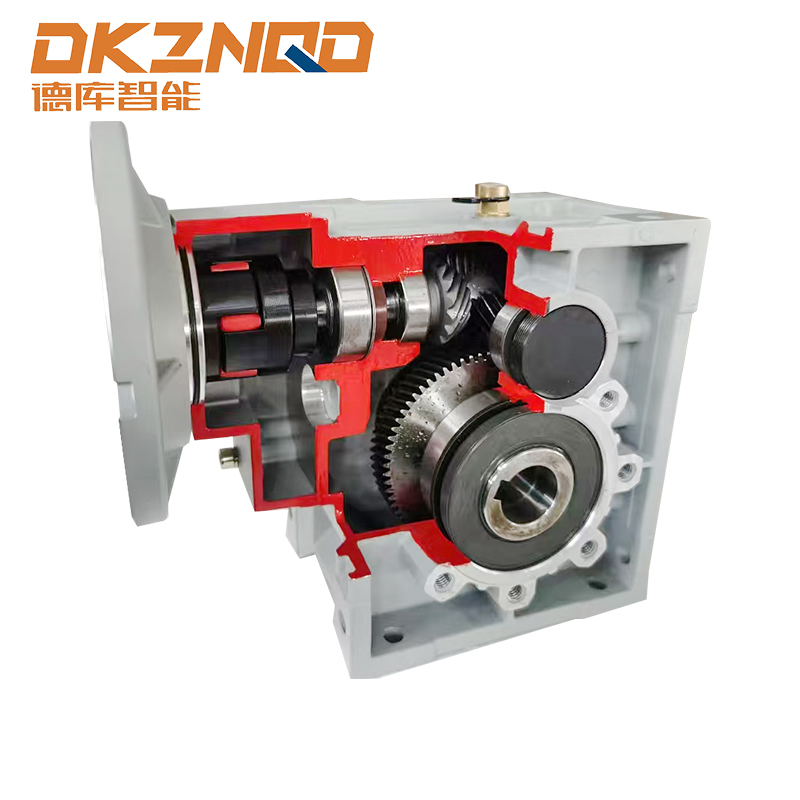
The Core Difference: Axis Offset
The fundamental difference between a spiral bevel gear and a hypoid gear is straightforward: a spiral bevel gear has intersecting axes, while a hypoid gear has offset, non-intersecting axes. In a spiral bevel gear, the pinion and ring gear axes meet at a point. In a hypoid design, the pinion axis is offset — typically below the centerline of the ring gear. This seemingly small geometric change has significant engineering consequences for load capacity, efficiency, noise, and application suitability.
What Is a Spiral Bevel Gear?
A spiral bevel gear transmits motion between two shafts that intersect, usually at a 90° angle. The teeth are curved in a helical arc, which allows more tooth contact area compared to straight bevel gears. This results in smoother, quieter operation and better load distribution.
- Axes intersect at a single point (typically 90°)
- Curved, helical tooth profile for smooth engagement
- Commonly used in high-speed, moderate-load applications
- Typical efficiency: 97–99%
- Applications: aerospace, machine tools, printing equipment, differential drives
Because the axes intersect, the pinion and ring gear are geometrically constrained. The pinion diameter is limited relative to the ring gear, which places a ceiling on the torque the pinion can transmit.
What Is a Hypoid Gear?
A hypoid gear is a type of spiral bevel gear where the pinion axis is offset from the ring gear axis — it does not intersect. This offset, often 10–30% of the ring gear's mean radius, allows the pinion to be made larger in diameter than a comparable spiral bevel pinion. A larger pinion means more tooth contact, greater tooth overlap, and significantly higher torque transmission capability.
- Axes are offset and do not intersect
- Pinion can be larger and longer in contact length
- Higher torque density and load-carrying capacity
- Quieter operation due to greater tooth overlap ratio
- Typical efficiency: 90–98% (slightly lower due to sliding contact)
- Applications: automotive rear axles, industrial conveyors, heavy-duty reducers
The sliding motion introduced by the offset requires extreme-pressure (EP) gear lubricants, which is a critical maintenance consideration compared to spiral bevel gears that rely mostly on rolling contact.
Side-by-Side Comparison
The table below summarizes the key technical differences:
| Feature | Spiral Bevel Gear | Hypoid Gear |
| Axis Relationship | Intersecting | Offset (non-intersecting) |
| Pinion Size | Smaller relative diameter | Larger relative diameter |
| Tooth Contact | Rolling contact dominant | Rolling + sliding contact |
| Torque Capacity | Moderate | High |
| Mechanical Efficiency | 97–99% | 90–98% |
| Noise Level | Low | Very Low |
| Lubrication Requirement | Standard gear oil | EP (extreme-pressure) gear oil |
| Gear Ratio Range | Typically 1:1 to 6:1 | Typically 3:1 to 10:1 or higher |
| Typical Applications | Machine tools, aerospace | Automotive axles, industrial reducers |
Why the Axis Offset Matters So Much
The pinion offset in a hypoid gear changes everything about how force is distributed across the teeth. Because the pinion is positioned lower (or higher) relative to the ring gear centerline, it can be made with a larger diameter, a longer face width, and a higher helix angle. Together, these factors increase the contact ratio — the average number of teeth in mesh at any given moment.
In practical terms, a hypoid gear set can have a contact ratio of 2.0 or higher, compared to approximately 1.5–1.8 for a typical spiral bevel. Higher contact ratio translates directly into smoother torque delivery, lower vibration, and the ability to handle shock loads without premature tooth failure.
The tradeoff is that the sliding motion between meshing teeth generates more heat and surface stress. This is why proper lubrication with EP additives is non-negotiable in hypoid gear applications.
Load Capacity and Torque: Where Hypoid Gears Excel
One of the most compelling reasons engineers choose hypoid over spiral bevel is torque density. Because the hypoid pinion can be made larger without being constrained by axis intersection geometry, it can transmit significantly more torque for the same ring gear diameter.
For example, in automotive rear-axle applications, hypoid gears have been the industry standard for decades because they allow the driveshaft to be positioned lower (improving vehicle floor height) while maintaining high torque transmission. In industrial settings, hypoid gear reducers can achieve output torques exceeding 50,000 Nm in compact housings.
Spiral bevel gears, while highly efficient, are better suited for applications where torque requirements are moderate and efficiency is paramount — such as helicopter tail rotors or precision machine tool spindles.
Noise and Vibration Characteristics
Hypoid gears generally produce less noise and vibration than spiral bevel gears at comparable speeds. The higher tooth overlap ratio means load transfer is more gradual, reducing the impulse noise associated with each tooth engagement. This makes hypoid gearboxes particularly attractive in environments where noise is a concern — such as food processing lines, packaging machinery, or conveyor systems operating in open facilities.
Spiral bevel gears are already quiet compared to straight bevel or spur gears, but in direct comparison with hypoid, they produce slightly more gear mesh noise, especially at high speeds or under fluctuating loads.
Efficiency: When Spiral Bevel Has the Advantage
The sliding contact in hypoid gears introduces friction losses that do not exist to the same extent in spiral bevel gears. At high reduction ratios — particularly above 7:1 — hypoid efficiency can drop to 90–93%, meaning 7–10% of input power is lost as heat. For continuous-duty applications running many hours per day, this translates into significant energy cost.
Spiral bevel gears, with their purely rolling tooth contact, maintain efficiencies of 97–99% even at higher speeds. In applications where energy consumption is tightly managed, such as wind turbines or large industrial compressors, spiral bevel stages are often preferred for their efficiency advantage.
When to Choose a Hypoid Gear Reducer
A hypoid gear reducer is the right choice when the application demands:
- High torque in a compact package — the enlarged pinion and greater contact ratio allow more torque without increasing housing size.
- Low noise operation — the smooth tooth engagement of a hypoid set is ideal for noise-sensitive environments.
- High reduction ratio in a single stage — hypoid gear sets can achieve ratios up to 10:1 or even higher, whereas spiral bevel is typically limited to 6:1 in a single stage.
- Shaft offset layout flexibility — the offset axis allows more flexible machine design, especially when driveshaft height must be minimized.
- Shock load resistance — the high contact ratio provides excellent shock absorption, useful in crushers, mixers, and conveyors.
For demanding industrial applications that require all of the above, a purpose-built solution such as the BKM Hypoid Gear Reducer is engineered to deliver high torque density, robust construction, and reliable performance across a wide range of industrial environments.
When to Choose a Spiral Bevel Gear Instead
Spiral bevel gears remain the preferred choice when:
- Efficiency above 97% is required for energy cost reasons
- Operating speeds are very high (above 5,000 RPM), where sliding contact heat becomes problematic
- Precision positioning is needed (machine tools, robotics)
- The drive configuration requires truly intersecting shafts
- Lubrication systems are simple and EP oil maintenance is impractical
Lubrication and Maintenance Differences
The lubrication requirement is one of the most practically important differences between these two gear types. Because hypoid gears rely on sliding tooth contact, the lubricant film must withstand much higher surface pressures. Standard gear oils will fail in a hypoid application — EP (extreme-pressure) additives containing sulfur-phosphorus compounds are essential.
Spiral bevel gears can operate on standard mineral or synthetic gear oils without EP additives in most applications, simplifying maintenance and reducing lubricant cost. In food-grade or pharmaceutical environments where EP additives are restricted, spiral bevel gears are often mandated.
For hypoid reducers, oil change intervals of 5,000–10,000 operating hours are typical under normal conditions, but should be shortened in high-temperature or contaminated environments.
FAQ
Q1: Can a hypoid gear replace a spiral bevel gear directly?
Not directly. The axis offset in a hypoid gear means the mounting geometry is different. Replacing one with the other requires redesigning the housing and shaft arrangement, not just swapping the gear set.
Q2: Why do hypoid gears require EP lubricant?
The offset axis creates sliding contact between teeth in addition to rolling contact. This sliding generates high surface pressure and heat that standard oils cannot handle. EP additives form a protective film under these extreme conditions.
Q3: Which gear type is more compact for the same torque output?
Hypoid gears are generally more compact. The larger pinion diameter enabled by the axis offset allows higher torque transmission within a smaller overall envelope.
Q4: Are hypoid gears always less efficient than spiral bevel?
Yes, by a measurable margin. Hypoid gears typically run at 90–98% efficiency due to sliding contact losses, while spiral bevel gears achieve 97–99%. The gap widens at higher reduction ratios.
Q5: What is the typical gear ratio range for hypoid reducers?
Hypoid gear reducers typically offer single-stage ratios from 3:1 to 10:1, with multi-stage configurations reaching 100:1 or more depending on design.
Q6: Which is better for high-speed applications?
Spiral bevel gears are better suited for high-speed applications. The sliding contact in hypoid gears generates more heat at elevated speeds, requiring more sophisticated thermal management.
Q7: Do hypoid gear reducers need special maintenance?
Yes. Beyond using EP-rated lubricant, hypoid reducers should be checked for oil level and contamination more frequently than spiral bevel units, especially under heavy or cyclic load conditions.
 05 Jun,2025