

 ENG
 English
 русский
 Español
 Türk

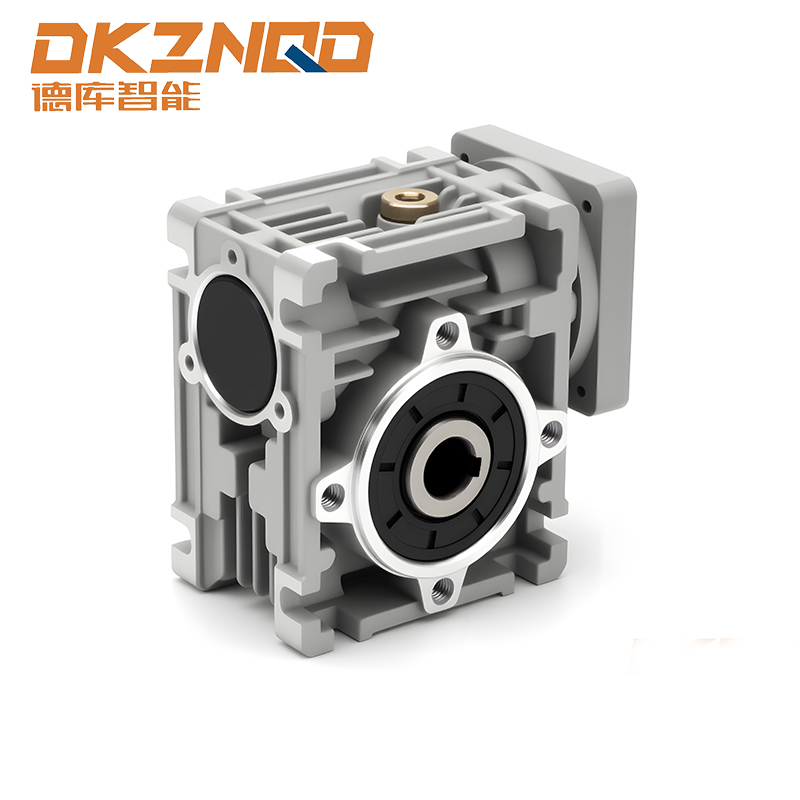
You have two candidate right-angle gearmotors for the same machine: a helical bevel gear motor and a worm gear motor. Both turn the drive direction by 90 degrees, but they are built on completely different gear geometries and behave very differently under real operating conditions.
Helical Bevel vs Worm Gear Motor: Core Design Differences
Helical Bevel Gear Motor: Rolling Contact and High Torque Density
A helical bevel gear motor combines a spiral bevel gear pair with one or more helical gear stages in a right-angle housing. The spiral bevel set handles the 90-degree direction change, while the helical stages add reduction and torque capacity. Gear teeth engage with rolling contact, which keeps friction low, efficiency high, and wear minimal even after tens of thousands of hours. Multi-stage helical bevel gearmotors cover a wide ratio range and are the default choice for continuous-duty machinery such as conveyors, cranes, mixers, and production lines.
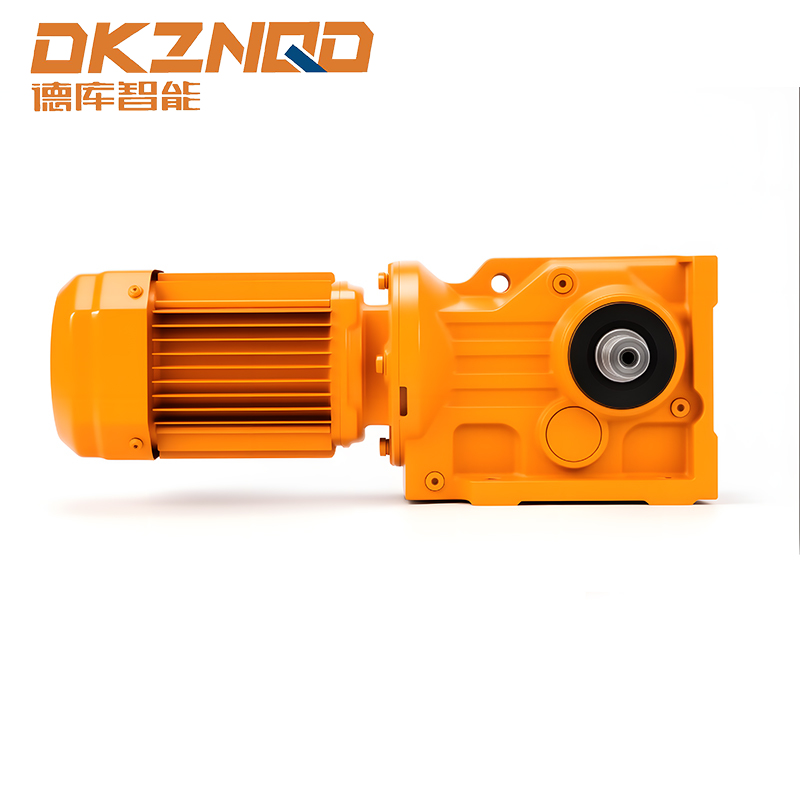 K Series Helical Bevel Gear Motor with Compact Right-Angle DesignThis gearmotor combines helical and bevel stages for high efficiency and low noise, covering 0.12–200 kW and up to 50,000 Nm. It suits continuous-duty applications like conveyors and mixers where space is limited.View Product →
Worm Gear Motor: Sliding Contact and Self-Locking Behavior
A worm gear motor drives a bronze worm wheel with a hardened steel worm. Sliding contact between the worm thread and the wheel teeth gives a very high ratio in a single stage and makes the drive quiet, but it also creates friction, heat, and wear. Efficiency depends strongly on ratio: roughly 80% at low ratios, falling to 40% to 50% at ratios above 50:1. When the ratio is high enough — typically above 30:1 — the drive becomes self-locking: the load cannot rotate the worm backward, which is a genuine safety advantage for lifting and positioning machinery.
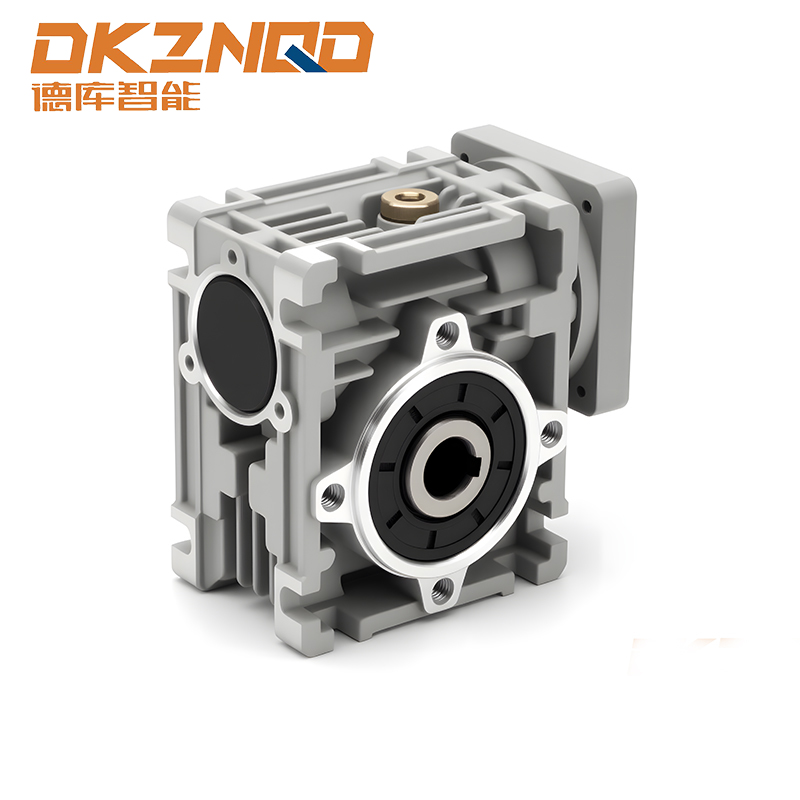 RV Worm Gear Reducer with Self-Locking Aluminum and Cast Iron HousingsThis unit offers ratios up to 5000, output torque to 1300 Nm, and single-stage self-locking for safety. Its efficient design makes it a practical choice where compactness and secure load holding matter.View Product →
Efficiency: The Real Cost Difference Between the Two Drives
Efficiency is the most important technical difference. A helical bevel gearmotor loses only 4% to 7% of input power through its gear stages. A worm gearmotor loses 15% at low ratios and more than half at high ratios. Everything that is not converted into output torque becomes heat inside the gearbox, and heat is the main enemy of oil life, seal life, and gear life.
| Parameter | Helical Bevel Gear Motor | Worm Gear Motor |
|---|---|---|
| Overall efficiency | 93-96% | 40-85%, ratio-dependent |
| Typical ratio range | 5:1 to 300:1 (multi-stage) | 7.5:1 to 100:1 (single stage) |
| Continuous-duty rating | Excellent | Limited by heat buildup |
| Shock-load resistance | High | Low to moderate |
| Self-locking | Not available | Yes above roughly 30:1 |
| Typical service life | 20,000-50,000+ hours | 10,000-20,000 hours |
| Backlash stability | Stable over life | Increases with wear |
To see how quickly energy loss adds up, take a 5.5 kW output requirement running 8,000 hours per year. A 94% efficient helical bevel unit draws about 5.85 kW from the supply. A 75% efficient worm unit draws about 7.33 kW for the same output. The difference is measured money, not a theoretical number.
That is more than $7,000 of wasted energy over five years at typical industrial electricity prices — often more than the gearmotor itself cost. For continuous heavy-duty service, the higher first cost of a helical bevel unit is usually recovered within the first year or two. You can examine the testing logic behind these figures in our review of what determines the efficiency rating of a K series helical bevel gearmotor.
Torque, Ratio Range, and Application Fit
Helical bevel gearmotors offer high torque per unit of weight because multiple teeth share the load in rolling contact. They tolerate overhung loads on the output shaft and the momentary shock loads common in cranes, hoists, and reversing conveyors. Multi-stage designs span ratios from roughly 5:1 to 300:1, from fractional-kilowatt sizes up to heavy industrial frames.
Worm gearmotors achieve a high ratio with far fewer components, which keeps the housing compact and the price low. But the worm wheel has a limited contact area and low tolerance for shock or overload, and efficiency collapses as the ratio climbs. That makes worm drives economical for light, intermittent jobs, not for demanding continuous duty.
- Helical bevel gearmotor: continuous production lines, long conveyors, cranes and hoists, mixers and agitators, material-handling systems, and any application where low backlash or frequent starts matter.
- Worm gearmotor: gates, dampers, valve actuators, indexing tables, small intermittent conveyors, lifting platforms that rely on self-locking, and compact low-power right-angle drives with short cycle times.
Service Life, Backlash, and Maintenance
Helical bevel gear motors wear slowly. The gear teeth are case-hardened and ground, and rolling contact means the oil film carries most of the load. With scheduled oil changes, the design life commonly exceeds 20,000 hours and can reach 50,000 hours or more. Backlash stays stable, which keeps positioning accuracy and repeatability predictable throughout the machine's life.
Worm reducers depend on a hydrodynamic oil film between the worm and the wheel. Sustained load and high oil temperature degrade that film, accelerate wear on the bronze wheel, and make backlash grow over time. Oil monitoring and temperature checks matter more on a worm drive than on any helical unit. Practical procedures and warning signs are covered in our guide to how to extend the service life of an RV worm gear reducer.
Operating temperature is the fastest indicator: a worm gearmotor running with oil above 90 °C is losing significant energy and aging rapidly. Helical bevel units run cooler at the same load, so they need less frequent attention.
Which Right-Angle Drive Should You Specify?
Work through four questions before you choose.
- Duty cycle: More than eight hours per day at or near rated load? Choose a helical bevel gearmotor. The efficiency advantage pays for the price difference.
- Load character: Shock loads, overhung loads, frequent reversing, or high inertia? Helical bevel gearmotors absorb these with margin. A worm wheel is the weakest point in the driveline.
- Self-locking requirement: Is it critical that a stopped load cannot back-drive the motor? A worm gearmotor with a ratio above roughly 30:1 provides that built-in holding effect.
- Budget basis: Are you comparing purchase price only, or the installed cost over five years? The helical bevel unit usually wins the lifecycle calculation even when its first cost is double.
For intermittent light duty, high single-stage ratio, and limited space, a conventional worm unit remains the economical choice. For continuous or heavy duty, a K series helical bevel gearmotor is the better investment.
There is also a middle path. An S series helical worm gearmotor stacks a helical input stage on a worm final stage. It improves efficiency, torque capacity, and running smoothness compared with a pure worm drive, while keeping the right-angle output and the self-locking characteristic. If the budget cannot reach a full helical bevel drive but the duty is too demanding for a worm, the S series is worth evaluating.
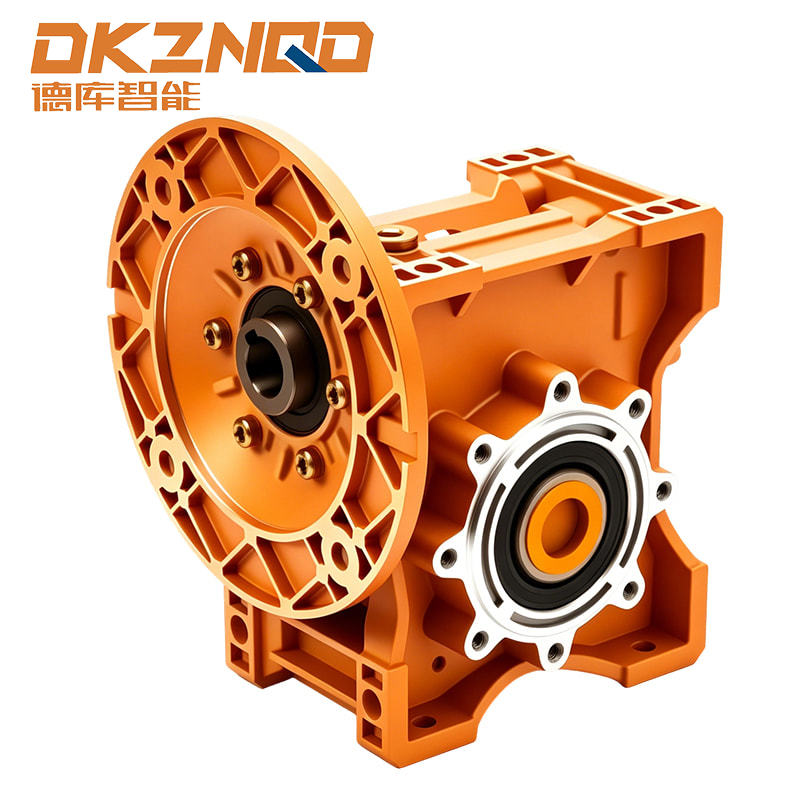 S Series Helical Worm Gearmotor Combining Helical and Worm StagesFeaturing a helical input and worm final stage, this gearmotor improves efficiency and smoothness over pure worm drives while retaining right-angle output and self-locking. It suits moderate-duty applications needing reliable performance.View Product →
Frequently Asked Questions
Q1: Which is more efficient, a helical bevel gear motor or a worm gear motor?
A helical bevel gear motor. Overall efficiency is typically 93% to 96%, while a worm gear motor ranges from roughly 80% at low ratios down to 40% to 50% at high ratios. If the drive runs more than a few hours per day, helical bevel is almost always the lower-cost choice once energy is included.
Q2: Can a worm gear motor replace a helical bevel gear motor?
Only in light, intermittent service with enough thermal margin. A worm unit is not suitable for high continuous load, shock loading, or applications that need stable backlash. It is the right choice when the design specifically needs a compact envelope, low first cost, or self-locking behavior.
Q3: How long does each type last?
Lifespan depends on load, environment, and maintenance, but helical bevel units typically reach 20,000 to 50,000 hours before a major overhaul. Worm reducers commonly need the worm wheel inspected or replaced between 10,000 and 20,000 hours because the wheel is the designed wear element.
Q4: What advantage does an S series helical worm gearmotor offer?
It sits between the two technologies. The helical input stage improves efficiency and smoothness; the worm final stage preserves the right-angle geometry and self-locking. You get better energy performance than a pure worm drive without paying the full cost of a K series helical bevel unit.
 05 Jun,2025